5KDR image
Deposition Date 2016-06-08
Release Date 2016-08-10
Last Version Date 2023-09-27
Entry Detail
PDB ID:
5KDR
Keywords:
Title:
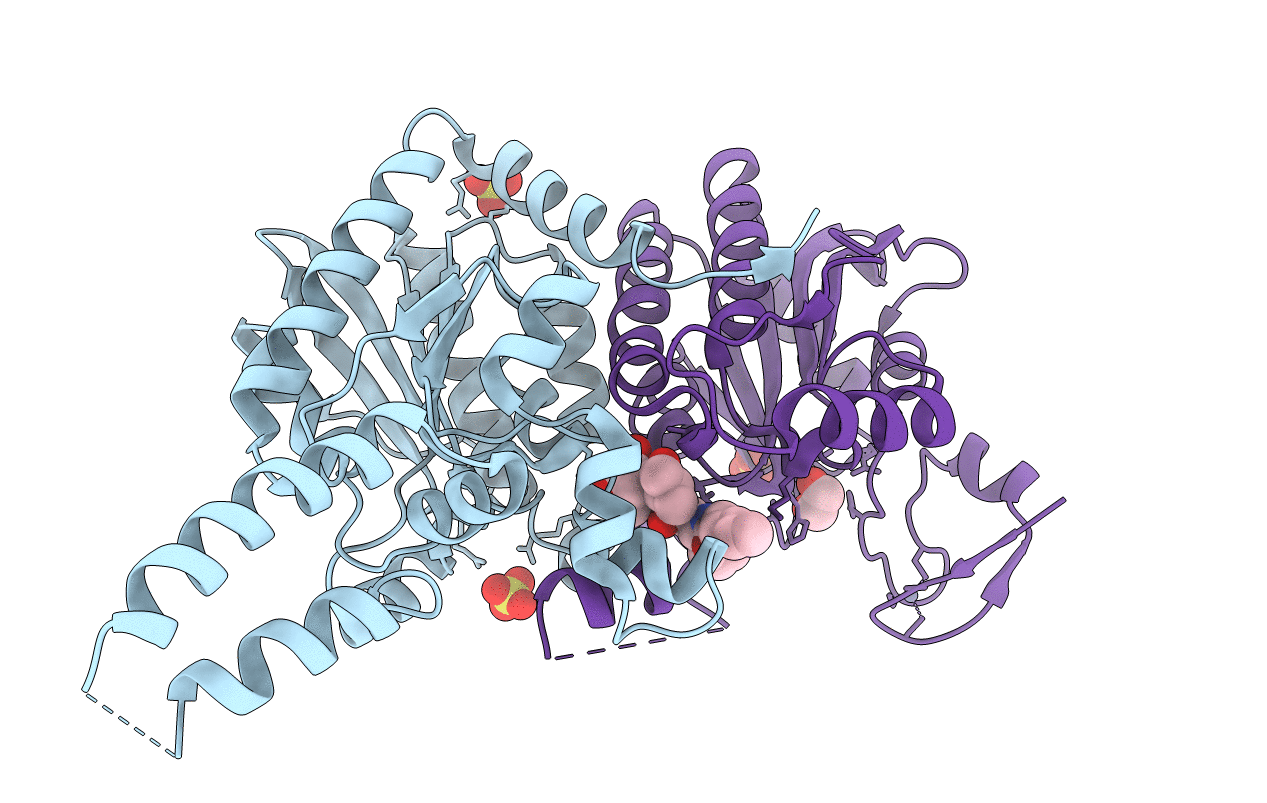
The crystal structure of carboxyltransferase from Staphylococcus Aureus bound to the antimicrobial agent moiramide B.
Biological Source:
Method Details:
Experimental Method:
Resolution:
2.60 Å
R-Value Free:
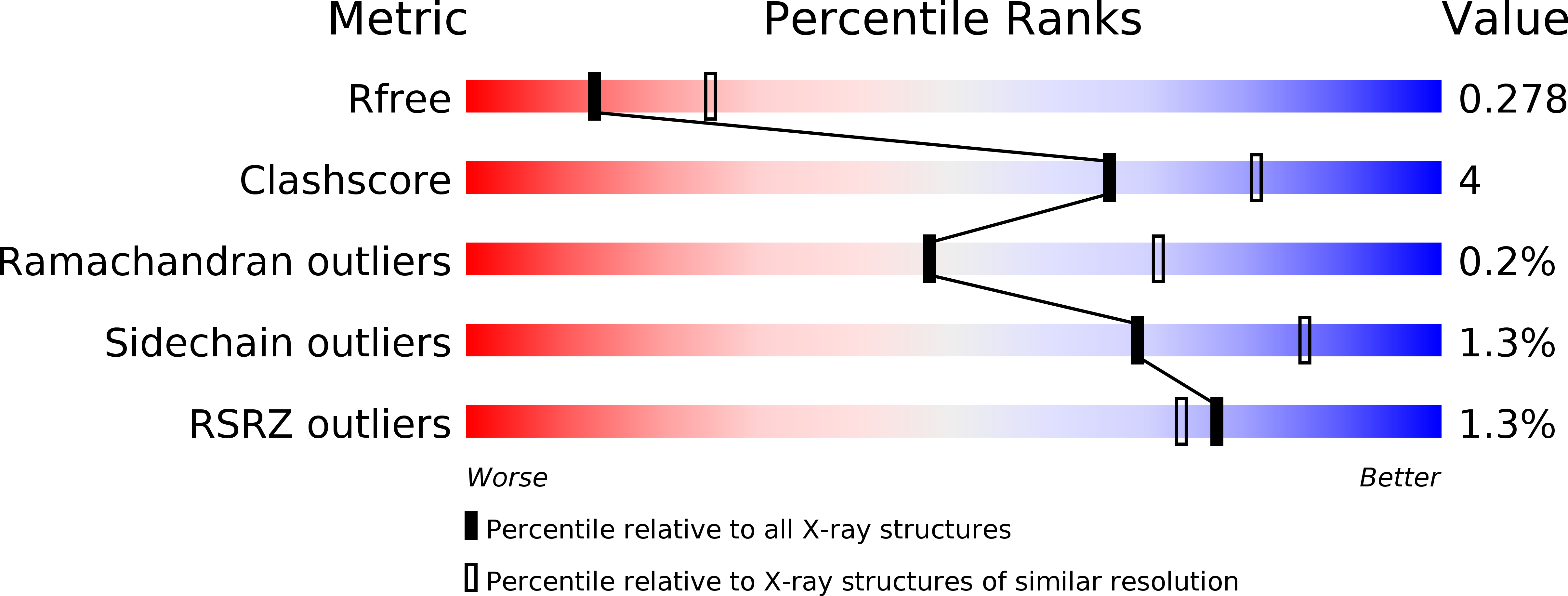
0.27
R-Value Work:
0.22
R-Value Observed:
0.23
Space Group:
C 1 2 1
Macromolecular Entities
Structures with similar UniProt ID
Protein Blast
Polymer Type:polypeptide(L)
Molecule:Acetyl-coenzyme A carboxylase carboxyl transferase subunit alpha
Chain IDs:A
Chain Length:327
Number of Molecules:1
Biological Source:Staphylococcus aureus (strain USA300)
Structures with similar UniProt ID
Protein Blast
Polymer Type:polypeptide(L)
Molecule:Acetyl-coenzyme A carboxylase carboxyl transferase subunit beta
Chain IDs:B
Chain Length:285
Number of Molecules:1
Biological Source:Staphylococcus aureus (strain bovine RF122 / ET3-1)
Primary Citation
Crystal Structure of Carboxyltransferase from Staphylococcus aureus Bound to the Antibacterial Agent Moiramide B.
Biochemistry 55 4666 4674 (2016)
PMID: 27471863 DOI: 10.1021/acs.biochem.6b00641

Abstact

The dramatic increase in the prevalence of antibiotic-resistant bacteria has necessitated a search for new antibacterial agents against novel targets. Moiramide B is a natural product, broad-spectrum antibiotic that inhibits the carboxyltransferase component of acetyl-CoA carboxylase, which catalyzes the first committed step in fatty acid synthesis. Herein, we report the 2.6 Å resolution crystal structure of moiramide B bound to carboxyltransferase. An unanticipated but significant finding was that moiramide B bound as the enol/enolate. Crystallographic studies demonstrate that the (4S)-methyl succinimide moiety interacts with the oxyanion holes of the enzyme, supporting the notion that an anionic enolate is the active form of the antibacterial agent. Structure-activity studies demonstrate that the unsaturated fatty acid tail of moiramide B is needed only for entry into the bacterial cell. These results will allow the design of new antibacterial agents against the bacterial form of carboxyltransferase.

Legend

Protein

Chemical

Disease

Primary Citation of related structures
Feedback Form
Name
Email
Institute
Feedback