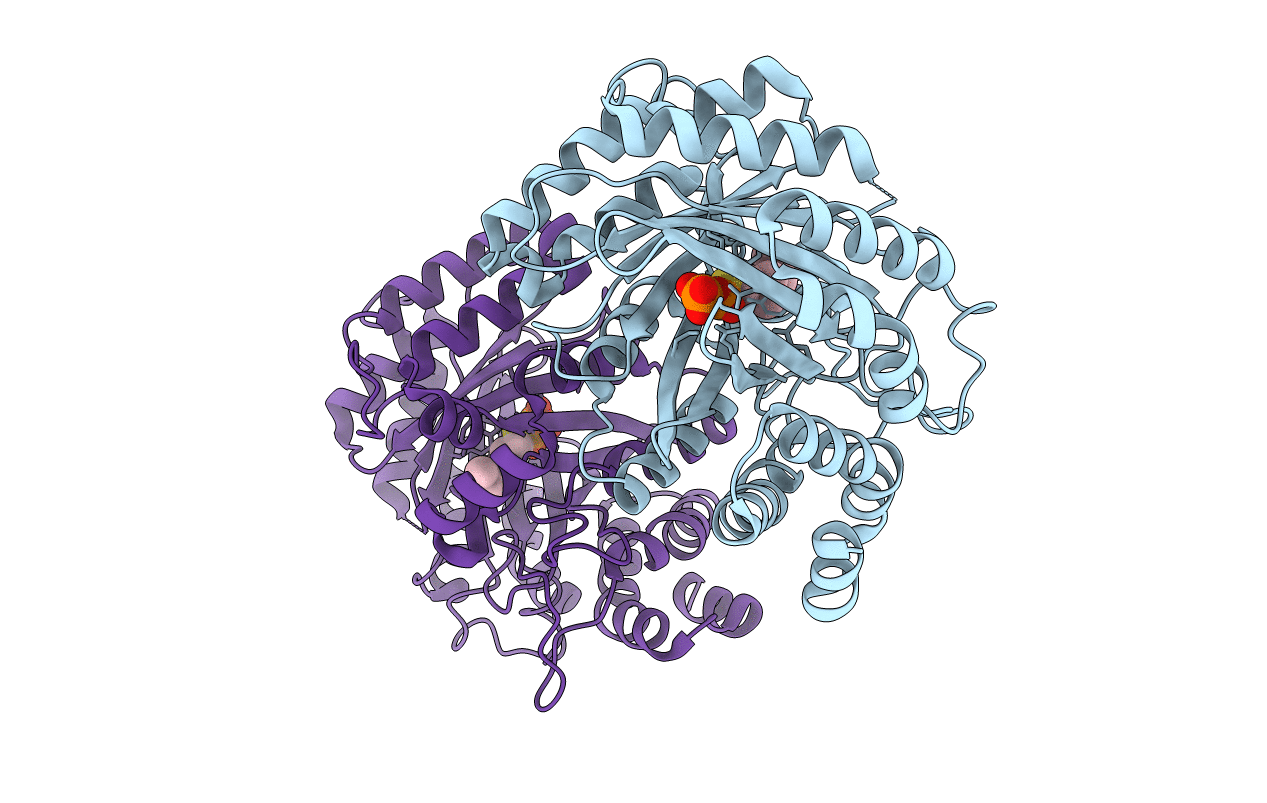
5KCQ image
Deposition Date 2016-06-06
Release Date 2016-12-21
Last Version Date 2023-11-08
Entry Detail
PDB ID:
5KCQ
Keywords:
Title:
Crystal structure of the aromatic prenyltransferase AtaPT from Aspergillus terreus A8-4 in complex with geranyl S-thiolodiphosphate
Biological Source:
Source Organism:
Host Organism:
Method Details:
Experimental Method:
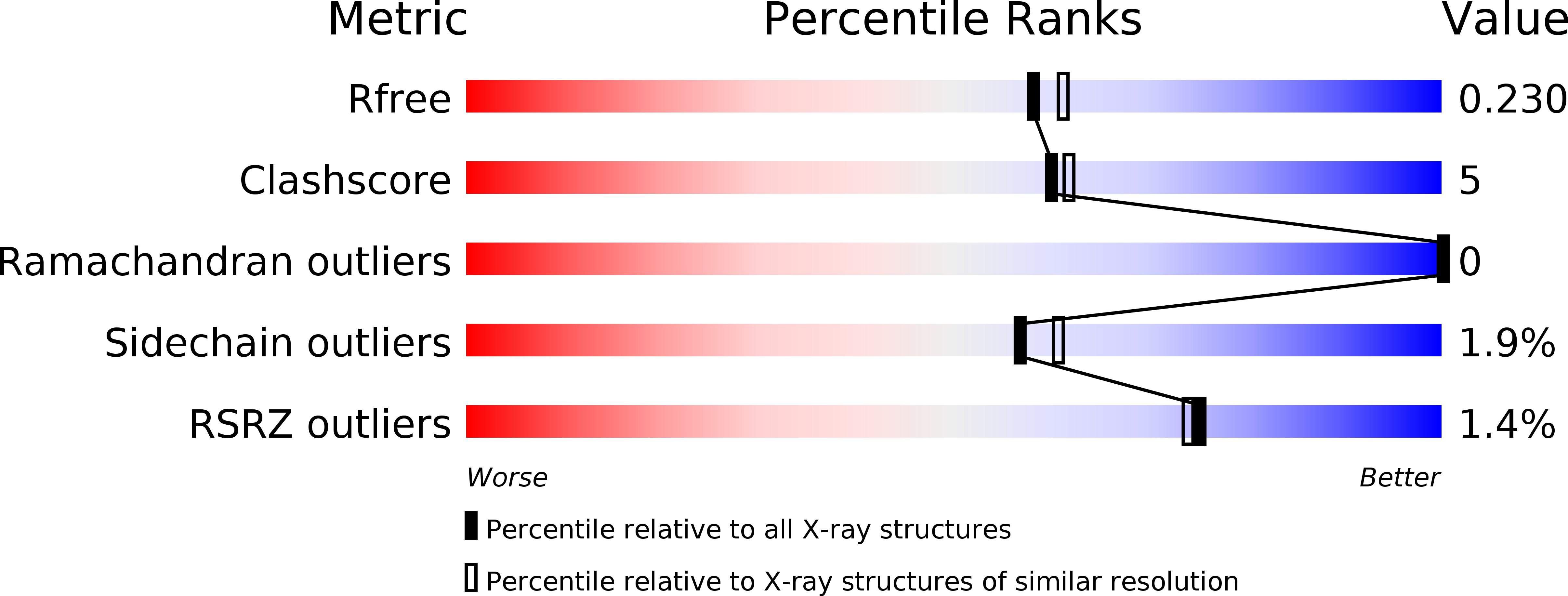
Resolution:
2.00 Å
R-Value Free:
0.22
R-Value Work:
0.18
R-Value Observed:
0.18
Space Group:
P 21 21 2
Macromolecular Entities
Structures with similar UniProt ID
Protein Blast
Polymer Type:polypeptide(L)
Molecule:aromatic prenyltransferase
Chain IDs:A, B
Chain Length:419
Number of Molecules:2
Biological Source:Aspergillus terreus
Ligand Molecules
Primary Citation
Molecular insights into the enzyme promiscuity of an aromatic prenyltransferase.
Nat. Chem. Biol. 13 226 234 (2017)
PMID: 27992881 DOI: 10.1038/nchembio.2263

Abstact

Aromatic prenyltransferases (aPTases) transfer prenyl moieties from isoprenoid donors to various aromatic acceptors, some of which have the rare property of extreme enzymatic promiscuity toward both a variety of prenyl donors and a large diversity of acceptors. In this study, we discovered a new aPTase, AtaPT, from Aspergillus terreus that exhibits unprecedented promiscuity toward diverse aromatic acceptors and prenyl donors and also yields products with a range of prenylation patterns. Systematic crystallographic studies revealed various discrete conformations for ligand binding with donor-dependent acceptor specificity and multiple binding sites within a spacious hydrophobic substrate-binding pocket. Further structure-guided mutagenesis of active sites at the substrate-binding pocket is responsible for altering the specificity and promiscuity toward substrates and the diversity of product prenylations. Our study reveals the molecular mechanism underlying the promiscuity of AtaPT and suggests an efficient protein engineering strategy to generate new prenylated derivatives in drug discovery applications.

Legend

Protein

Chemical

Disease

Primary Citation of related structures
Feedback Form
Name
Email
Institute
Feedback