5K1I image
Deposition Date 2016-05-18
Release Date 2016-12-21
Last Version Date 2024-01-10
Entry Detail
PDB ID:
5K1I
Keywords:
Title:
PDE4 crystal structure in complex with small molecule inhibitor
Biological Source:
Source Organism:
Homo sapiens (Taxon ID: 9606)
Method Details:
Experimental Method:
Resolution:
2.61 Å
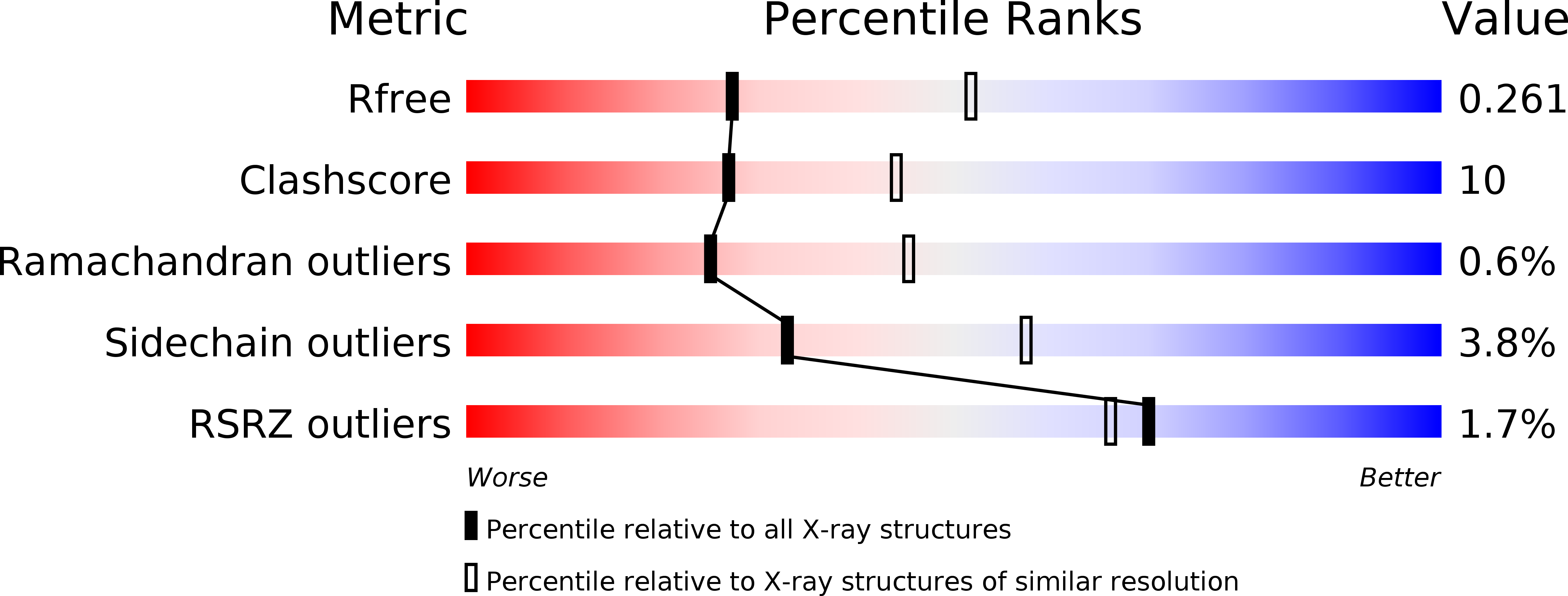
R-Value Free:
0.25
R-Value Work:
0.19
R-Value Observed:
0.19
Space Group:
P 1
Macromolecular Entities
Structures with similar UniProt ID
Protein Blast
Polymer Type:polypeptide(L)
Molecule:cAMP-specific 3',5'-cyclic phosphodiesterase 4D
Gene (Uniprot):PDE4D
Chain IDs:A, B, C, D, E, F, G, H
Chain Length:326
Number of Molecules:8
Biological Source:Homo sapiens
Primary Citation
Biphenyl Pyridazinone Derivatives as Inhaled PDE4 Inhibitors: Structural Biology and Structure-Activity Relationships.
J. Med. Chem. 59 10479 10497 (2016)
PMID: 27933955 DOI: 10.1021/acs.jmedchem.6b00829

Abstact

Cyclic nucleotide cAMP is a ubiquitous secondary messenger involved in a plethora of cellular responses to biological agents involving activation of adenylyl cyclase. Its intracellular levels are tightly controlled by a family of cyclic nucleotide degrading enzymes, the PDEs. In recent years, cyclic nucleotide phosphodiesterase type 4 (PDE4) has aroused scientific attention as a suitable target for anti-inflammatory therapy in respiratory diseases, particularly in the management of asthma and COPD. Here we describe our efforts to discover novel, highly potent inhaled inhibitors of PDE4. Through structure based design, with the inclusion of a variety of functional groups and physicochemical profiles in order to occupy the solvent-filled pocket of the PDE4 enzyme, we modified the structure of our oral PDE4 inhibitors to reach compounds down to picomolar enzymatic potencies while at the same time tackling successfully an uncovered selectivity issue with the adenosine receptors. In vitro potencies were demonstrated in a rat lung neutrophilia model by administration of a suspension with a Penn-Century MicroSprayer Aerosolizer.

Legend

Protein

Chemical

Disease

Primary Citation of related structures
Feedback Form
Name
Email
Institute
Feedback