Planned Maintenance: Some services may turn out to be unavailable from 15th January, 2026 to 16th January, 2026. We apologize for the inconvenience!

5JPV image
Deposition Date 2016-05-04
Release Date 2017-06-14
Last Version Date 2024-11-20
Entry Detail
PDB ID:
5JPV
Title:
Efficient targeting of the asialoglycoprotein receptor by polyvalent display of a compact galactoseamine mimic
Method Details:
Experimental Method:
Resolution:
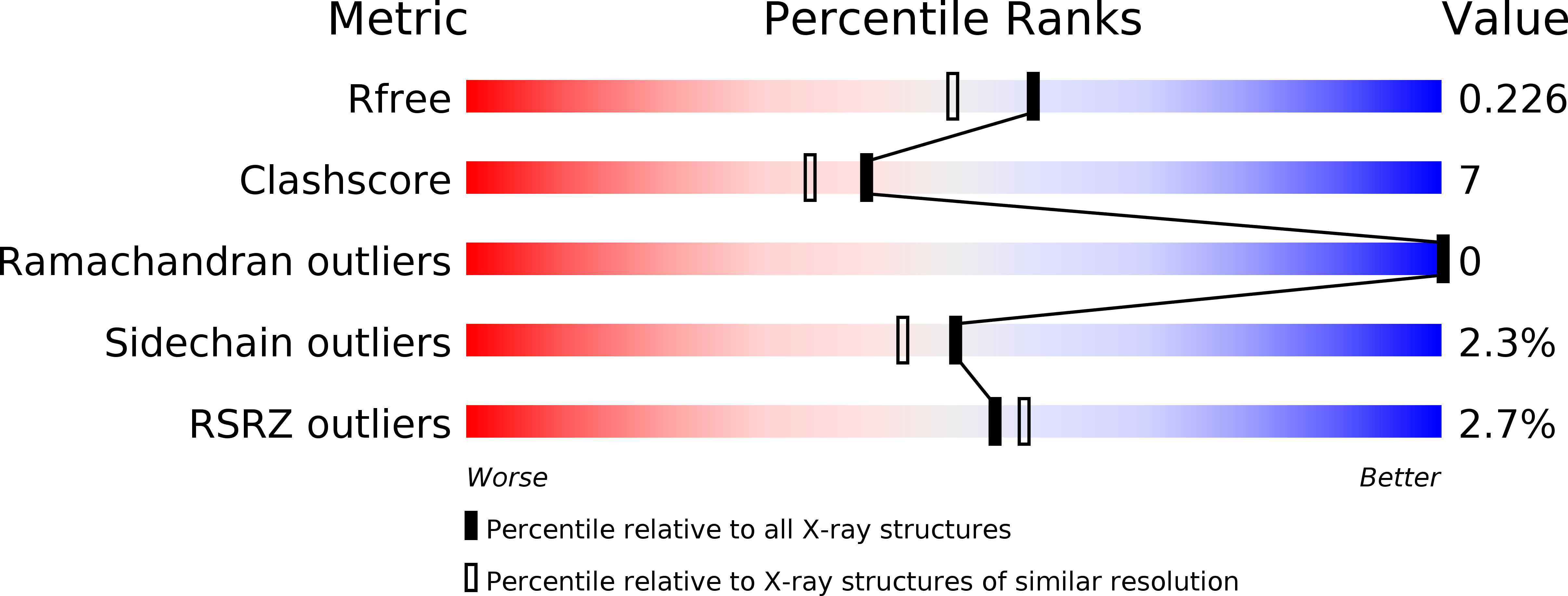
1.90 Å
R-Value Free:
0.22
R-Value Work:
0.19
R-Value Observed:
0.19
Space Group:
P 1 21 1
Macromolecular Entities
Structures with similar UniProt ID
Protein Blast
Polymer Type:polypeptide(L)
Molecule:Asialoglycoprotein receptor 1
Gene (Uniprot):ASGR1
Chain IDs:A, B
Chain Length:145
Number of Molecules:2
Biological Source:Homo sapiens
Peptide-like Molecules
PRD_900008
Primary Citation
Efficient Liver Targeting by Polyvalent Display of a Compact Ligand for the Asialoglycoprotein Receptor.
J. Am. Chem. Soc. 139 3528 3536 (2017)
PMID: 28230359 DOI: 10.1021/jacs.6b12964

Abstact

A compact and stable bicyclic bridged ketal was developed as a ligand for the asialoglycoprotein receptor (ASGPR). This compound showed excellent ligand efficiency, and the molecular details of binding were revealed by the first X-ray crystal structures of ligand-bound ASGPR. This analogue was used to make potent di- and trivalent binders of ASGPR. Extensive characterization of the function of these compounds showed rapid ASGPR-dependent cellular uptake in vitro and high levels of liver/plasma selectivity in vivo. Assessment of the biodistribution in rodents of a prototypical Alexa647-labeled trivalent conjugate showed selective hepatocyte targeting with no detectable distribution in nonparenchymal cells. This molecule also exhibited increased ASGPR-directed hepatocellular uptake and prolonged retention compared to a similar GalNAc derived trimer conjugate. Selective release in the liver of a passively permeable small-molecule cargo was achieved by retro-Diels-Alder cleavage of an oxanorbornadiene linkage, presumably upon encountering intracellular thiol. Therefore, the multicomponent construct described here represents a highly efficient delivery vehicle to hepatocytes.

Legend

Protein

Chemical

Disease

Primary Citation of related structures
Feedback Form
Name
Email
Institute
Feedback