5JPL image
Deposition Date 2016-05-03
Release Date 2017-03-01
Last Version Date 2024-11-20
Entry Detail
PDB ID:
5JPL
Keywords:
Title:
LP2006, a handcuff-topology lasso peptide antibiotic
Biological Source:
Method Details:
Experimental Method:
Conformers Calculated:
200
Conformers Submitted:
20
Selection Criteria:
structures with the lowest energy
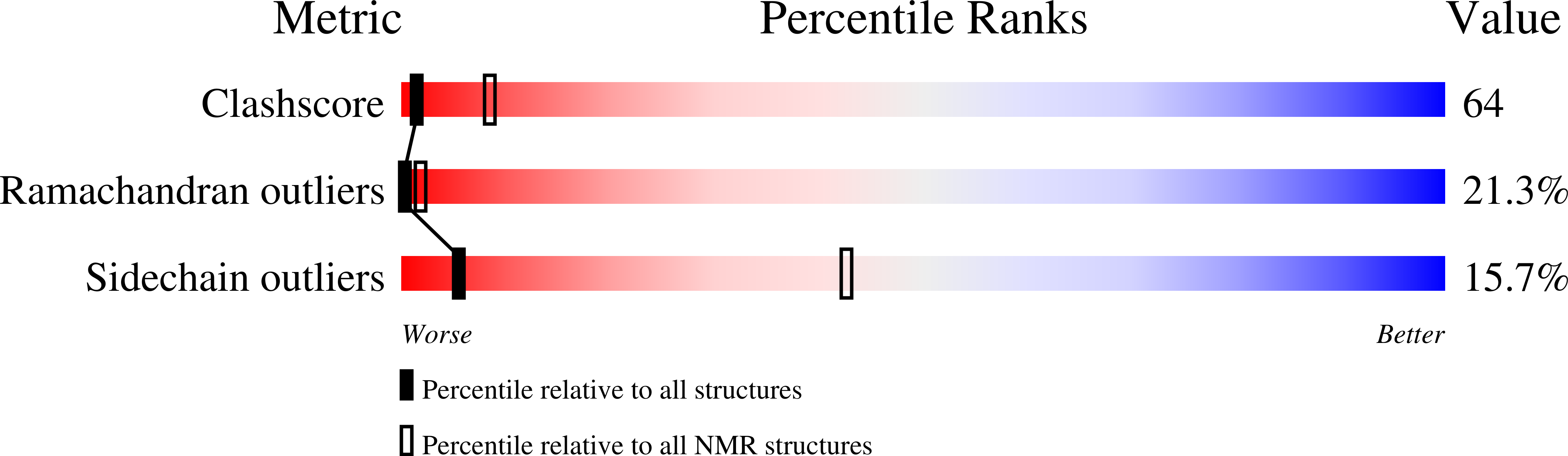
Macromolecular Entities
Structures with similar UniProt ID
Protein Blast
Polymer Type:polypeptide(L)
Molecule:Uncharacterized protein
Gene (Uniprot):B005_3667
Chain IDs:A
Chain Length:17
Number of Molecules:1
Biological Source:Nocardiopsis alba (strain ATCC BAA-2165 / BE74)
Ligand Molecules
Primary Citation
A new genome-mining tool redefines the lasso peptide biosynthetic landscape.
Nat. Chem. Biol. 13 470 478 (2017)
PMID: 28244986 DOI: 10.1038/nchembio.2319

Abstact

Ribosomally synthesized and post-translationally modified peptide (RiPP) natural products are attractive for genome-driven discovery and re-engineering, but limitations in bioinformatic methods and exponentially increasing genomic data make large-scale mining of RiPP data difficult. We report RODEO (Rapid ORF Description and Evaluation Online), which combines hidden-Markov-model-based analysis, heuristic scoring, and machine learning to identify biosynthetic gene clusters and predict RiPP precursor peptides. We initially focused on lasso peptides, which display intriguing physicochemical properties and bioactivities, but their hypervariability renders them challenging prospects for automated mining. Our approach yielded the most comprehensive mapping to date of lasso peptide space, revealing >1,300 compounds. We characterized the structures and bioactivities of six lasso peptides, prioritized based on predicted structural novelty, including one with an unprecedented handcuff-like topology and another with a citrulline modification exceptionally rare among bacteria. These combined insights significantly expand the knowledge of lasso peptides and, more broadly, provide a framework for future genome-mining efforts.

Legend

Protein

Chemical

Disease

Primary Citation of related structures
Feedback Form
Name
Email
Institute
Feedback