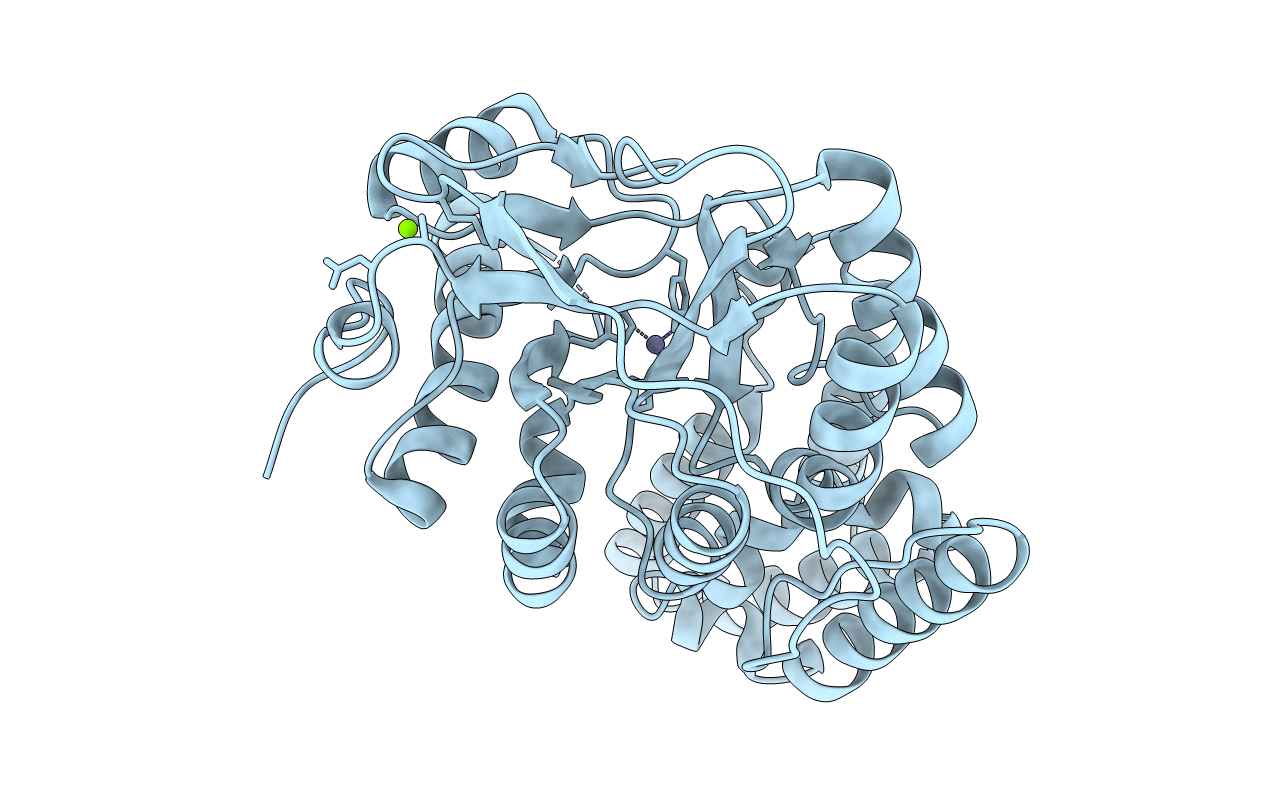
5JP6 image
Deposition Date 2016-05-03
Release Date 2016-06-01
Last Version Date 2024-01-10
Entry Detail
PDB ID:
5JP6
Keywords:
Title:
Bdellovibrio bacteriovorus peptidoglycan deacetylase Bd3279
Biological Source:
Source Organism:
Host Organism:
Method Details:
Experimental Method:
Resolution:
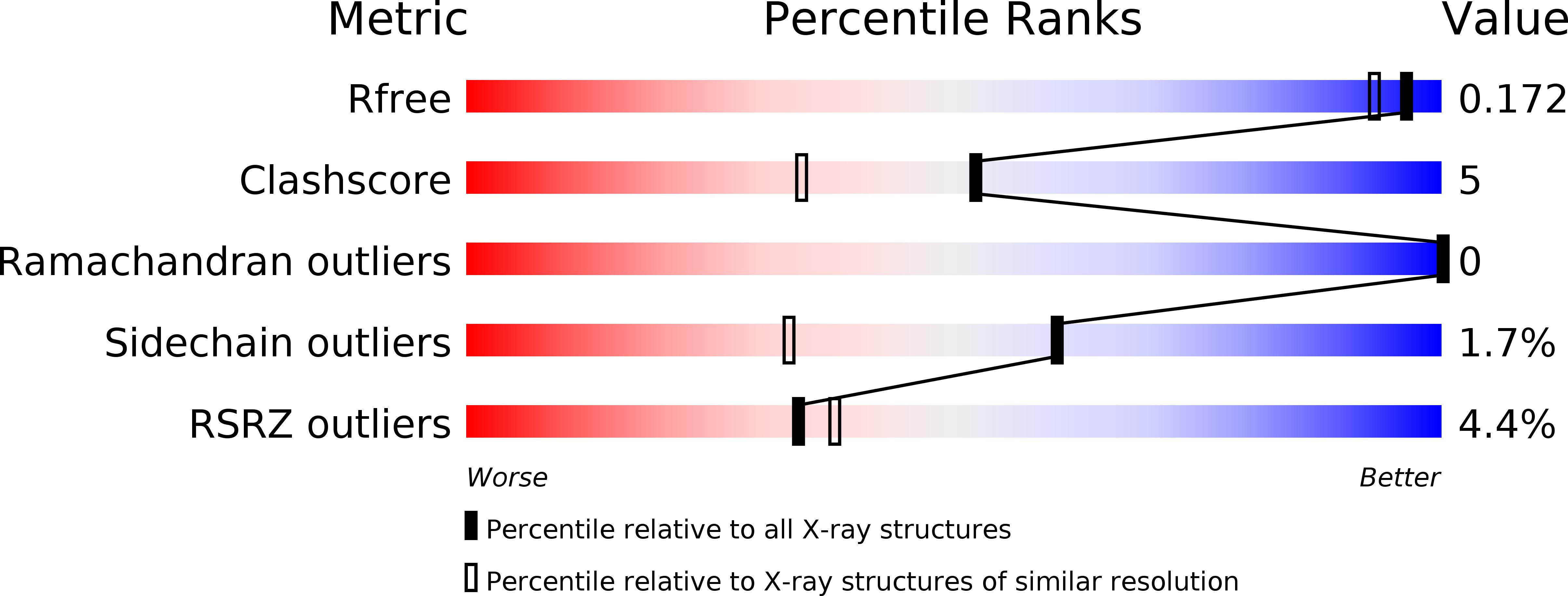
1.50 Å
R-Value Free:
0.16
R-Value Work:
0.14
R-Value Observed:
0.14
Space Group:
P 61
Macromolecular Entities
Structures with similar UniProt ID
Protein Blast
Polymer Type:polypeptide(L)
Molecule:Putative polysaccharide deacetylase
Gene (Uniprot):Bd3279
Chain IDs:A
Chain Length:383
Number of Molecules:1
Biological Source:Bdellovibrio bacteriovorus HD100
Modified Residue
Compound ID Chain ID Parent Comp ID Details 2D Image
PXU A PRO modified residue
Primary Citation
Interrupting peptidoglycan deacetylation during Bdellovibrio predator-prey interaction prevents ultimate destruction of prey wall, liberating bacterial-ghosts.
Sci Rep 6 26010 26010 (2016)
PMID: 27211869 DOI: 10.1038/srep26010

Abstact

The peptidoglycan wall, located in the periplasm between the inner and outer membranes of the cell envelope in Gram-negative bacteria, maintains cell shape and endows osmotic robustness. Predatory Bdellovibrio bacteria invade the periplasm of other bacterial prey cells, usually crossing the peptidoglycan layer, forming transient structures called bdelloplasts within which the predators replicate. Prey peptidoglycan remains intact for several hours, but is modified and then degraded by escaping predators. Here we show predation is altered by deleting two Bdellovibrio N-acetylglucosamine (GlcNAc) deacetylases, one of which we show to have a unique two domain structure with a novel regulatory"plug". Deleting the deacetylases limits peptidoglycan degradation and rounded prey cell "ghosts" persist after mutant-predator exit. Mutant predators can replicate unusually in the periplasmic region between the peptidoglycan wall and the outer membrane rather than between wall and inner-membrane, yet still obtain nutrients from the prey cytoplasm. Deleting two further genes encoding DacB/PBP4 family proteins, known to decrosslink and round prey peptidoglycan, results in a quadruple mutant Bdellovibrio which leaves prey-shaped ghosts upon predation. The resultant bacterial ghosts contain cytoplasmic membrane within bacteria-shaped peptidoglycan surrounded by outer membrane material which could have promise as "bacterial skeletons" for housing artificial chromosomes.

Legend

Protein

Chemical

Disease

Primary Citation of related structures
Feedback Form
Name
Email
Institute
Feedback