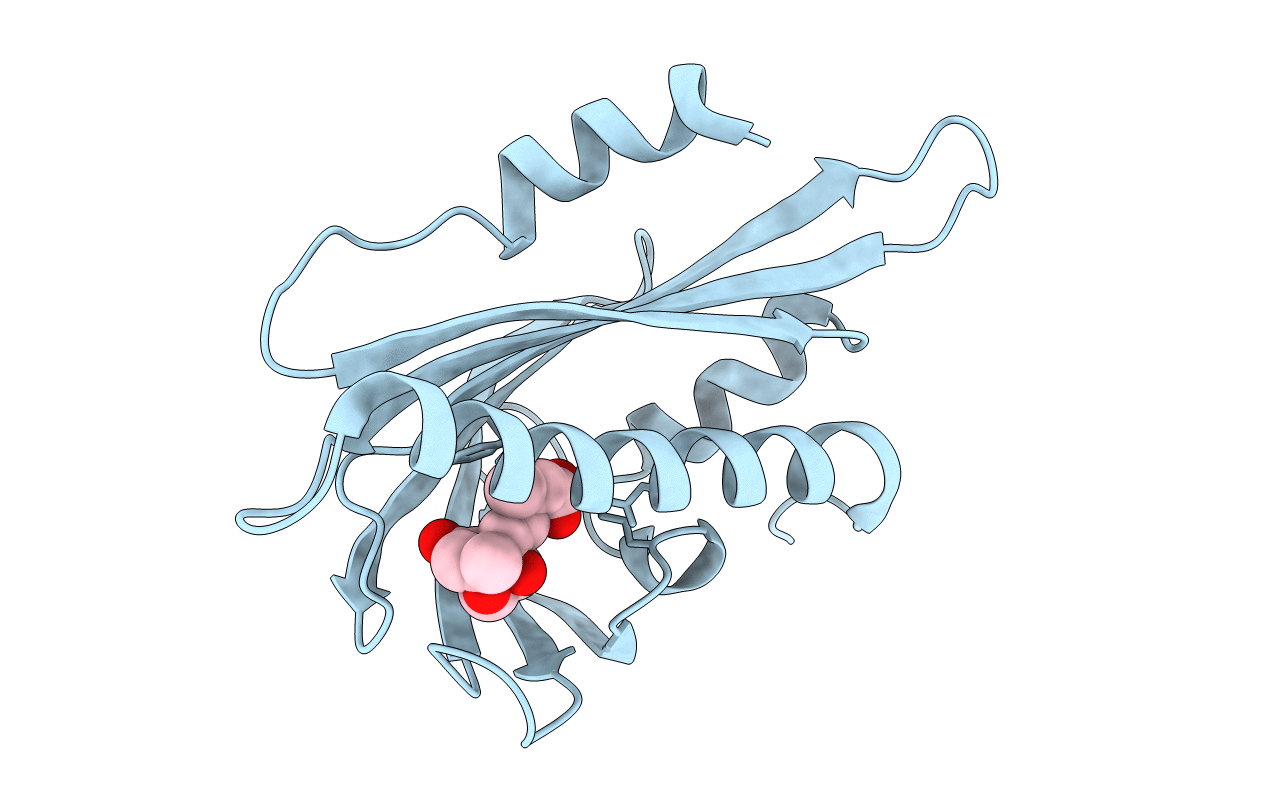
5JNN image
Deposition Date 2016-04-30
Release Date 2016-08-17
Last Version Date 2024-03-06
Entry Detail
PDB ID:
5JNN
Title:
Crystal structure of abscisic acid receptor PYL2 in complex with Phaseic acid.
Biological Source:
Source Organism:
Host Organism:
Method Details:
Experimental Method:
Resolution:
2.30 Å
R-Value Free:
0.23
R-Value Work:
0.18
R-Value Observed:
0.19
Space Group:
P 61 2 2

Macromolecular Entities
Structures with similar UniProt ID
Protein Blast
Polymer Type:polypeptide(L)
Molecule:Abscisic acid receptor PYL2
Gene (Uniprot):PYL2
Chain IDs:A
Chain Length:190
Number of Molecules:1
Biological Source:Arabidopsis thaliana
Ligand Molecules
Primary Citation
Co-evolution of Hormone Metabolism and Signaling Networks Expands Plant Adaptive Plasticity.
Cell 166 881 893 (2016)
PMID: 27518563 DOI: 10.1016/j.cell.2016.06.027

Abstact

Classically, hormones elicit specific cellular responses by activating dedicated receptors. Nevertheless, the biosynthesis and turnover of many of these hormone molecules also produce chemically related metabolites. These molecules may also possess hormonal activities; therefore, one or more may contribute to the adaptive plasticity of signaling outcomes in host organisms. Here, we show that a catabolite of the plant hormone abscisic acid (ABA), namely phaseic acid (PA), likely emerged in seed plants as a signaling molecule that fine-tunes plant physiology, environmental adaptation, and development. This trait was facilitated by both the emergence-selection of a PA reductase that modulates PA concentrations and by the functional diversification of the ABA receptor family to perceive and respond to PA. Our results suggest that PA serves as a hormone in seed plants through activation of a subset of ABA receptors. This study demonstrates that the co-evolution of hormone metabolism and signaling networks can expand organismal resilience.

Legend

Protein

Chemical

Disease

Primary Citation of related structures
Feedback Form
Name
Email
Institute
Feedback