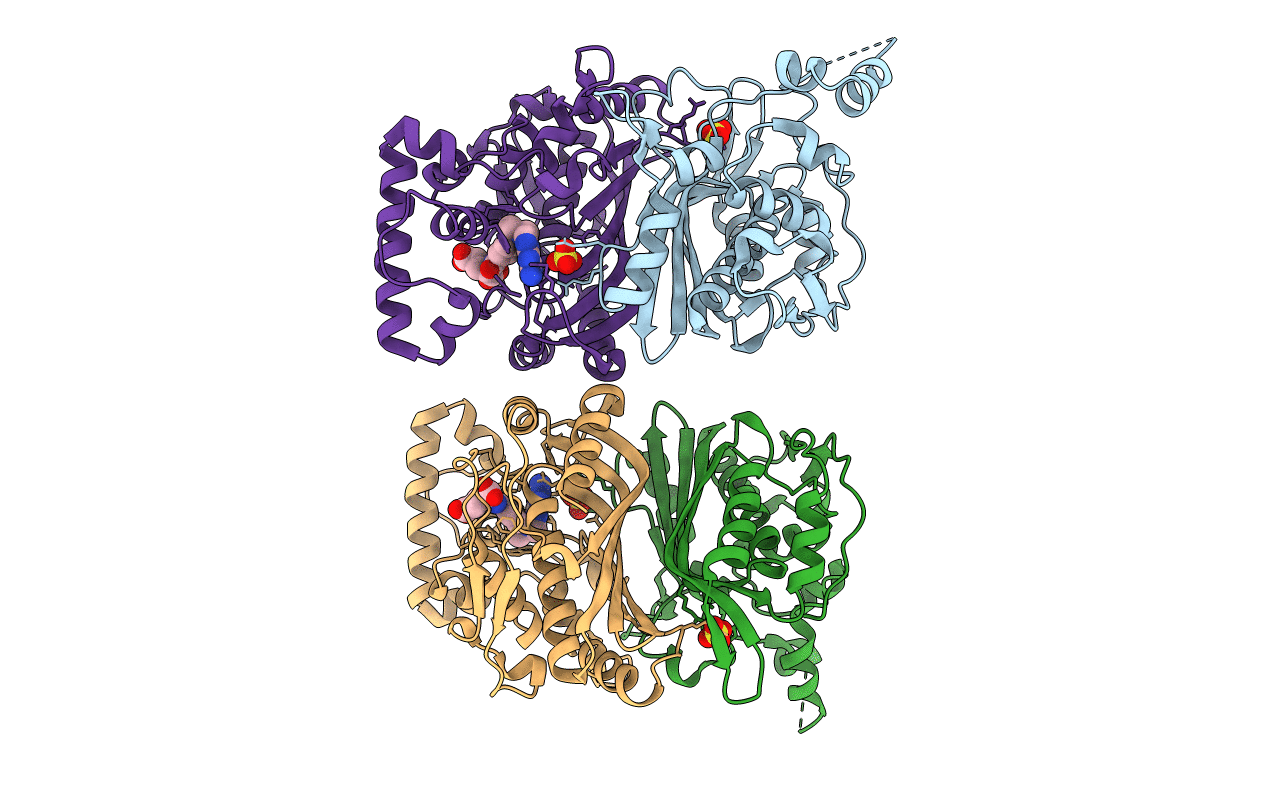
5J7W image
Deposition Date 2016-04-07
Release Date 2016-09-28
Last Version Date 2024-05-08
Entry Detail
PDB ID:
5J7W
Keywords:
Title:
Enterococcus faecalis thymidylate synthase complex with methotrexate
Biological Source:
Source Organism:
Method Details:
Experimental Method:
Resolution:
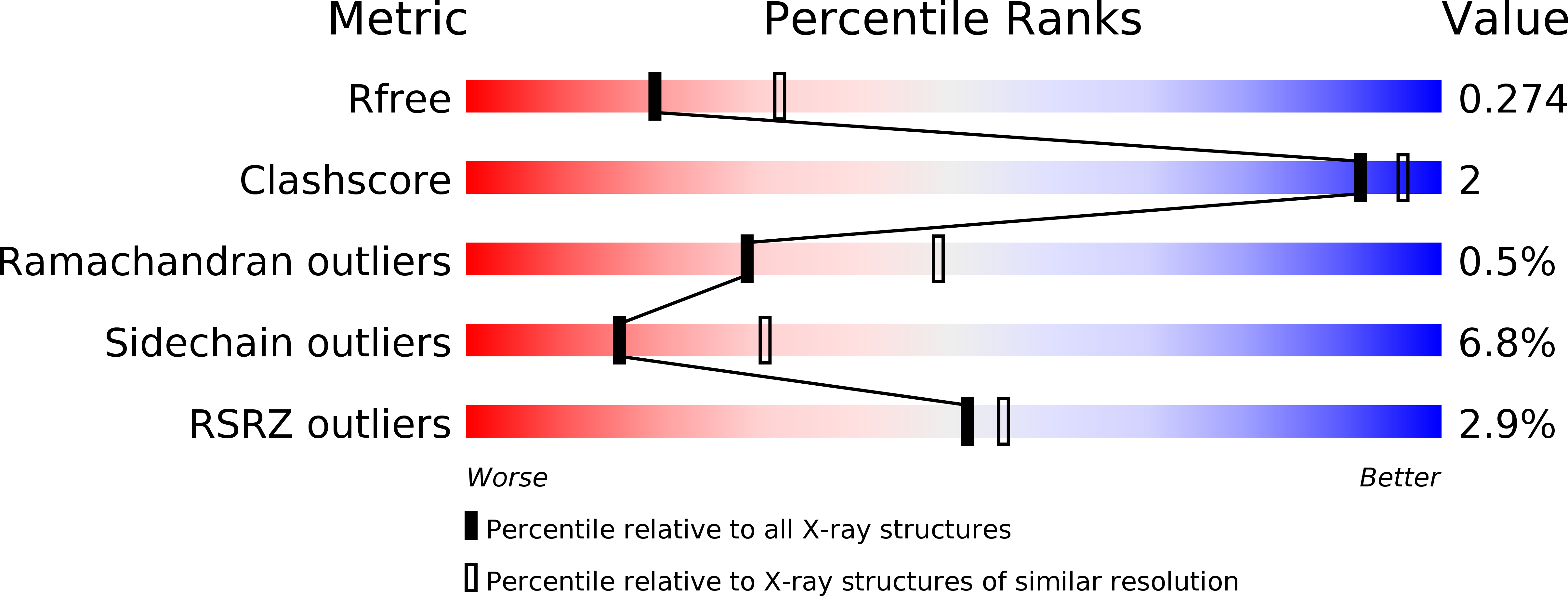
2.50 Å
R-Value Free:
0.27
R-Value Work:
0.20
R-Value Observed:
0.20
Space Group:
P 1 21 1
Macromolecular Entities
Structures with similar UniProt ID
Protein Blast
Polymer Type:polypeptide(L)
Molecule:Thymidylate synthase
Gene (Uniprot):thyA
Chain IDs:A, B, C, D
Chain Length:315
Number of Molecules:4
Biological Source:Enterococcus faecalis
Primary Citation
X-ray crystal structures of Enterococcus faecalis thymidylate synthase with folate binding site inhibitors.
Eur.J.Med.Chem. 123 649 664 (2016)
PMID: 27517810 DOI: 10.1016/j.ejmech.2016.07.066

Abstact

Infections caused by Enterococcus faecalis (Ef) represent nowadays a relevant health problem. We selected Thymidylate synthase (TS) from this organism as a potential specific target for antibacterial therapy. We have previously demonstrated that species-specific inhibition of the protein can be achieved despite the relatively high structural similarity among bacterial TSs and human TS. We had previously obtained the EfTS crystal structure of the protein in complex with the metabolite 5-formyl-tetrahydrofolate (5-FTHF) suggesting the protein role as metabolite reservoir; however, protein-inhibitors complexes were still missing. In the present work we identified some inhibitors bearing the phthalimidic core from our in-house library and we performed crystallographic screening towards EfTS. We obtained two X-ray crystallographic structures: the first with a weak phthalimidic inhibitor bound in one subunit and 5-hydroxymethylene-6-hydrofolic acid (5-HMHF) in the other subunit; a second X-ray structure complex with methotrexate. The structural information achieved confirm the role of EfTS as an enzyme involved in the folate pool system and provide a structural basis for structure-based drug design.

Legend

Protein

Chemical

Disease

Primary Citation of related structures
Feedback Form
Name
Email
Institute
Feedback