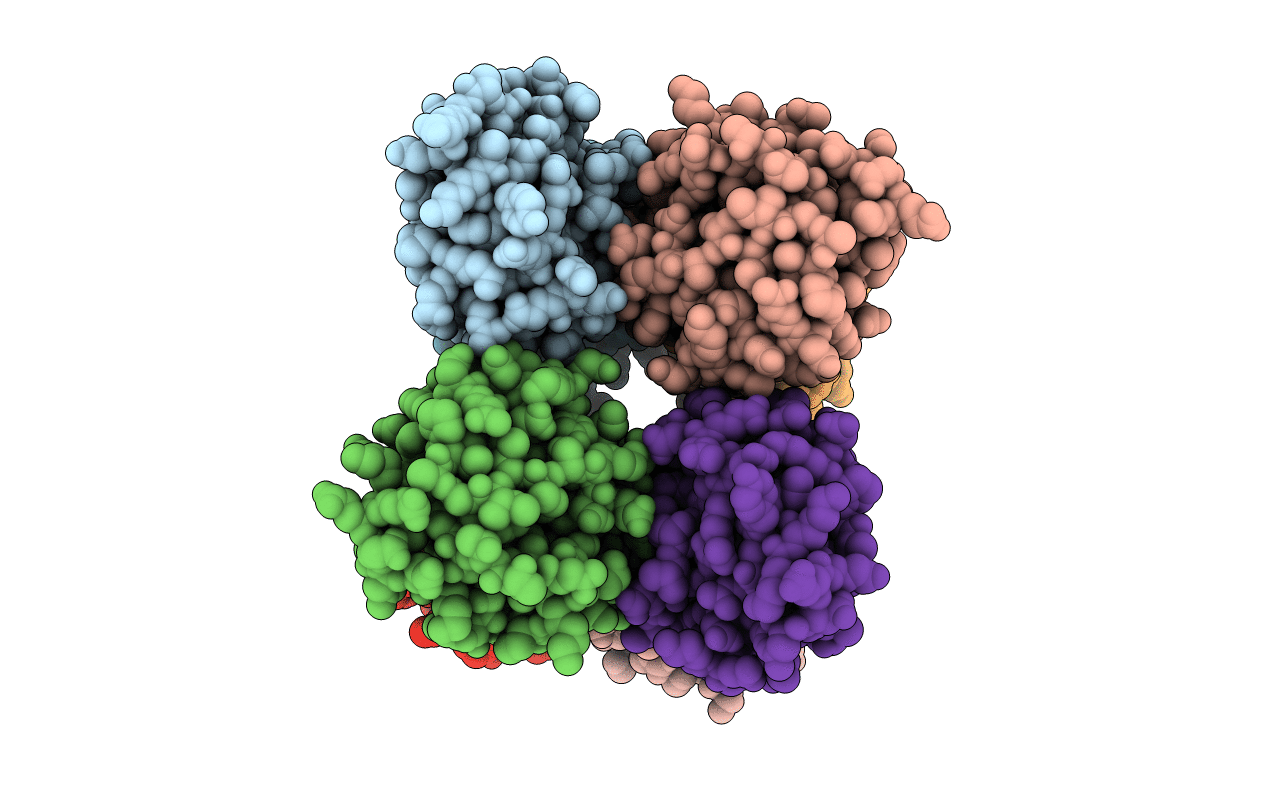
5J7D image
Deposition Date 2016-04-06
Release Date 2016-10-05
Last Version Date 2024-01-10
Entry Detail
PDB ID:
5J7D
Keywords:
Title:
Computationally Designed Thioredoxin dF106
Biological Source:
Source Organism:
Host Organism:
Method Details:
Experimental Method:
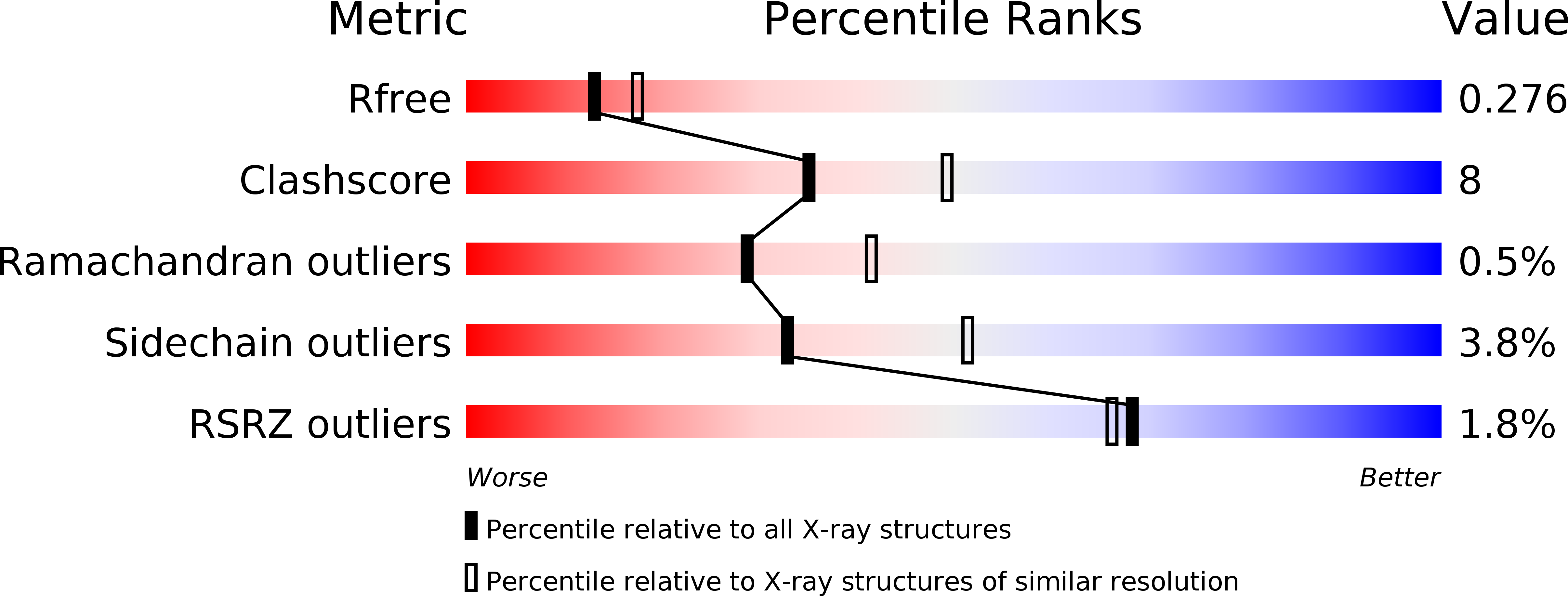
Resolution:
2.40 Å
R-Value Free:
0.27
R-Value Work:
0.20
R-Value Observed:
0.20
Space Group:
P 21 21 21
Macromolecular Entities
Polymer Type:polypeptide(L)
Molecule:Designed Thioredoxin dF106
Chain IDs:A, B, C, D, E, F, G, H
Chain Length:112
Number of Molecules:8
Biological Source:synthetic construct
Ligand Molecules
Primary Citation
Computational Redesign of Thioredoxin Is Hypersensitive toward Minor Conformational Changes in the Backbone Template.
J.Mol.Biol. 428 4361 4377 (2016)
PMID: 27659562 DOI: 10.1016/j.jmb.2016.09.013

Abstact

Despite the development of powerful computational tools, the full-sequence design of proteins still remains a challenging task. To investigate the limits and capabilities of computational tools, we conducted a study of the ability of the program Rosetta to predict sequences that recreate the authentic fold of thioredoxin. Focusing on the influence of conformational details in the template structures, we based our study on 8 experimentally determined template structures and generated 120 designs from each. For experimental evaluation, we chose six sequences from each of the eight templates by objective criteria. The 48 selected sequences were evaluated based on their progressive ability to (1) produce soluble protein in Escherichia coli and (2) yield stable monomeric protein, and (3) on the ability of the stable, soluble proteins to adopt the target fold. Of the 48 designs, we were able to synthesize 32, 20 of which resulted in soluble protein. Of these, only two were sufficiently stable to be purified. An X-ray crystal structure was solved for one of the designs, revealing a close resemblance to the target structure. We found a significant difference among the eight template structures to realize the above three criteria despite their high structural similarity. Thus, in order to improve the success rate of computational full-sequence design methods, we recommend that multiple template structures are used. Furthermore, this study shows that special care should be taken when optimizing the geometry of a structure prior to computational design when using a method that is based on rigid conformations.

Legend

Protein

Chemical

Disease

Primary Citation of related structures
Feedback Form
Name
Email
Institute
Feedback