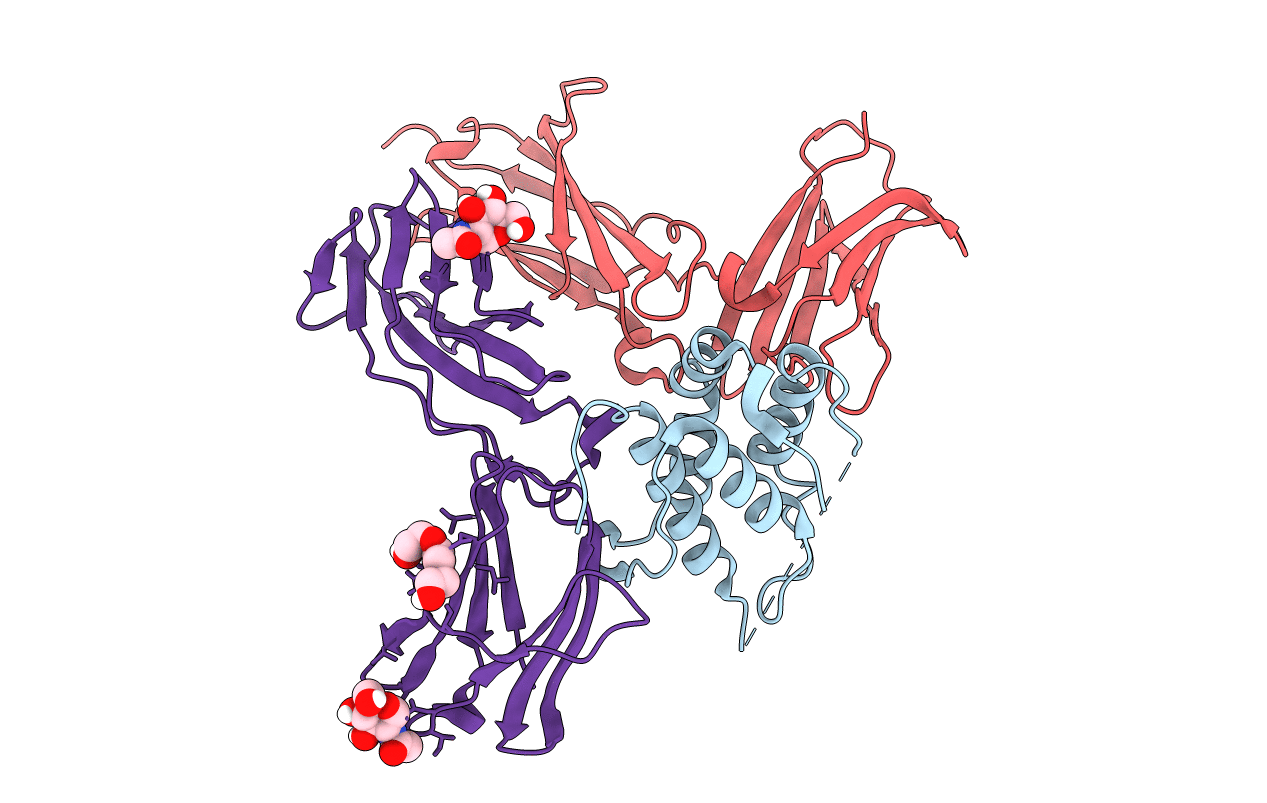
5J11 image
Deposition Date 2016-03-28
Release Date 2017-04-05
Last Version Date 2024-11-20
Entry Detail
PDB ID:
5J11
Title:
Structure of human TSLP in complex with TSLPR and IL-7Ralpha
Biological Source:
Source Organism:
Homo sapiens (Taxon ID: 9606)
Method Details:
Experimental Method:
Resolution:
2.56 Å
R-Value Free:
0.21
R-Value Work:
0.19
R-Value Observed:
0.19
Space Group:
C 1 2 1
Macromolecular Entities
Structures with similar UniProt ID
Protein Blast
Polymer Type:polypeptide(L)
Molecule:Thymic stromal lymphopoietin
Gene (Uniprot):TSLP
Mutagens:Residues 127 to 131 were deleted in the construct used for crystallisation.
Chain IDs:A
Chain Length:147
Number of Molecules:1
Biological Source:Homo sapiens
Structures with similar UniProt ID
Protein Blast
Polymer Type:polypeptide(L)
Molecule:Interleukin-7 receptor subunit alpha
Chain IDs:B
Chain Length:240
Number of Molecules:1
Biological Source:Homo sapiens
Structures with similar UniProt ID
Protein Blast
Polymer Type:polypeptide(L)
Molecule:Cytokine receptor-like factor 2
Gene (Uniprot):CRLF2
Mutagens:N47Q
Chain IDs:C
Chain Length:230
Number of Molecules:1
Biological Source:Homo sapiens
Primary Citation
Structure and antagonism of the receptor complex mediated by human TSLP in allergy and asthma.
Nat Commun 8 14937 14937 (2017)
PMID: 28368013 DOI: 10.1038/ncomms14937

Abstact

The pro-inflammatory cytokine thymic stromal lymphopoietin (TSLP) is pivotal to the pathophysiology of widespread allergic diseases mediated by type 2 helper T cell (Th2) responses, including asthma and atopic dermatitis. The emergence of human TSLP as a clinical target against asthma calls for maximally harnessing its therapeutic potential via structural and mechanistic considerations. Here we employ an integrative experimental approach focusing on productive and antagonized TSLP complexes and free cytokine. We reveal how cognate receptor TSLPR allosterically activates TSLP to potentiate the recruitment of the shared interleukin 7 receptor α-chain (IL-7Rα) by leveraging the flexibility, conformational heterogeneity and electrostatics of the cytokine. We further show that the monoclonal antibody Tezepelumab partly exploits these principles to neutralize TSLP activity. Finally, we introduce a fusion protein comprising a tandem of the TSLPR and IL-7Rα extracellular domains, which harnesses the mechanistic intricacies of the TSLP-driven receptor complex to manifest high antagonistic potency.

Legend

Protein

Chemical

Disease

Primary Citation of related structures
Feedback Form
Name
Email
Institute
Feedback