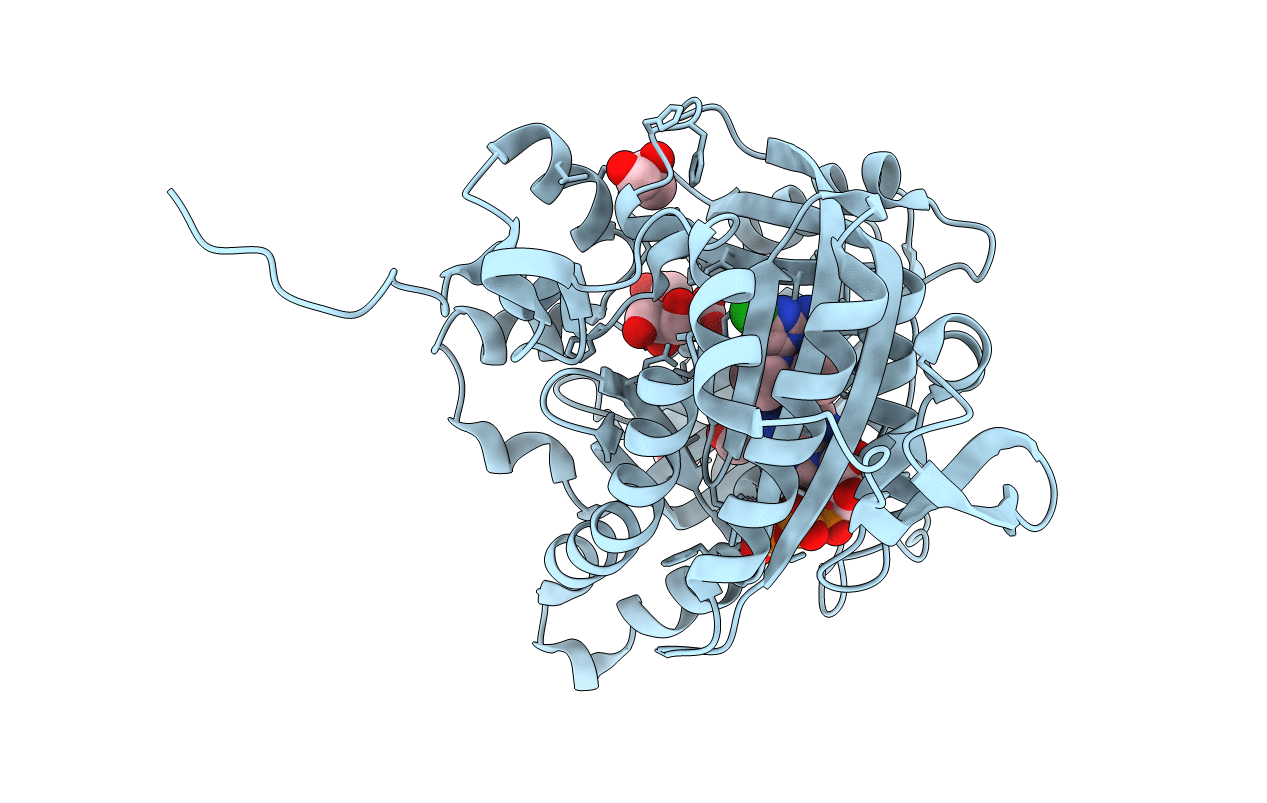
5IV3 image
Deposition Date 2016-03-18
Release Date 2016-08-17
Last Version Date 2024-11-13
Entry Detail
PDB ID:
5IV3
Keywords:
Title:
Crystal structure of human soluble adenylyl cyclase in complex with alpha,beta-methyleneadenosine-5'-triphosphate and the allosteric inhibitor LRE1
Biological Source:
Source Organism:
Homo sapiens (Taxon ID: 9606)
Host Organism:
Method Details:
Experimental Method:
Resolution:
1.86 Å
R-Value Free:
0.22
R-Value Work:
0.17
R-Value Observed:
0.17
Space Group:
P 63

Macromolecular Entities
Structures with similar UniProt ID
Protein Blast
Polymer Type:polypeptide(L)
Molecule:Adenylate cyclase type 10
Gene (Uniprot):ADCY10
Chain IDs:A
Chain Length:475
Number of Molecules:1
Biological Source:Homo sapiens
Modified Residue
Compound ID Chain ID Parent Comp ID Details 2D Image
CME A CYS modified residue
Primary Citation
Discovery of LRE1 as a specific and allosteric inhibitor of soluble adenylyl cyclase.
Nat.Chem.Biol. 12 838 844 (2016)
PMID: 27547922 DOI: 10.1038/nchembio.2151

Abstact

The prototypical second messenger cAMP regulates a wide variety of physiological processes. It can simultaneously mediate diverse functions by acting locally in independently regulated microdomains. In mammalian cells, two types of adenylyl cyclase generate cAMP: G-protein-regulated transmembrane adenylyl cyclases and bicarbonate-, calcium- and ATP-regulated soluble adenylyl cyclase (sAC). Because each type of cyclase regulates distinct microdomains, methods to distinguish between them are needed to understand cAMP signaling. We developed a mass-spectrometry-based adenylyl cyclase assay, which we used to identify a new sAC-specific inhibitor, LRE1. LRE1 bound to the bicarbonate activator binding site and inhibited sAC via a unique allosteric mechanism. LRE1 prevented sAC-dependent processes in cellular and physiological systems, and it will facilitate exploration of the therapeutic potential of sAC inhibition.

Legend

Protein

Chemical

Disease

Primary Citation of related structures
Feedback Form
Name
Email
Institute
Feedback