5ICK image
Deposition Date 2016-02-23
Release Date 2017-03-08
Last Version Date 2024-03-20
Entry Detail
PDB ID:
5ICK
Keywords:
Title:
A unique binding model of FXR LBD with feroline
Biological Source:
Source Organism(s):
Homo sapiens (Taxon ID: 9606)
Expression System(s):
Method Details:
Experimental Method:
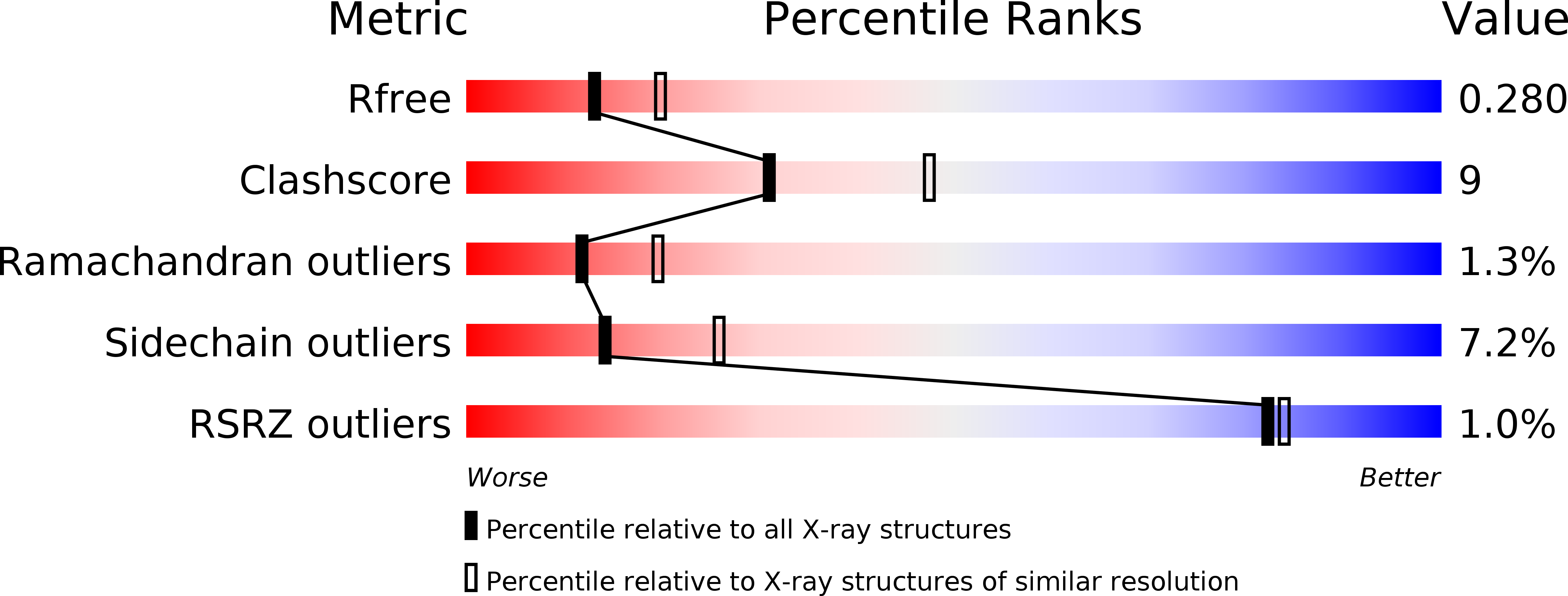
Resolution:
2.47 Å
R-Value Free:
0.27
R-Value Work:
0.21
R-Value Observed:
0.21
Space Group:
P 1 2 1
Macromolecular Entities
Structures with similar UniProt ID
Protein Blast
Polymer Type:polypeptide(L)
Molecule:Bile acid receptor
Gene (Uniprot):NR1H4
Chain IDs:A, B
Chain Length:229
Number of Molecules:2
Biological Source:Homo sapiens
Structures with similar UniProt ID
Protein Blast
Polymer Type:polypeptide(L)
Molecule:Nuclear receptor coactivator 2
Gene (Uniprot):NCOA2
Chain IDs:C, D
Chain Length:11
Number of Molecules:2
Biological Source:Homo sapiens
Ligand Molecules
Primary Citation
A Novel Class of Natural FXR Modulators with a Unique Mode of Selective Co-regulator Assembly
Chembiochem 18 721 725 (2017)
PMID: 28186695 DOI: 10.1002/cbic.201700059

Abstact

The farnesoid X receptor (FXR) is an important target for drug discovery. Small molecules induce a conformational change in FXR that modulates its binding to co-regulators, thus resulting in distinct FXR functional profiles. However, the mechanisms for selectively recruiting co-regulators by FXR remain elusive, partly because of the lack of FXR-selective modulators. We report the identification of two natural terpenoids, tschimgine and feroline, as novel FXR modulators. Remarkably, their crystal structures uncovered a secondary binding pocket important for ligand binding. Further, tschimgine or feroline induced dynamic conformational changes in the activation function 2 (AF-2) surface, thus leading to differential co-regulator recruiting profiles, modulated by both hydrophobic and selective hydrogen-bond interactions unique to specific co-regulators. Our findings thus provide a novel structure template for optimization for FXR-selective modulators of clinical value.

Legend

Protein

Chemical

Disease

Primary Citation of related structures
Feedback Form
Name
Email
Institute
Feedback