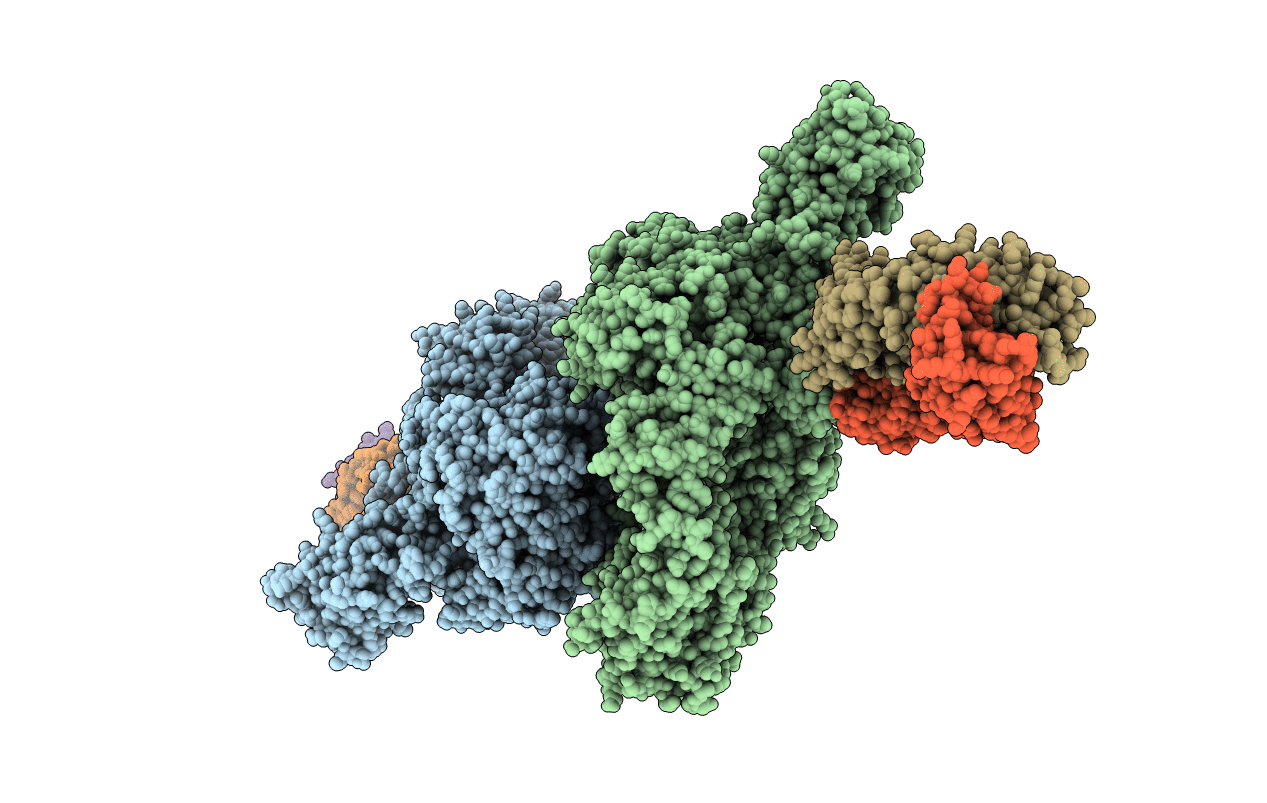
5I5K image
Deposition Date 2016-02-15
Release Date 2016-03-16
Last Version Date 2024-10-09
Entry Detail
PDB ID:
5I5K
Keywords:
Title:
Structure of complement C5 in complex with eculizumab
Biological Source:
Source Organism:
Homo sapiens (Taxon ID: 9606)
Host Organism:
Method Details:
Experimental Method:
Resolution:
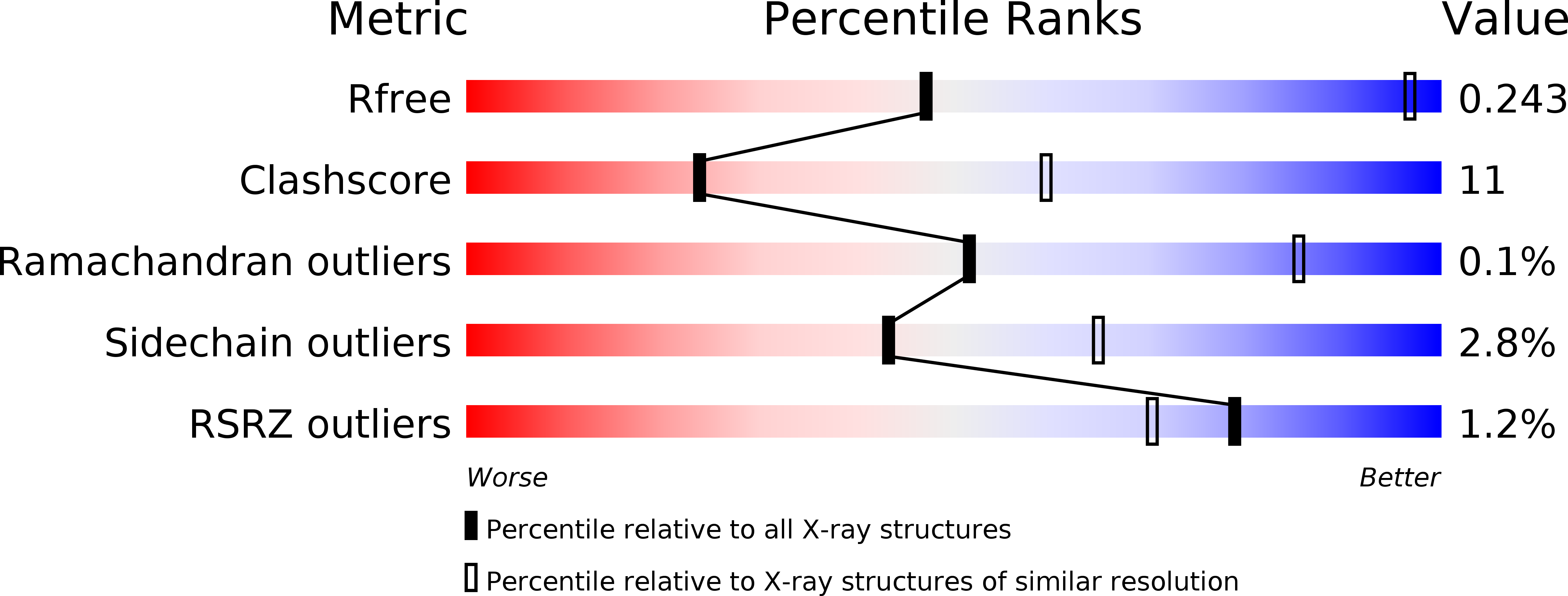
4.20 Å
R-Value Free:
0.24
R-Value Work:
0.20
R-Value Observed:
0.20
Space Group:
C 1 2 1
Macromolecular Entities
Structures with similar UniProt ID
Protein Blast
Polymer Type:polypeptide(L)
Molecule:Complement C5
Gene (Uniprot):C5
Chain IDs:A (auth: B), D (auth: A)
Chain Length:1676
Number of Molecules:2
Biological Source:Homo sapiens
Polymer Type:polypeptide(L)
Molecule:Eculizumab heavy chain (variable domain)
Chain IDs:B (auth: H), E (auth: X)
Chain Length:230
Number of Molecules:2
Biological Source:Homo sapiens
Polymer Type:polypeptide(L)
Molecule:Eculizumab light chain (variable domain)
Chain IDs:C (auth: L), F (auth: Y)
Chain Length:214
Number of Molecules:2
Biological Source:Homo sapiens
Ligand Molecules
Primary Citation
Structural Basis for Eculizumab-Mediated Inhibition of the Complement Terminal Pathway.
J Immunol. 197 337 344 (2016)
PMID: 27194791 DOI: 10.4049/jimmunol.1600280

Abstact

Eculizumab is a humanized mAb approved for treatment of patients with paroxysmal nocturnal hemoglobinuria and atypical hemolytic uremic syndrome. Eculizumab binds complement component C5 and prevents its cleavage by C5 convertases, inhibiting release of both the proinflammatory metabolite C5a and formation of the membrane attack complex via C5b. In this study, we present the crystal structure of the complex between C5 and a Fab fragment with the same sequence as eculizumab at a resolution of 4.2 Å. Five CDRs contact the C5 macroglobulin 7 domain, which contains the entire epitope. A complete mutational scan of the 66 CDR residues identified 28 residues as important for the C5-eculizumab interaction, and the structure of the complex offered an explanation for the reduced C5 binding observed for these mutant Abs. Furthermore, the structural observations of the interaction are supported by the reduced ability of a subset of these mutated Abs to inhibit membrane attack complex formation as tested in a hemolysis assay. Our results suggest that eculizumab functions by sterically preventing C5 from binding to convertases and explain the exquisite selectivity of eculizumab for human C5 and how polymorphisms in C5 cause eculizumab-resistance in a small number of patients with paroxysmal nocturnal hemoglobinuria.

Legend

Protein

Chemical

Disease

Primary Citation of related structures
Feedback Form
Name
Email
Institute
Feedback