5I33 image
Deposition Date 2016-02-09
Release Date 2016-08-24
Last Version Date 2023-09-27
Entry Detail
PDB ID:
5I33
Keywords:
Title:
Unligated adenylosuccinate synthetase from Cryptococcus neoformans
Biological Source:
Method Details:
Experimental Method:
Resolution:
2.20 Å
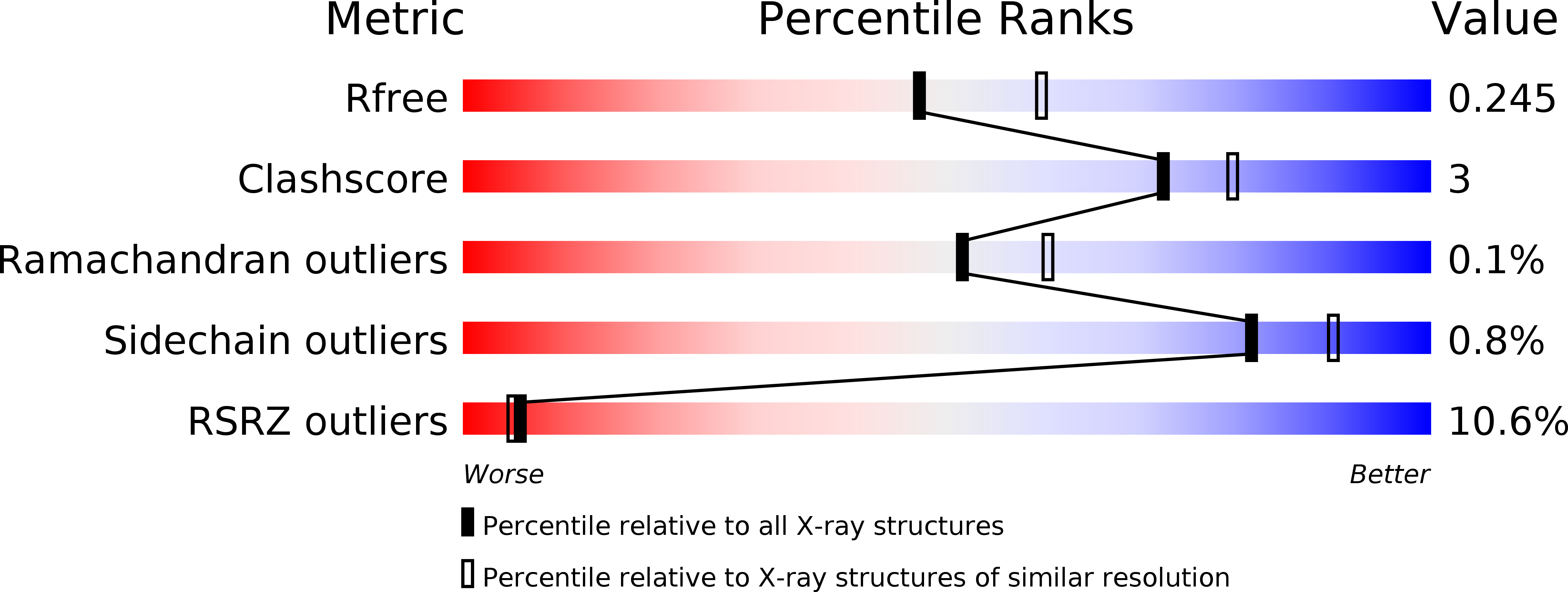
R-Value Free:
0.24
R-Value Work:
0.20
R-Value Observed:
0.20
Space Group:
P 21 21 21
Macromolecular Entities
Structures with similar UniProt ID
Protein Blast
Polymer Type:polypeptide(L)
Molecule:Adenylosuccinate synthetase
Gene (Uniprot):CNAG_02858
Chain IDs:A, B
Chain Length:441
Number of Molecules:2
Biological Source:Cryptococcus neoformans var. grubii serotype A (strain H99 / ATCC 208821 / CBS 10515 / FGSC 9487)
Primary Citation
Disruption of de Novo Adenosine Triphosphate (ATP) Biosynthesis Abolishes Virulence in Cryptococcus neoformans.
Acs Infect Dis. 2 651 663 (2016)
PMID: 27759389 DOI: 10.1021/acsinfecdis.6b00121

Abstact

Opportunistic fungal pathogens such as Cryptococcus neoformans are a growing cause of morbidity and mortality among immunocompromised populations worldwide. To address the current paucity of antifungal therapeutic agents, further research into fungal-specific drug targets is required. Adenylosuccinate synthetase (AdSS) is a crucial enzyme in the adeosine triphosphate (ATP) biosynthetic pathway, catalyzing the formation of adenylosuccinate from inosine monophosphate and aspartate. We have investigated the potential of this enzyme as an antifungal drug target, finding that loss of function results in adenine auxotrophy in C. neoformans, as well as complete loss of virulence in a murine model. Cryptococcal AdSS was expressed and purified in Escherichia coli and the enzyme's crystal structure determined, the first example of a structure of this enzyme from fungi. Together with enzyme kinetic studies, this structural information enabled comparison of the fungal enzyme with the human orthologue and revealed species-specific differences potentially exploitable via rational drug design. These results validate AdSS as a promising antifungal drug target and lay a foundation for future in silico and in vitro screens for novel antifungal compounds.

Legend

Protein

Chemical

Disease

Primary Citation of related structures
Feedback Form
Name
Email
Institute
Feedback