5HO4 image
Deposition Date 2016-01-19
Release Date 2017-02-08
Last Version Date 2024-03-20
Entry Detail
PDB ID:
5HO4
Title:
Crystal structure of hnRNPA2B1 in complex with 10-mer RNA
Biological Source:
Source Organism:
Method Details:
Experimental Method:
Resolution:
1.85 Å
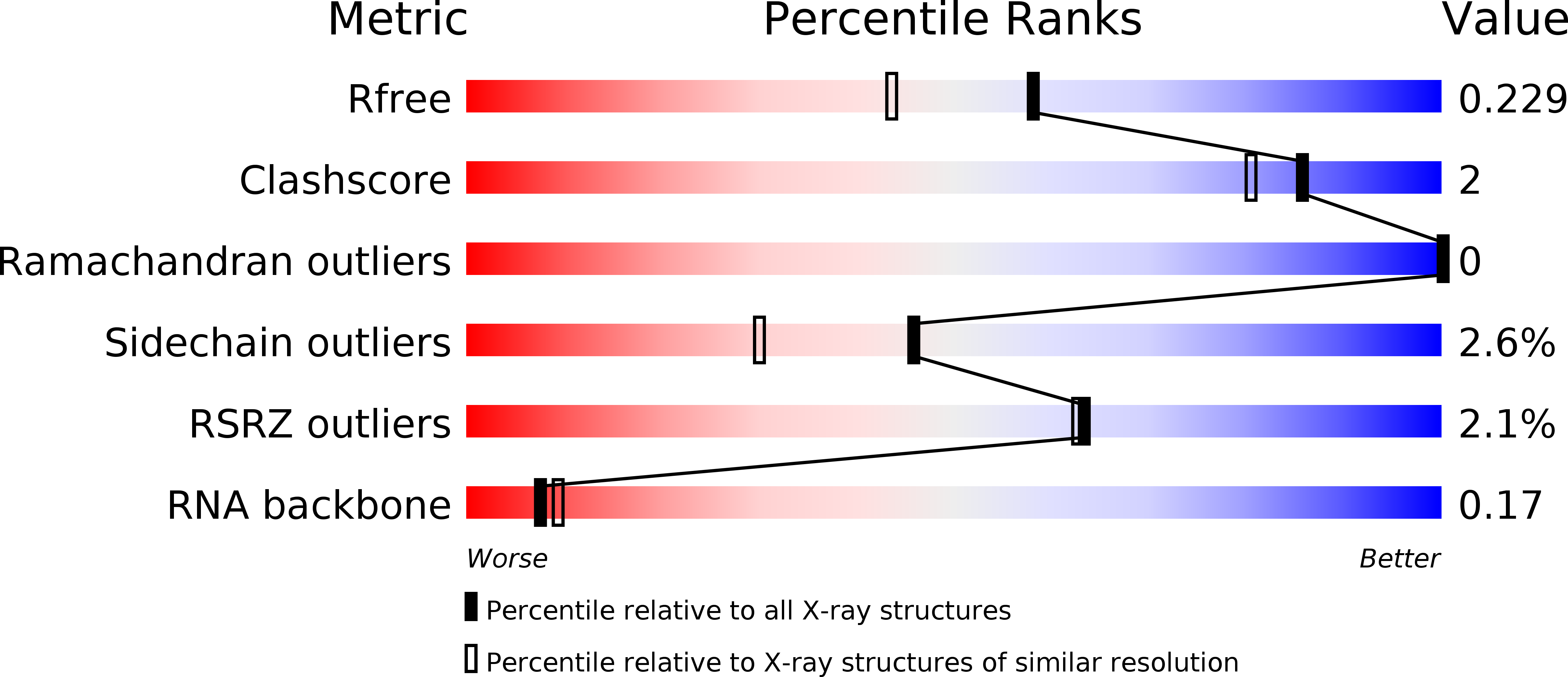
R-Value Free:
0.22
R-Value Work:
0.18
R-Value Observed:
0.18
Space Group:
C 1 2 1
Macromolecular Entities
Structures with similar UniProt ID
Protein Blast
Polymer Type:polypeptide(L)
Molecule:Heterogeneous nuclear ribonucleoproteins A2/B1
Gene (Uniprot):HNRNPA2B1
Chain IDs:A
Chain Length:179
Number of Molecules:1
Biological Source:Homo sapiens
Polymer Type:polyribonucleotide
Molecule:RNA (5'-R(*AP*AP*GP*GP*AP*CP*UP*AP*GP*C)-3')
Chain IDs:B
Chain Length:10
Number of Molecules:1
Biological Source:synthetic construct
Primary Citation
Molecular basis for the specific and multivariant recognitions of RNA substrates by human hnRNP A2/B1.
Nat Commun 9 420 420 (2018)
PMID: 29379020 DOI: 10.1038/s41467-017-02770-z

Abstact

Human hnRNP A2/B1 is an RNA-binding protein that plays important roles in many biological processes, including maturation, transport, and metabolism of mRNA, and gene regulation of long noncoding RNAs. hnRNP A2/B1 was reported to control the microRNAs sorting to exosomes and promote primary microRNA processing as a potential m6A "reader." hnRNP A2/B1 contains two RNA recognition motifs that provide sequence-specific recognition of RNA substrates. Here, we determine crystal structures of tandem RRM domains of hnRNP A2/B1 in complex with various RNA substrates, elucidating specific recognitions of AGG and UAG motifs by RRM1 and RRM2 domains, respectively. Further structural and biochemical results demonstrate multivariant binding modes for sequence-diversified RNA substrates, supporting a RNA matchmaker mechanism in hnRNP A2/B1 function. Moreover, our studies in combination with bioinformatic analysis suggest that hnRNP A2/B1 may mediate effects of m6A through a "m6A switch" mechanism, instead of acting as a direct "reader" of m6A modification.

Legend

Protein

Chemical

Disease

Primary Citation of related structures
Feedback Form
Name
Email
Institute
Feedback