5H5W image
Deposition Date 2016-11-09
Release Date 2017-02-22
Last Version Date 2023-11-08
Entry Detail
PDB ID:
5H5W
Title:
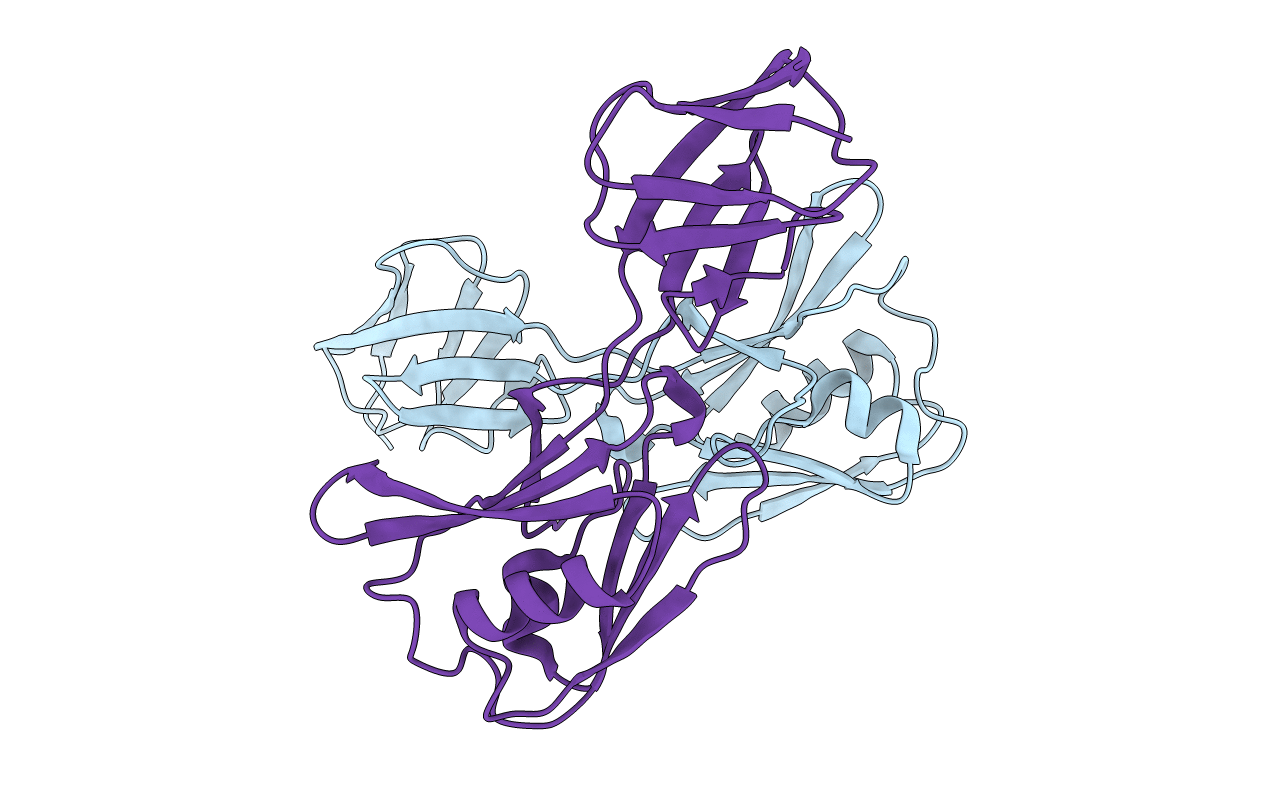
Crystal structure of the flagellar cap protein FliD D2-D3 domains from Escherichia coli
Biological Source:
Source Organism:
Escherichia coli (Taxon ID: 562)
Method Details:
Experimental Method:
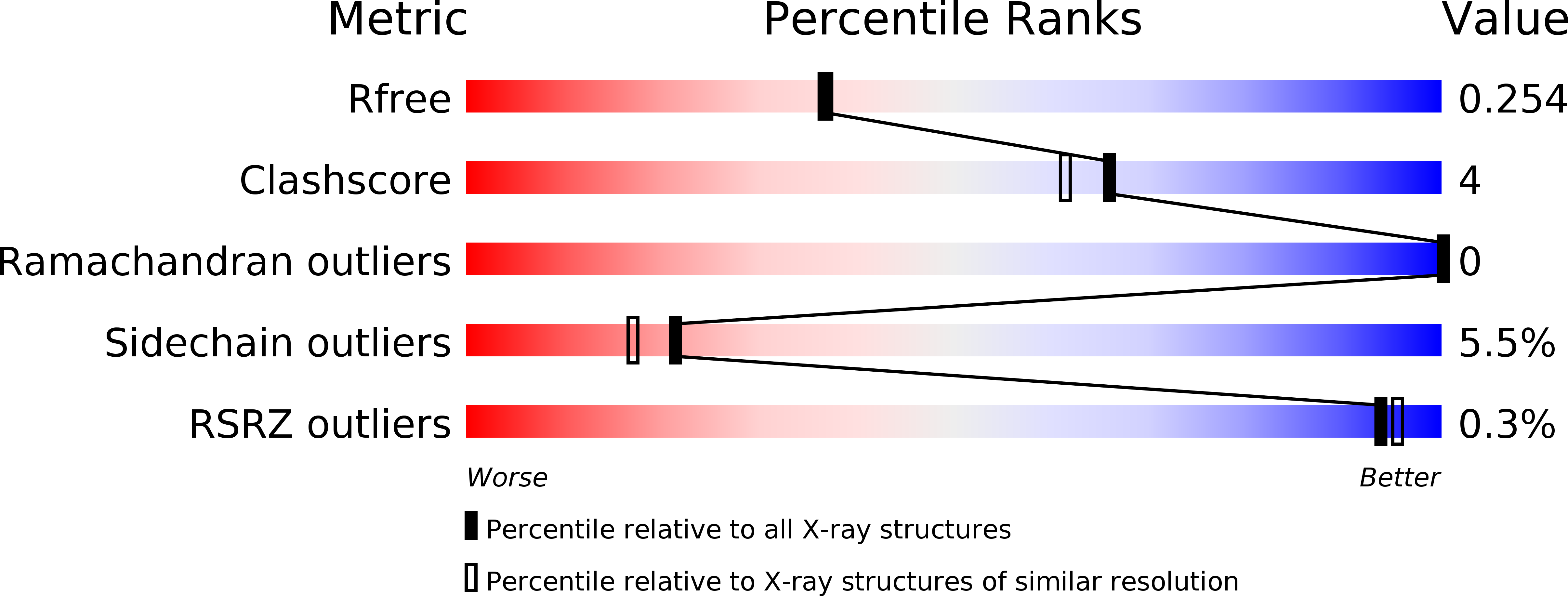
Resolution:
2.15 Å
R-Value Free:
0.25
R-Value Work:
0.21
R-Value Observed:
0.21
Space Group:
P 6
Macromolecular Entities
Structures with similar UniProt ID
Protein Blast
Polymer Type:polypeptide(L)
Molecule:Flagellar hook-associated protein 2
Chain IDs:A, B
Chain Length:203
Number of Molecules:2
Biological Source:Escherichia coli
Primary Citation
Self-Oligomerizing Structure of the Flagellar Cap Protein FliD and Its Implication in Filament Assembly.
J. Mol. Biol. 429 847 857 (2017)
PMID: 28179186 DOI: 10.1016/j.jmb.2017.02.001

Abstact

FliD is a self-oligomerizing structural protein that caps the growing end of the bacterial flagellar filament. FliD also plays a key role in the flagellar system by continuously adding a new flagellin protein to the tip of the filament. To structurally characterize FliD oligomerization and to provide a FliD-mediated flagellin polymerization mechanism, we have determined the crystal structures of FliD proteins from Escherichia coli and Salmonella enterica serovar Typhimurium (ecFliD and stFliD, respectively). ecFliD consists of three domains (D1, D2, and D3) and forms a hexamer plate of the D2 and D3 domains that resembles a six-pointed star with legs consisting of the D1 domain. In contrast, the D2 and D3 domains of stFliD assemble into a pentamer as a five-pointed star plate. Despite their distinct oligomeric states, ecFliD and stFliD engage a common molecular surface for oligomerization. FliD also features interdomain and intersubunit flexibility, suggesting that FliD reorganizes its domains and adjacent subunits depending on the FliD binding partner. The similarity of the FliD shape to flagellin and the structural dynamics of FliD led us to propose a FliD-catalyzed filament elongation mechanism. In this model, FliD occupies a position in place of a nascent flagellin until the flagellin reaches the growing end of the filament, and then, FliD moves aside to repeat the positional replacement.

Legend

Protein

Chemical

Disease

Primary Citation of related structures
Feedback Form
Name
Email
Institute
Feedback