5H4U image
Deposition Date 2016-11-02
Release Date 2017-03-22
Last Version Date 2024-10-16
Entry Detail
PDB ID:
5H4U
Keywords:
Title:
Crystal structure of cellulase from Antarctic springtail, Cryptopygus antarcticus
Biological Source:
Source Organism:
Host Organism:
Method Details:
Experimental Method:
Resolution:
2.60 Å
R-Value Free:
0.28
R-Value Work:
0.21
R-Value Observed:
0.22
Space Group:
P 31
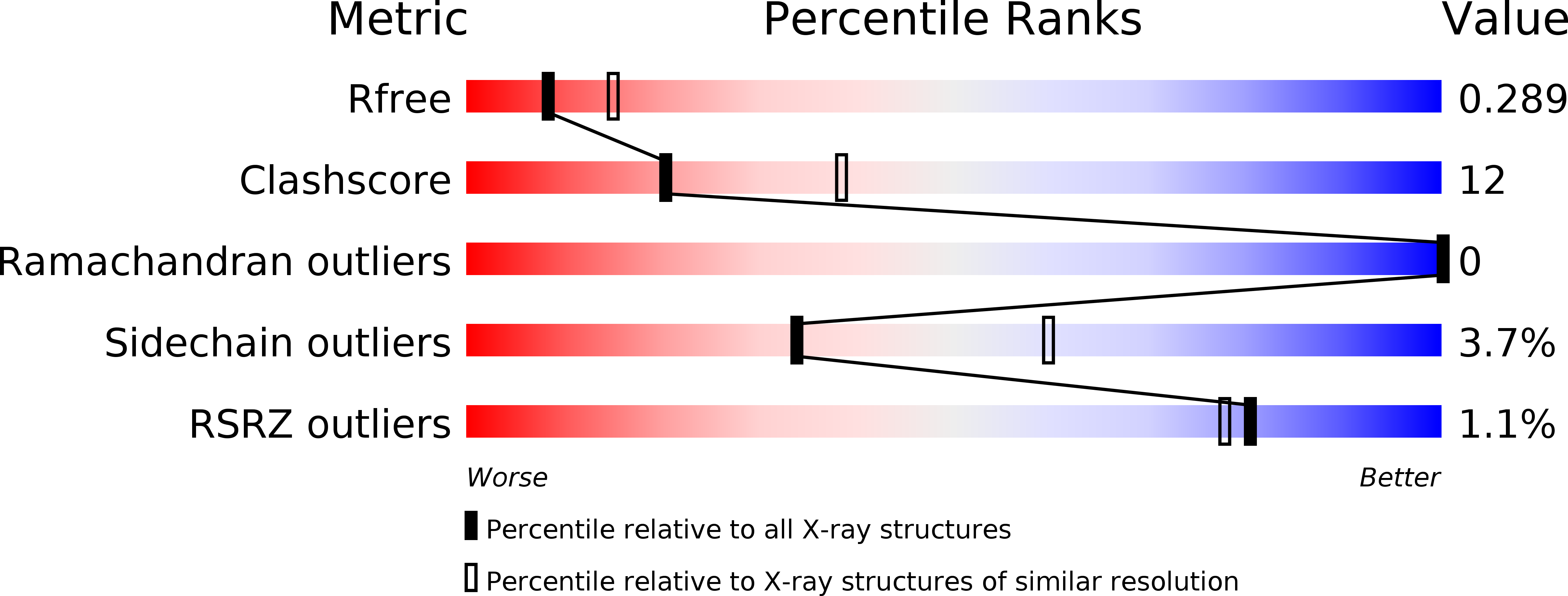
Macromolecular Entities
Structures with similar UniProt ID
Protein Blast
Polymer Type:polypeptide(L)
Molecule:Endo-beta-1,4-glucanase
Chain IDs:A, B, C
Chain Length:231
Number of Molecules:3
Biological Source:Cryptopygus antarcticus
Primary Citation
Genetic and Structural Characterization of a Thermo-Tolerant, Cold-Active, and Acidic Endo-beta-1,4-glucanase from Antarctic Springtail, Cryptopygus antarcticus.
J. Agric. Food Chem. 65 1630 1640 (2017)
PMID: 28156112 DOI: 10.1021/acs.jafc.6b05037

Abstact

The CaCel gene from Antarctic springtail Cryptopygus antarcticus codes for a cellulase belonging to the glycosyl hydrolase family 45 (GHF45). Phylogenetic, biochemical, and structural analyses revealed that the CaCel gene product (CaCel) is closely related to fungal GHF45 endo-β-1,4-glucanases. The organization of five introns within the open reading frame of the CaCel gene indicates its endogenous origin in the genome of the species, which suggests the horizontal transfer of the gene from fungi to the springtail. CaCel exhibited optimal activity at pH 3.5, retained 80% of its activity at 0-10 °C, and maintained a half-life of 4 h at 70 °C. Based on the structural comparison between CaCel and a fungal homologue, we deduced the structural basis for the unusual characteristics of CaCel. Under acidic conditions at 50 °C, CaCel was effective to digest the green algae (Ulva pertusa), suggesting that it could be exploited for biofuel production from seaweeds.

Legend

Protein

Chemical

Disease

Primary Citation of related structures
Feedback Form
Name
Email
Institute
Feedback