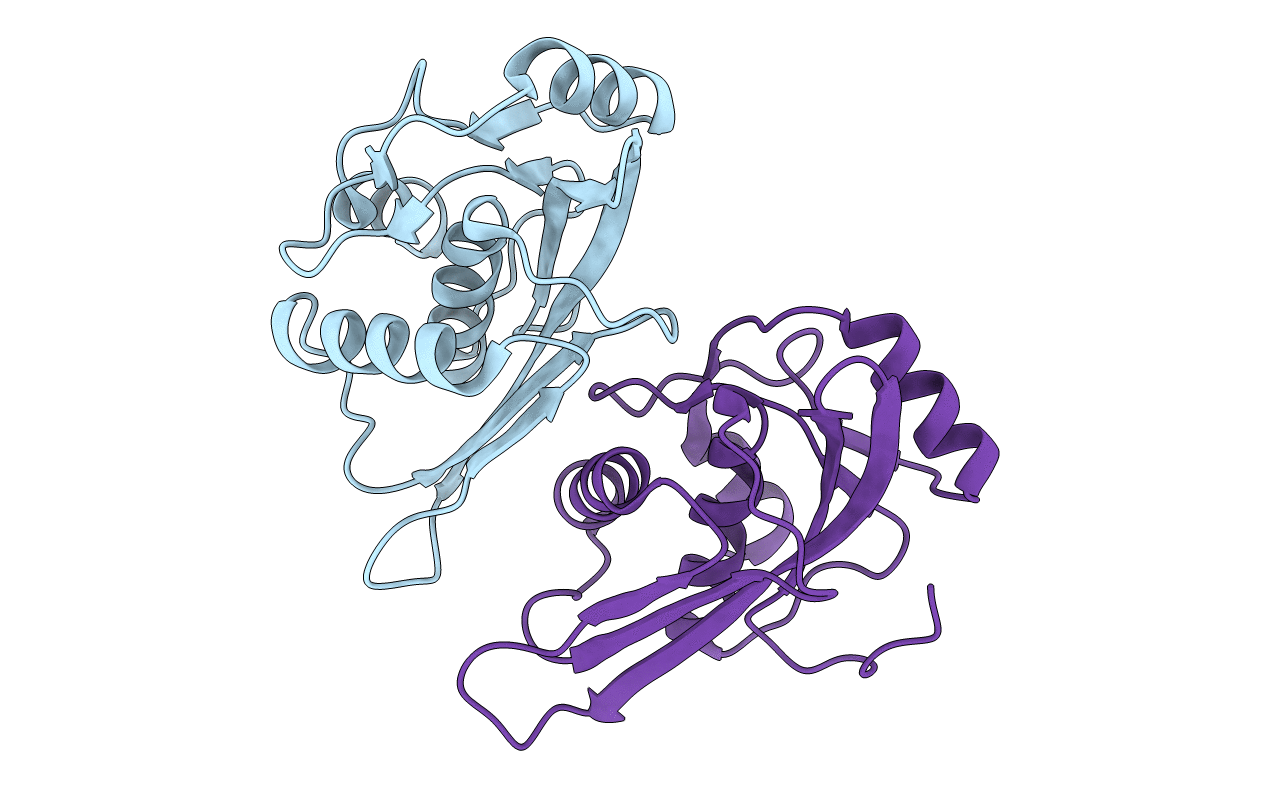
5H45 image
Deposition Date 2016-10-30
Release Date 2017-05-03
Last Version Date 2024-03-20
Entry Detail
PDB ID:
5H45
Title:
Crystal structure of the C-terminal Lon protease-like domain of Thermus thermophilus RadA/Sms
Biological Source:
Method Details:
Experimental Method:
Resolution:
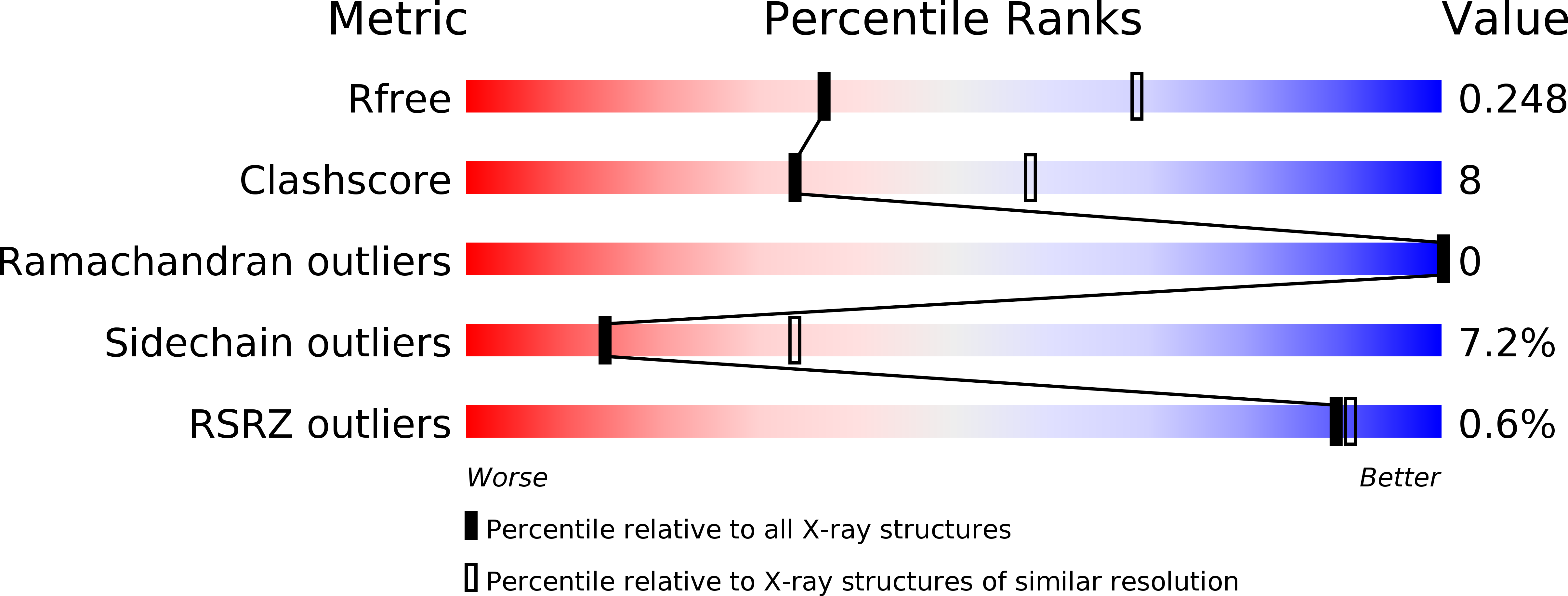
2.70 Å
R-Value Free:
0.24
R-Value Work:
0.19
R-Value Observed:
0.19
Space Group:
P 43 3 2
Macromolecular Entities
Structures with similar UniProt ID
Protein Blast
Polymer Type:polypeptide(L)
Molecule:DNA repair protein RadA
Gene (Uniprot):radA
Chain IDs:A, B
Chain Length:184
Number of Molecules:2
Biological Source:Thermus thermophilus (strain HB8 / ATCC 27634 / DSM 579)
Primary Citation
The Lon protease-like domain in the bacterial RecA paralog RadA is required for DNA binding and repair.
J. Biol. Chem. 292 9801 9814 (2017)
PMID: 28432121 DOI: 10.1074/jbc.M116.770180

Abstact

Homologous recombination (HR) plays an essential role in the maintenance of genome integrity. RecA/Rad51 paralogs have been recognized as an important factor of HR. Among them, only one bacterial RecA/Rad51 paralog, RadA, is involved in HR as an accessory factor of RecA recombinase. RadA has a unique Lon protease-like domain (LonC) at its C terminus, in addition to a RecA-like ATPase domain. Unlike Lon protease, RadA's LonC domain does not show protease activity but is still essential for RadA-mediated DNA repair. Reconciling these two facts has been difficult because RadA's tertiary structure and molecular function are unknown. Here, we describe the hexameric ring structure of RadA's LonC domain, as determined by X-ray crystallography. The structure revealed the two positively charged regions unique to the LonC domain of RadA are located at the intersubunit cleft and the central hole of a hexameric ring. Surprisingly, a functional domain analysis demonstrated the LonC domain of RadA binds DNA, with site-directed mutagenesis showing that the two positively charged regions are critical for this DNA-binding activity. Interestingly, only the intersubunit cleft was required for the DNA-dependent stimulation of ATPase activity of RadA, and at least the central hole was essential for DNA repair function. Our data provide the structural and functional features of the LonC domain and their function in RadA-mediated DNA repair.

Legend

Protein

Chemical

Disease

Primary Citation of related structures
Feedback Form
Name
Email
Institute
Feedback