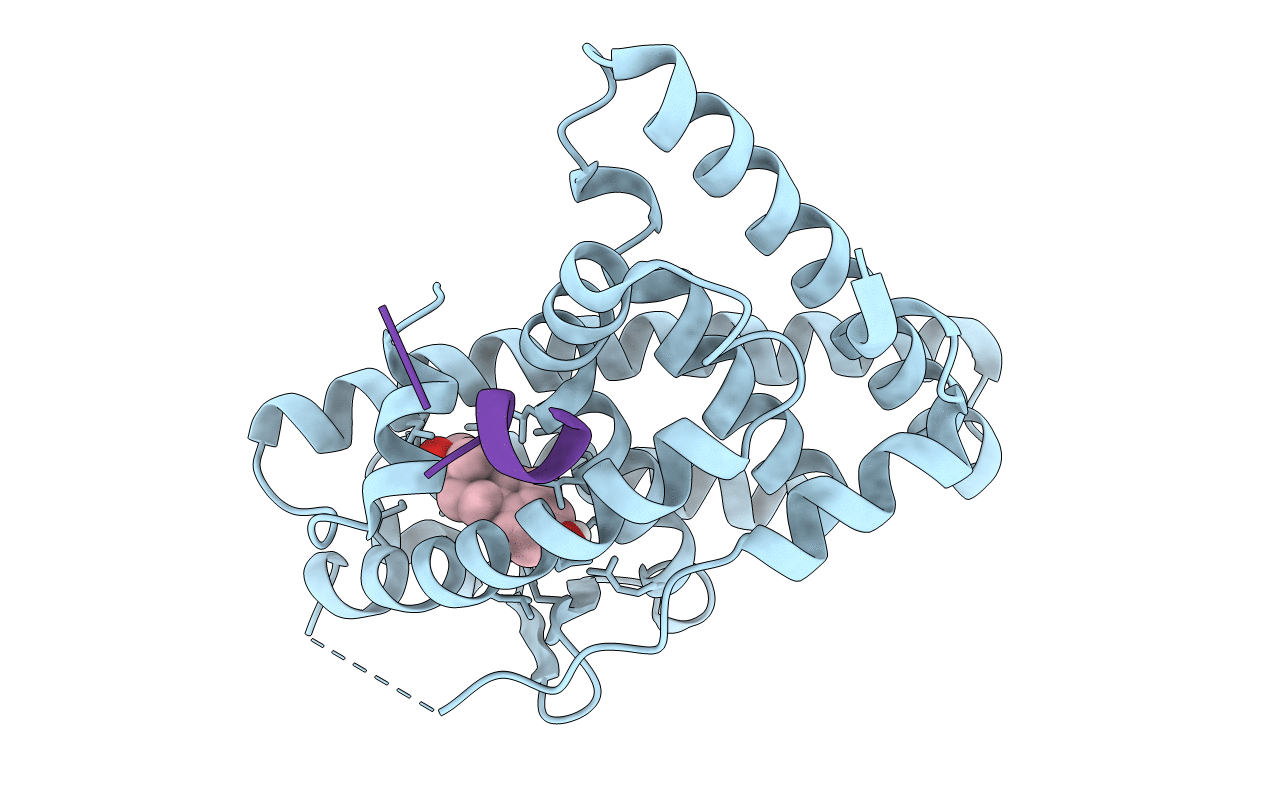
5GTR image
Deposition Date 2016-08-23
Release Date 2017-08-30
Last Version Date 2025-04-09
Entry Detail
PDB ID:
5GTR
Keywords:
Title:
estrogen receptor alpha in complex with a stabilized peptide antagonist 6
Biological Source:
Source Organism:
Homo sapiens (Taxon ID: 9606)
unidentified (Taxon ID: 32644)
Host Organism:
Method Details:
Experimental Method:
Resolution:
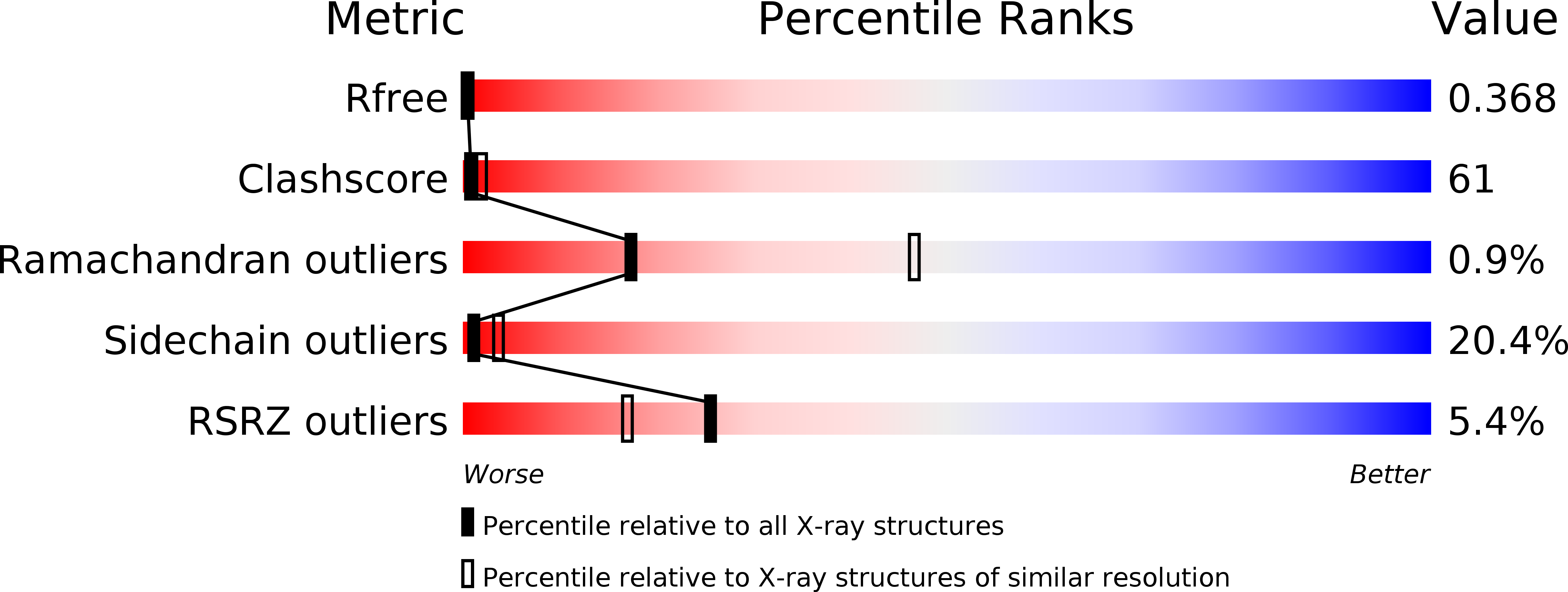
2.80 Å
R-Value Free:
0.36
R-Value Work:
0.22
R-Value Observed:
0.22
Space Group:
P 2 21 21
Macromolecular Entities
Structures with similar UniProt ID
Protein Blast
Polymer Type:polypeptide(L)
Molecule:Estrogen receptor
Gene (Uniprot):ESR1
Chain IDs:A
Chain Length:243
Number of Molecules:1
Biological Source:Homo sapiens
Polymer Type:polypeptide(L)
Molecule:ARG-IAS-ILE-0JY-DPP-ARG-0JY-0JY-GLN-NH2
Chain IDs:B (auth: C)
Chain Length:10
Number of Molecules:1
Biological Source:unidentified
Ligand Molecules
Primary Citation
Structural Basis of Inhibition of ER alpha-Coactivator Interaction by High-Affinity N-Terminus Isoaspartic Acid Tethered Helical Peptides
J. Med. Chem. 60 8731 8740 (2017)
PMID: 29045135 DOI: 10.1021/acs.jmedchem.7b00732

Abstact

Direct inhibition of the protein-protein interaction of ERα and its endogenous coactivators with a cell permeable stabilized peptide may offer a novel, promising strategy for combating ERα positive breast cancers. Here, we report the co-crystal structure of a helical peptide stabilized by a N-terminal unnatural cross-linked aspartic acid (TD) in complex with the ERα ligand binding domain (LBD). We designed a series of peptides and peptide 6 that showed direct and high-affinity binding to ERα with selective antiproliferative activity in ERα positive breast cancer cells. The co-crystal structure of the TD-stabilized peptide 6 in complex with ERα LBD further demonstrates that it forms an α helical conformation and directly binds at the coactivator binding site of ERα. Further studies showed that peptide 6W could potently inhibit cellular ERα's transcriptional activity. This approach demonstrates the potential of TD stabilized peptides to modulate various intracellular protein-protein interactions involved in a range of disorders.

Legend

Protein

Chemical

Disease

Primary Citation of related structures
Feedback Form
Name
Email
Institute
Feedback