5GNK image
Deposition Date 2016-07-21
Release Date 2017-04-05
Last Version Date 2024-10-23
Entry Detail
PDB ID:
5GNK
Keywords:
Title:
Crystal structure of EGFR 696-988 T790M in complex with LXX-6-34
Biological Source:
Source Organism:
Homo sapiens (Taxon ID: 9606)
Host Organism:
Method Details:
Experimental Method:
Resolution:
1.80 Å
R-Value Free:
0.17
R-Value Work:
0.16
R-Value Observed:
0.16
Space Group:
P 42 21 2
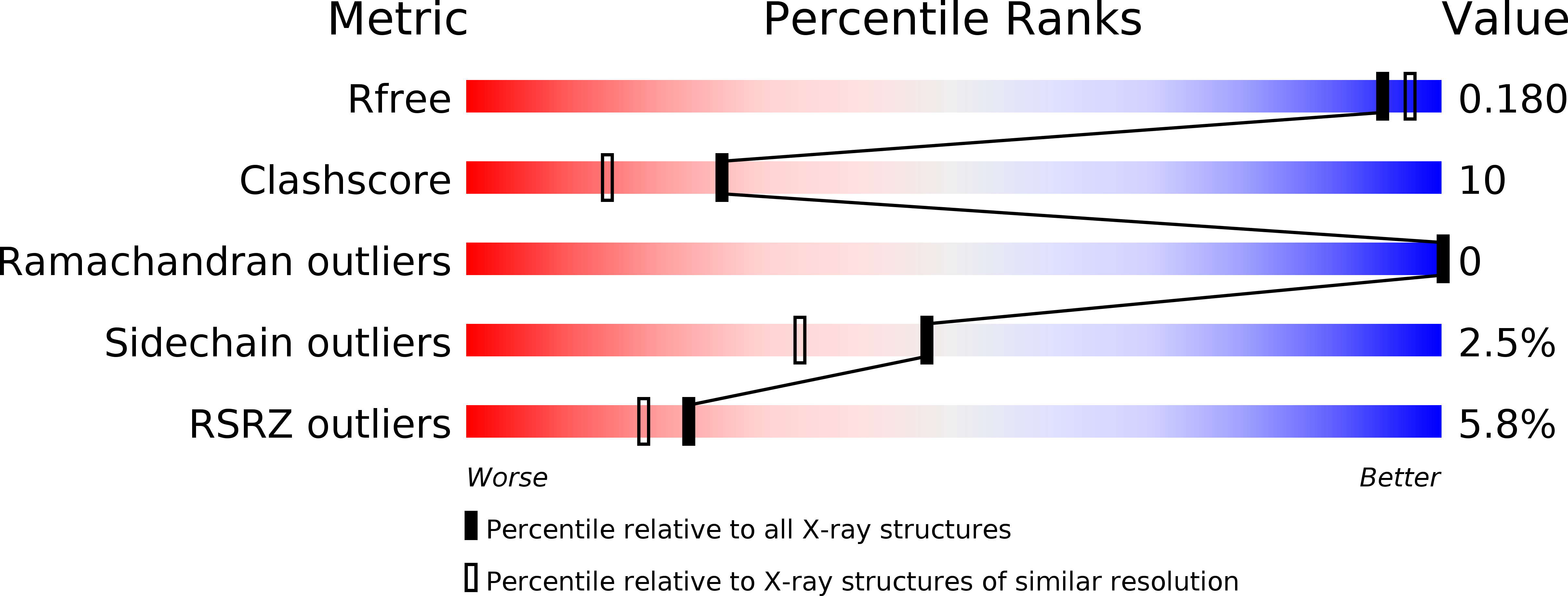
Macromolecular Entities
Structures with similar UniProt ID
Protein Blast
Polymer Type:polypeptide(L)
Molecule:Epidermal growth factor receptor
Gene (Uniprot):EGFR
Mutagens:T790M
Chain IDs:A
Chain Length:297
Number of Molecules:1
Biological Source:Homo sapiens
Primary Citation
Discovery of (R)-1-(3-(4-Amino-3-(3-chloro-4-(pyridin-2-ylmethoxy)phenyl)-1H-pyrazolo[3,4-d]pyrimidin-1-yl)piperidin-1-yl)prop-2-en-1-one (CHMFL-EGFR-202) as a Novel Irreversible EGFR Mutant Kinase Inhibitor with a Distinct Binding Mode.
J. Med. Chem. 60 2944 2962 (2017)
PMID: 28282122 DOI: 10.1021/acs.jmedchem.6b01907

Abstact

On the basis of Ibrutinib's core pharmacophore, which was moderately active to EGFR T790M mutant, we discovered novel epidermal growth factor receptor (EGFR) inhibitor compound 19 (CHMFL-EGFR-202), which potently inhibited EGFR primary mutants (L858R, del19) and drug-resistant mutant L858R/T790M. Compound 19 displayed a good selectivity profile among 468 kinases/mutants tested in the KINOMEscan assay (S score (1) = 0.02). In particular, it did not exhibit apparent activities against INSR and IGF1R kinases. The X-ray crystal structure revealed that this class of inhibitors formed a covalent bond with Cys797 in a distinct "DFG-in-C-helix-out" inactive EGFR conformation. Compound 19 displayed strong antiproliferative effects against EGFR mutant-driven nonsmall cell lung cancer (NSCLC) cell lines such as H1975, PC9, HCC827, and H3255 but not the wild-type EGFR expressing cells. In the H1975 and PC9 cell-inoculated xenograft mouse models, compound 19 exhibited dose-dependent tumor growth suppression efficacy without obvious toxicity. Compound 19 might be a potential drug candidate for EGFR mutant-driven NSCLC.

Legend

Protein

Chemical

Disease

Primary Citation of related structures
Feedback Form
Name
Email
Institute
Feedback