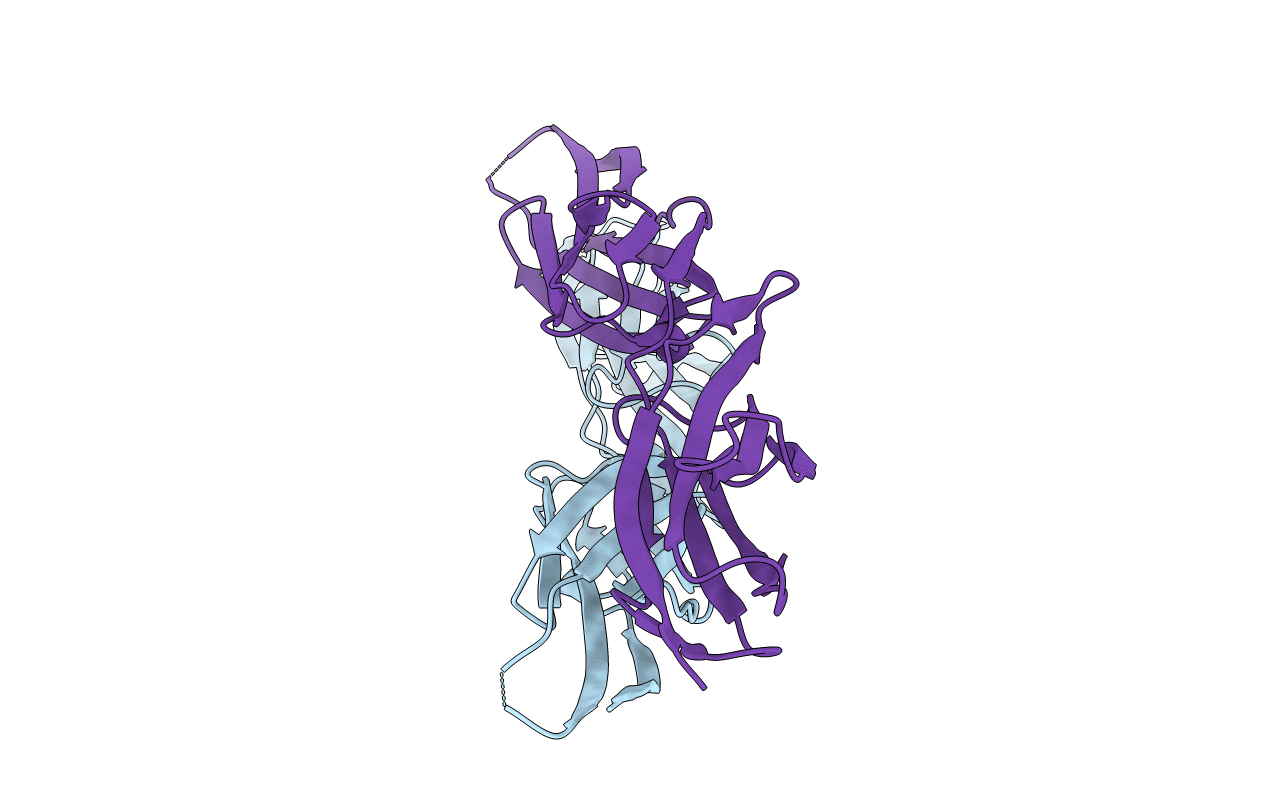
5GNI image
Deposition Date 2016-07-21
Release Date 2016-12-21
Last Version Date 2024-11-13
Entry Detail
PDB ID:
5GNI
Keywords:
Title:
The crystal structure of PECAM-1 IgL1-2 trans-homophilic dimer
Biological Source:
Source Organism:
Homo sapiens (Taxon ID: 9606)
Host Organism:
Method Details:
Experimental Method:
Resolution:
3.01 Å
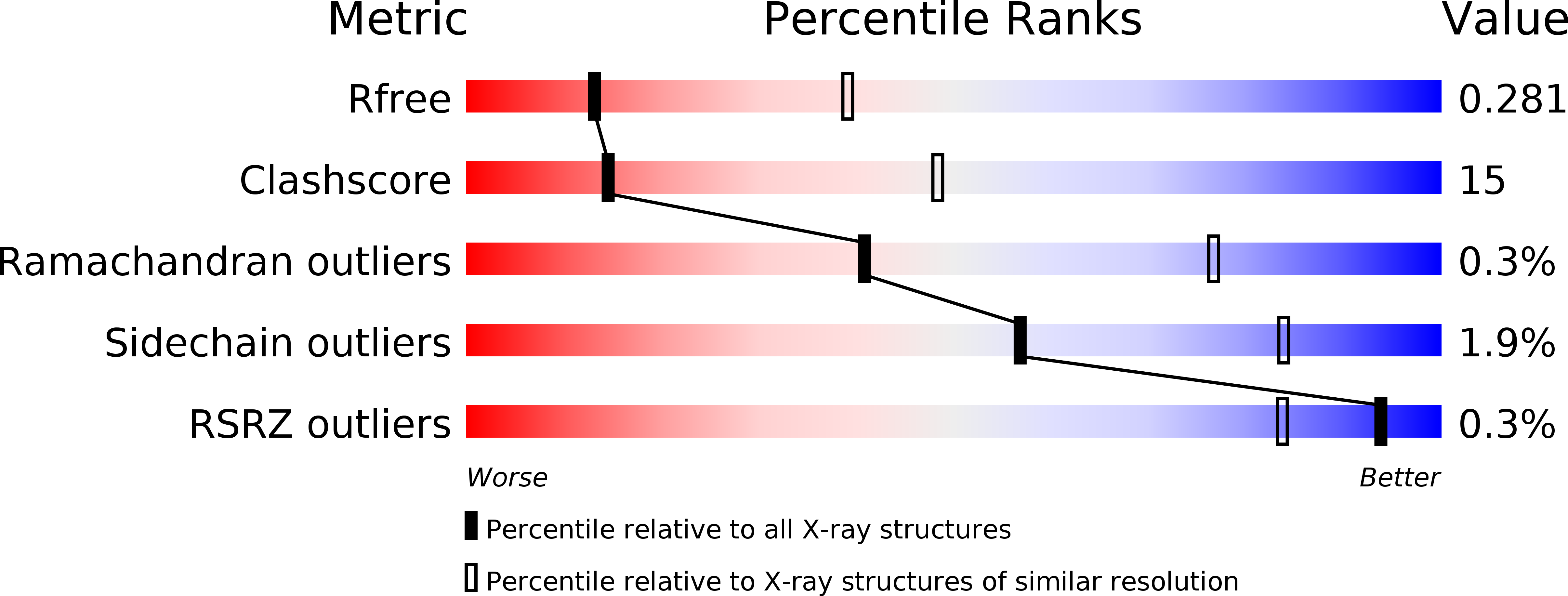
R-Value Free:
0.28
R-Value Work:
0.22
R-Value Observed:
0.22
Space Group:
I 2 2 2
Macromolecular Entities
Structures with similar UniProt ID
Protein Blast
Polymer Type:polypeptide(L)
Molecule:Platelet endothelial cell adhesion molecule
Gene (Uniprot):PECAM1
Mutagens:N52Q, N84Q, N151Q
Chain IDs:A, B
Chain Length:213
Number of Molecules:2
Biological Source:Homo sapiens
Ligand Molecules
Primary Citation
Structural Basis for Human PECAM-1-Mediated Trans-homophilic Cell Adhesion
Sci Rep 6 38655 38655 (2016)
PMID: 27958302 DOI: 10.1038/srep38655

Abstact

Cell adhesion involved in signal transduction, tissue integrity and pathogen infection is mainly mediated by cell adhesion molecules (CAM). One CAM member, platelet-endothelial-cell adhesion molecule-1 (PECAM-1), plays an important role in tight junction among endothelia cells, leukocyte trafficking, and immune response through its homophilic and heterophilic binding patterns. Both kinds of interactions, which lead to endogenous and exogenous signal transmission, are derived from extracellular immunoglobulin-like (IgL) domains and cytoplasmic immunoreceptor tyrosine-based inhibitory motifs (ITIMs) of PECAM-1. To date, the mechanism of trans-homophilic interaction of PECAM-1 remains unclear. Here, we present the crystal structure of PECAM-1 IgL1-2 trans-homo dimer. Both IgL 1 and 2 adopt the classical Ig domain conformation comprised of two layers of β-sheets possessing antiparallel β-strands with each being anchored by a pair of cysteines forming a disulfide bond. The dimer interface includes hydrophobic and hydrophilic interactions. The Small-Angle X-ray Scattering (SAXS) envelope of PECAM-1 IgL1-6 supported such a dimer formation in solution. Cell adhesion assays on wildtype and mutant PECAM-1 further characterized the structural determinants in cell junction and communication.

Legend

Protein

Chemical

Disease

Primary Citation of related structures
Feedback Form
Name
Email
Institute
Feedback