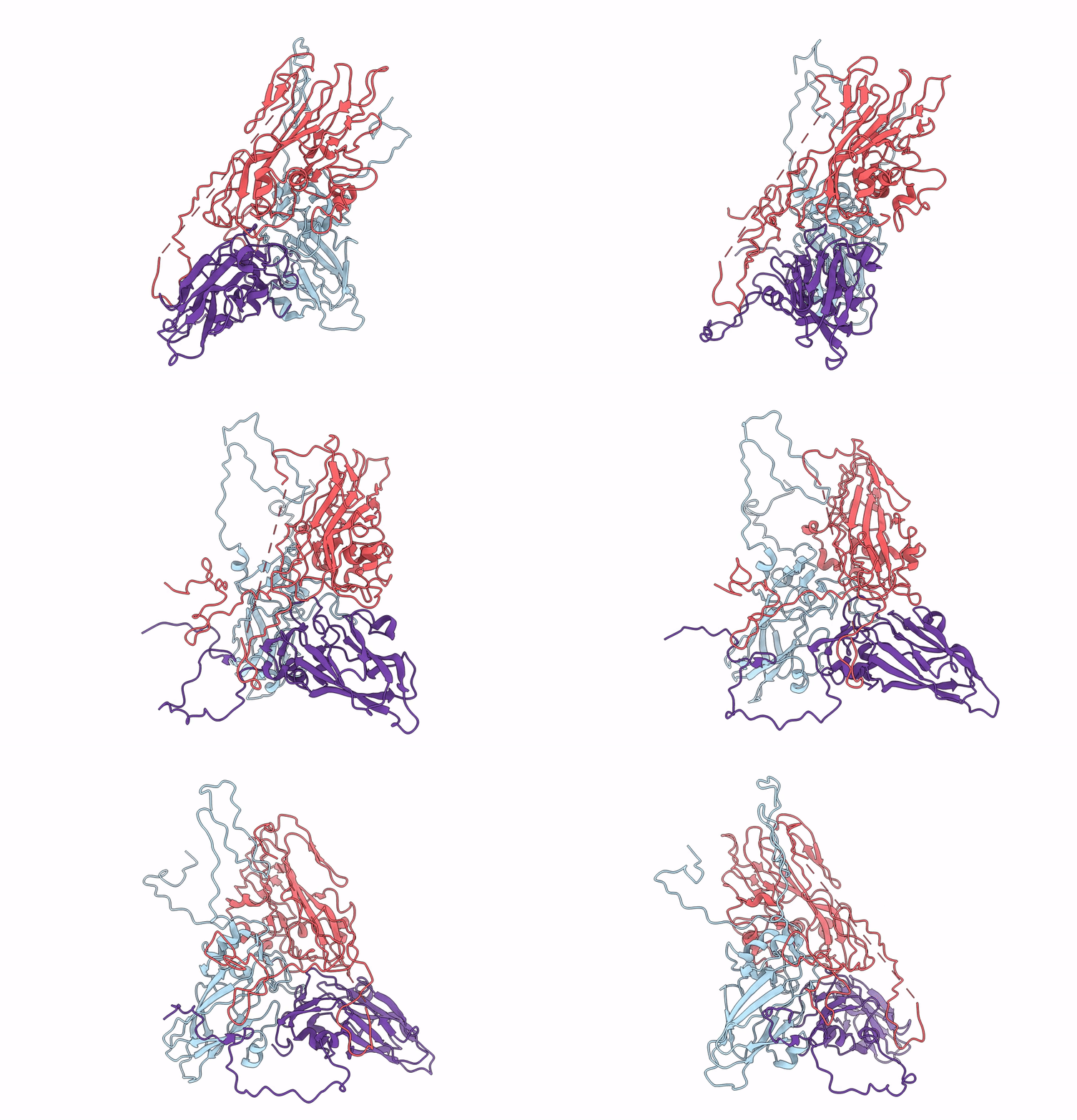
5GKA image
Deposition Date 2016-07-04
Release Date 2016-09-21
Last Version Date 2024-03-27
Entry Detail
PDB ID:
5GKA
Keywords:
Title:
cryo-EM structure of human Aichi virus
Biological Source:
Source Organism:
Host Organism:
Method Details:
Experimental Method:
Resolution:
3.70 Å
Aggregation State:
PARTICLE
Reconstruction Method:
SINGLE PARTICLE

Macromolecular Entities
Structures with similar UniProt ID
Protein Blast
Polymer Type:polypeptide(L)
Molecule:capsid protein VP1
Chain IDs:A
Chain Length:253
Number of Molecules:1
Biological Source:Aichi virus (strain Human/A846/88/1989)
Structures with similar UniProt ID
Protein Blast
Polymer Type:polypeptide(L)
Molecule:capsid protein VP0
Chain IDs:B
Chain Length:367
Number of Molecules:1
Biological Source:Aichi virus (strain Human/A846/88/1989)
Structures with similar UniProt ID
Protein Blast
Polymer Type:polypeptide(L)
Molecule:Genome polyprotein
Chain IDs:C
Chain Length:222
Number of Molecules:1
Biological Source:Aichi virus (strain Human/A846/88/1989)
Ligand Molecules
Primary Citation
Structure of human Aichi virus and implications for receptor binding
Nat Microbiol 1 16150 16150 (2016)
PMID: 27595320 DOI: 10.1038/nmicrobiol.2016.150

Abstact

Aichi virus (AiV), an unusual and poorly characterized picornavirus, classified in the genus Kobuvirus, can cause severe gastroenteritis and deaths in children below the age of five years, especially in developing countries1,2. The seroprevalence of AiV is approximately 60% in children under the age of ten years and reaches 90% later in life3,4. There is no available vaccine or effective antiviral treatment. Here, we describe the structure of AiV at 3.7 Å. This first high-resolution structure for a kobuvirus is intermediate between those of the enteroviruses and cardioviruses, with a shallow, narrow depression bounded by the prominent VP0 CD loops (linking the C and D strands of the β-barrel), replacing the depression known as the canyon, frequently the site of receptor attachment in enteroviruses. VP0 is not cleaved to form VP2 and VP4, so the 'VP2' β-barrel structure is complemented with a unique extended structure on the inside of the capsid. On the outer surface, a polyproline helix structure, not seen previously in picornaviruses is present at the C terminus of VP1, a position where integrin binding motifs are found in some other picornaviruses. A peptide corresponding to this polyproline motif somewhat attenuates virus infectivity, presumably blocking host-cell attachment. This may guide cellular receptor identification.

Legend

Protein

Chemical

Disease

Primary Citation of related structures
Feedback Form
Name
Email
Institute
Feedback