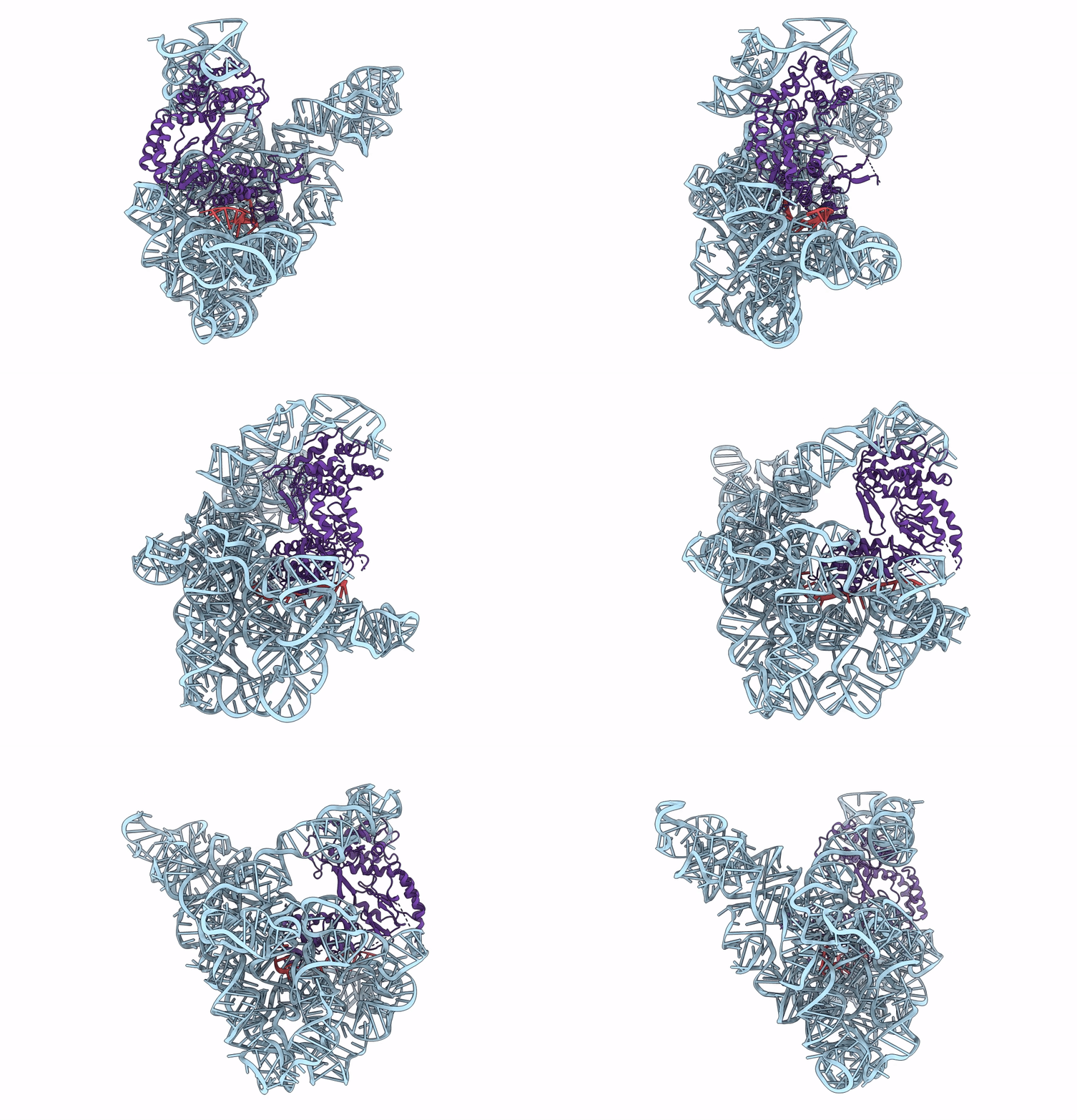
5G2X image
Deposition Date 2016-04-16
Release Date 2016-05-11
Last Version Date 2024-05-08
Entry Detail
PDB ID:
5G2X
Keywords:
Title:
Structure a of Group II Intron Complexed with its Reverse Transcriptase
Biological Source:
Source Organism:
Host Organism:
Method Details:
Experimental Method:
Resolution:
3.80 Å
Aggregation State:
PARTICLE
Reconstruction Method:
SINGLE PARTICLE
Macromolecular Entities
Polymer Type:polyribonucleotide
Molecule:GROUP II INTRON
Chain IDs:A
Chain Length:704
Number of Molecules:1
Biological Source:LACTOCOCCUS LACTIS
Polymer Type:polyribonucleotide
Molecule:5'-R(*CP*AP*CP*AP*UP*CP*CP*AP*UP*AP*AP*CP)-3'
Chain IDs:B
Chain Length:12
Number of Molecules:1
Biological Source:LACTOCOCCUS LACTIS SUBSP. CREMORIS
Structures with similar UniProt ID
Protein Blast
Polymer Type:polypeptide(L)
Molecule:GROUP II INTRON-ENCODED PROTEIN LTRA
Gene (Uniprot):ltrA
Chain IDs:C
Chain Length:599
Number of Molecules:1
Biological Source:LACTOCOCCUS LACTIS SUBSP. CREMORIS
Ligand Molecules
Primary Citation
Structure of a Group II Intron in Complex with its Reverse Transcriptase.
Nat.Struct.Mol.Biol. 23 549 ? (2016)
PMID: 27136327 DOI: 10.1038/NSMB.3220

Abstact

Bacterial group II introns are large catalytic RNAs related to nuclear spliceosomal introns and eukaryotic retrotransposons. They self-splice, yielding mature RNA, and integrate into DNA as retroelements. A fully active group II intron forms a ribonucleoprotein complex comprising the intron ribozyme and an intron-encoded protein that performs multiple activities including reverse transcription, in which intron RNA is copied into the DNA target. Here we report cryo-EM structures of an endogenously spliced Lactococcus lactis group IIA intron in its ribonucleoprotein complex form at 3.8-Å resolution and in its protein-depleted form at 4.5-Å resolution, revealing functional coordination of the intron RNA with the protein. Remarkably, the protein structure reveals a close relationship between the reverse transcriptase catalytic domain and telomerase, whereas the active splicing center resembles the spliceosomal Prp8 protein. These extraordinary similarities hint at intricate ancestral relationships and provide new insights into splicing and retromobility.

Legend

Protein

Chemical

Disease

Primary Citation of related structures
Feedback Form
Name
Email
Institute
Feedback