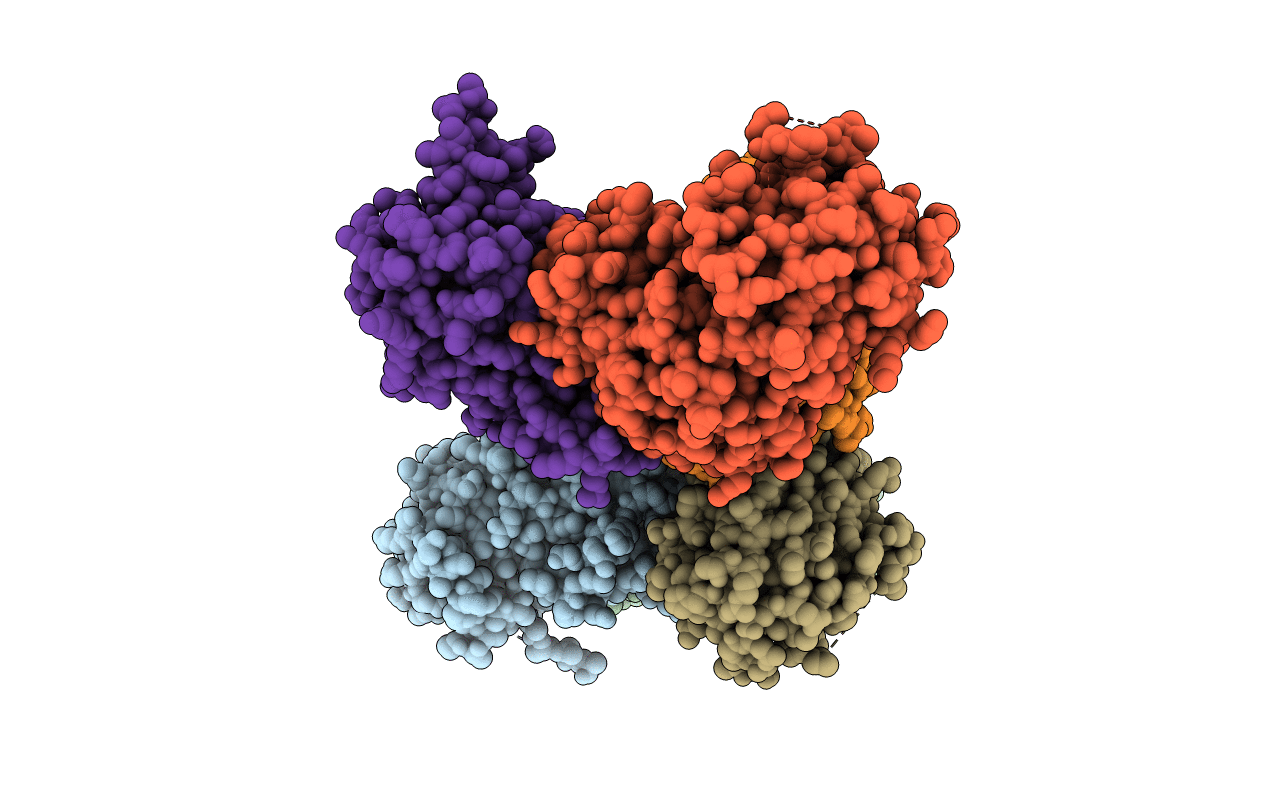
5G1P image
Deposition Date 2016-03-29
Release Date 2016-06-22
Last Version Date 2024-01-10
Entry Detail
PDB ID:
5G1P
Keywords:
Title:
Aspartate transcarbamoylase domain of human CAD bound to carbamoyl phosphate
Biological Source:
Source Organism:
HOMO SAPIENS (Taxon ID: 9606)
Host Organism:
Method Details:
Experimental Method:
Resolution:
3.19 Å
R-Value Free:
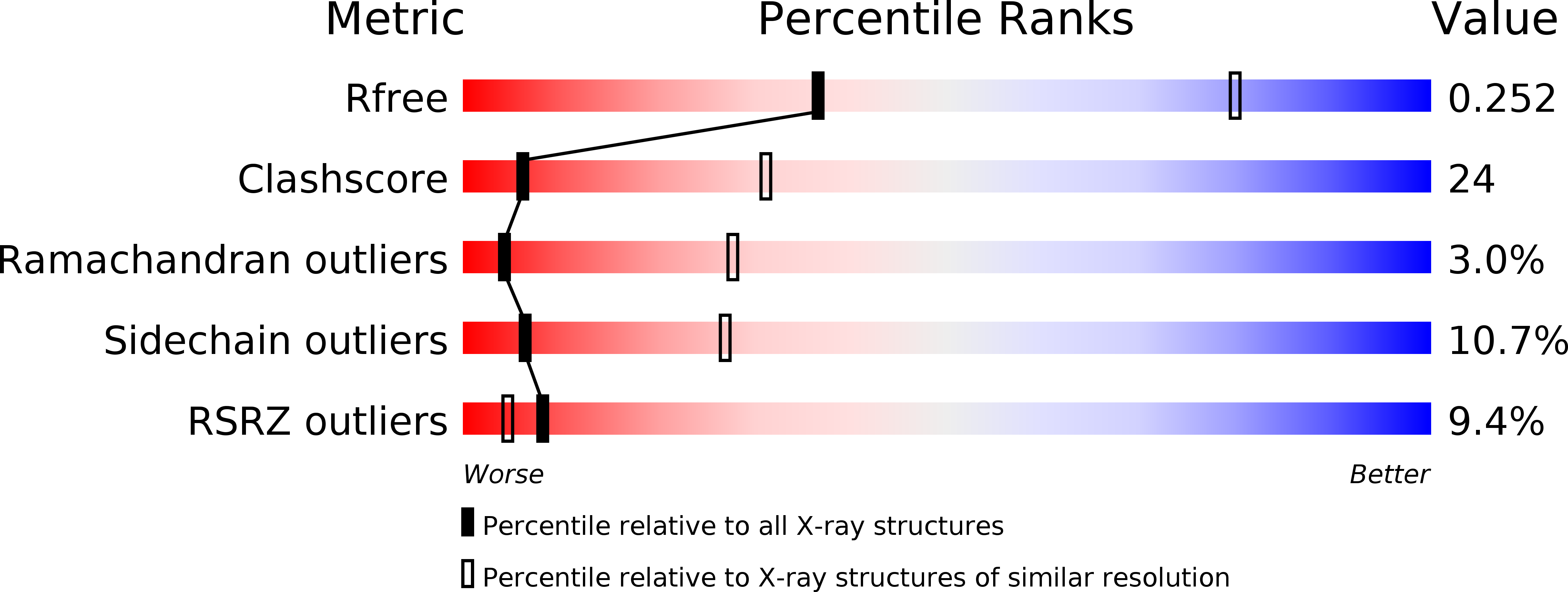
0.25
R-Value Work:
0.22
R-Value Observed:
0.22
Space Group:
P 1 21 1
Macromolecular Entities
Structures with similar UniProt ID
Protein Blast
Polymer Type:polypeptide(L)
Molecule:CAD PROTEIN
Gene (Uniprot):CAD
Chain IDs:A, B, C, D, E, F
Chain Length:314
Number of Molecules:6
Biological Source:HOMO SAPIENS
Ligand Molecules
Primary Citation
Structure and Functional Characterization of Human Aspartate Transcarbamoylase, the Target of the Anti-Tumoral Drug Pala.
Structure 24 1081 ? (2016)
PMID: 27265852 DOI: 10.1016/J.STR.2016.05.001

Abstact

CAD, the multienzymatic protein that initiates and controls de novo synthesis of pyrimidines in animals, associates through its aspartate transcarbamoylase (ATCase) domain into particles of 1.5 MDa. Despite numerous structures of prokaryotic ATCases, we lack structural information on the ATCase domain of CAD. Here, we report the structure and functional characterization of human ATCase, confirming the overall similarity with bacterial homologs. Unexpectedly, human ATCase exhibits cooperativity effects that reduce the affinity for the anti-tumoral drug PALA. Combining structural, mutagenic, and biochemical analysis, we identified key elements for the necessary regulation and transmission of conformational changes leading to cooperativity between subunits. Mutation of one of these elements, R2024, was recently found to cause the first non-lethal CAD deficit. We reproduced this mutation in human ATCase and measured its effect, demonstrating that this arginine is part of a molecular switch that regulates the equilibrium between low- and high-affinity states for the ligands.

Legend

Protein

Chemical

Disease

Primary Citation of related structures
Feedback Form
Name
Email
Institute
Feedback