5FZP image
Deposition Date 2016-03-15
Release Date 2016-08-10
Last Version Date 2024-11-06
Entry Detail
PDB ID:
5FZP
Title:
Structure of the dispase autolysis inducing protein from Streptomyces mobaraensis
Biological Source:
Source Organism:
Method Details:
Experimental Method:
Resolution:
1.70 Å
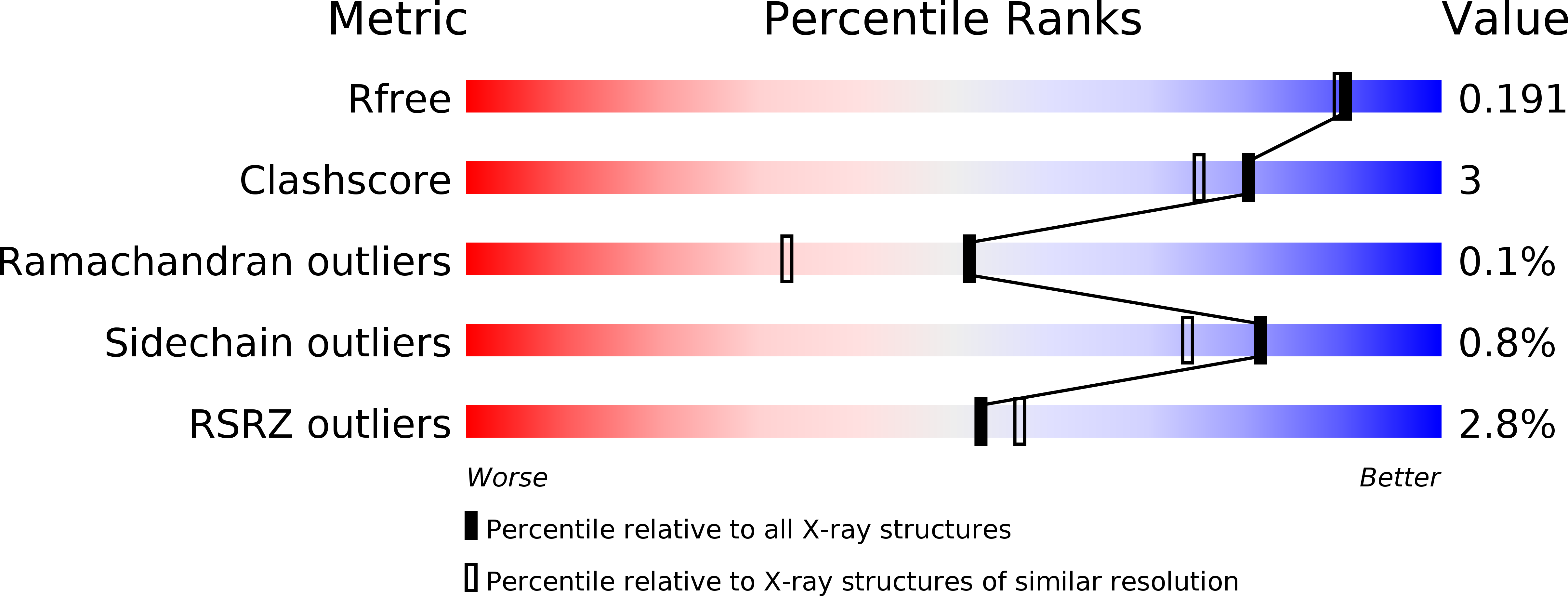
R-Value Free:
0.19
R-Value Work:
0.15
R-Value Observed:
0.16
Space Group:
P 21 21 21
Macromolecular Entities
Structures with similar UniProt ID
Protein Blast
Polymer Type:polypeptide(L)
Molecule:DISPASE AUTOLYSIS-INDUCING PROTEIN
Gene (Uniprot):daip
Chain IDs:A, B
Chain Length:348
Number of Molecules:2
Biological Source:STREPTOMYCES MOBARAENSIS
Primary Citation
Structure of the Dispase Autolysis Inducing Protein from Streptomyces Mobaraensis and Glutamine Cross-Linking Sites for Transglutaminase
J.Biol.Chem. 291 20417 ? (2016)
PMID: 27493205 DOI: 10.1074/JBC.M116.731109

Abstact

Transglutaminase from Streptomyces mobaraensis (MTG) is an important enzyme for cross-linking and modifying proteins. An intrinsic substrate of MTG is the dispase autolysis-inducing protein (DAIP). The amino acid sequence of DAIP contains 5 potential glutamines and 10 lysines for MTG-mediated cross-linking. The aim of the study was to determine the structure and glutamine cross-linking sites of the first physiological MTG substrate. A production procedure was established in Escherichia coli BL21 (DE3) to obtain high yields of recombinant DAIP. DAIP variants were prepared by replacing four of five glutamines for asparagines in various combinations via site-directed mutagenesis. Incorporation of biotin cadaverine revealed a preference of MTG for the DAIP glutamines in the order of Gln-39 ≫ Gln-298 > Gln-345 ∼ Gln-65 ≫ Gln-144. In the structure of DAIP the preferred glutamines do cluster at the top of the seven-bladed β-propeller. This suggests a targeted cross-linking of DAIP by MTG that may occur after self-assembly in the bacterial cell wall. Based on our biochemical and structural data of the first physiological MTG substrate, we further provide novel insight into determinants of MTG-mediated modification, specificity, and efficiency.

Legend

Protein

Chemical

Disease

Primary Citation of related structures
Feedback Form
Name
Email
Institute
Feedback