5FR2 image
Deposition Date 2015-12-15
Release Date 2016-01-13
Last Version Date 2024-10-23
Entry Detail
PDB ID:
5FR2
Title:
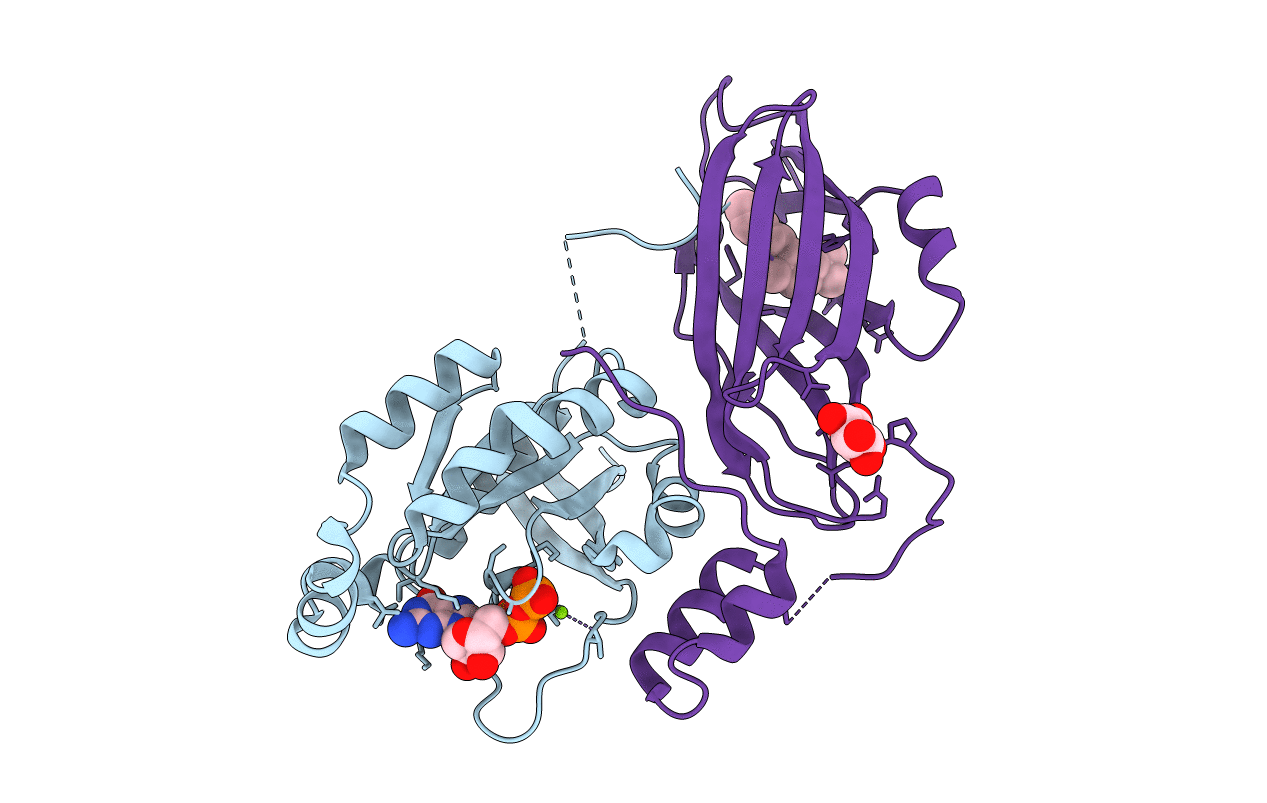
Farnesylated RhoA-GDP in complex with RhoGDI-alpha, lysine acetylated at K178
Biological Source:
Source Organism:
HOMO SAPIENS (Taxon ID: 9606)
BOS TAURUS (Taxon ID: 9913)
Host Organism:
Method Details:
Experimental Method:
Resolution:
3.35 Å
R-Value Free:
0.25
R-Value Work:
0.23
R-Value Observed:
0.23
Space Group:
P 62
Macromolecular Entities
Structures with similar UniProt ID
Protein Blast
Polymer Type:polypeptide(L)
Molecule:TRANSFORMING PROTEIN RHOA
Gene (Uniprot):RHOA
Chain IDs:A
Chain Length:195
Number of Molecules:1
Biological Source:HOMO SAPIENS
Structures with similar UniProt ID
Protein Blast
Polymer Type:polypeptide(L)
Molecule:RHO GDP-DISSOCIATION INHIBITOR 1
Gene (Uniprot):ARHGDIA
Chain IDs:B
Chain Length:213
Number of Molecules:1
Biological Source:BOS TAURUS
Modified Residue
Compound ID Chain ID Parent Comp ID Details 2D Image
ALY B LYS N(6)-ACETYLLYSINE
Primary Citation
Structural and Mechanistic Insights Into the Regulation of the Fundamental Rho-Regulator Rhogdi Alpha by Lysine Acetylation.
J.Biol.Chem. 291 5484 ? (2016)
PMID: 26719334 DOI: 10.1074/JBC.M115.707091

Abstact

Rho proteins are small GTP/GDP-binding proteins primarily involved in cytoskeleton regulation. Their GTP/GDP cycle is often tightly connected to a membrane/cytosol cycle regulated by the Rho guanine nucleotide dissociation inhibitor α (RhoGDIα). RhoGDIα has been regarded as a housekeeping regulator essential to control homeostasis of Rho proteins. Recent proteomic screens showed that RhoGDIα is extensively lysine-acetylated. Here, we present the first comprehensive structural and mechanistic study to show how RhoGDIα function is regulated by lysine acetylation. We discover that lysine acetylation impairs Rho protein binding and increases guanine nucleotide exchange factor-catalyzed nucleotide exchange on RhoA, these two functions being prerequisites to constitute a bona fide GDI displacement factor. RhoGDIα acetylation interferes with Rho signaling, resulting in alteration of cellular filamentous actin. Finally, we discover that RhoGDIα is endogenously acetylated in mammalian cells, and we identify CBP, p300, and pCAF as RhoGDIα-acetyltransferases and Sirt2 and HDAC6 as specific deacetylases, showing the biological significance of this post-translational modification.

Legend

Protein

Chemical

Disease

Primary Citation of related structures
Feedback Form
Name
Email
Institute
Feedback