5FCE image
Deposition Date 2015-12-15
Release Date 2016-07-06
Last Version Date 2024-11-06
Entry Detail
PDB ID:
5FCE
Keywords:
Title:
The crystal structure of the ligand binding region of Serine-glutamate repeat protein A (SgrA) of Enterococcus faecium
Biological Source:
Source Organism:
Host Organism:
Method Details:
Experimental Method:
Resolution:
1.80 Å
R-Value Free:
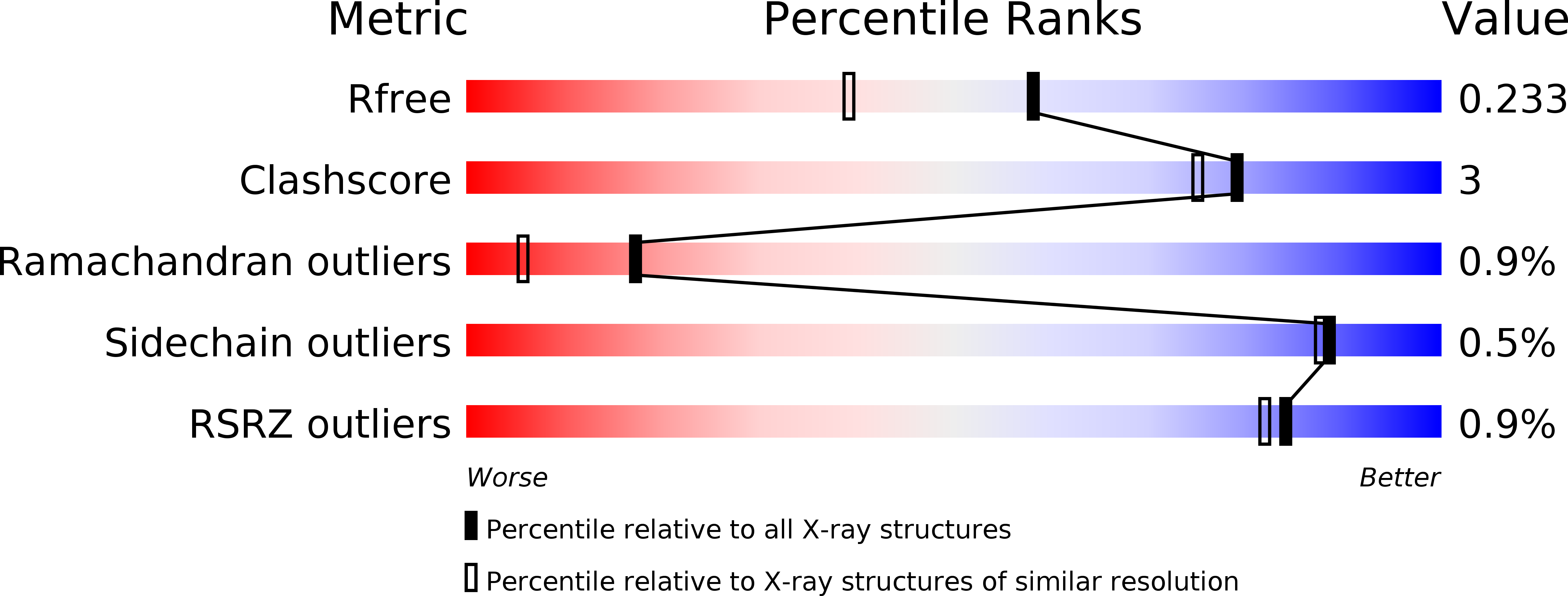
0.23
R-Value Work:
0.18
R-Value Observed:
0.19
Space Group:
P 1 21 1
Macromolecular Entities
Structures with similar UniProt ID
Protein Blast
Polymer Type:polypeptide(L)
Molecule:LPXTG family cell surface protein Fms2
Gene (Uniprot):fms2
Chain IDs:A, B
Chain Length:116
Number of Molecules:2
Biological Source:Enterococcus faecium DO
Modified Residue
Compound ID Chain ID Parent Comp ID Details 2D Image
MSE A MET modified residue
Primary Citation
The crystal structure of the ligand-binding region of serine-glutamate repeat containing protein A (SgrA) of Enterococcus faecium reveals a new protein fold: functional characterization and insights into its adhesion function.
FEBS J. 283 3039 3055 (2016)
PMID: 27334767 DOI: 10.1111/febs.13792

Abstact

UNLABELLED Antimicrobial-resistant and hospital-adapted Enterococcus faecium represents a clinical problem in immunocompromised patients in hospitals worldwide. Understanding the molecular pathogenesis of E. faecium infections may provide novel therapies to treat or prevent infections. A potential target for novel treatment therapies is the serine-glutamate repeat containing protein A (SgrA), which is a cell wall-anchored LPxTG surface protein implicated in binding to fibrinogen and nidogen. Here, we report the X-ray crystal structure of the N-terminal ligand-binding domain of SgrA (rSgrA28-153) to a resolution of 1.79 Å. The structure revealed a new protein fold with significant differences from previously characterized DEv-IgG- and inv-IgG-like folds of adhesive proteins known as microbial surface components recognizing adhesive matrix molecules. The structure contains a Lys-Asn-Glu triad with the potential to form a Lys-Asn isopeptide bond. However, even in the absence of a stabilizing intramolecular isopeptide bond, rSgrA28-153 exhibits remarkable properties like resistance to proteases and high thermal stability. The interaction of rSgrA28-153 with fibrinogen, nidogen, laminin, and abiotic surfaces has been characterized and rSgrA28-153 binds to these molecules with high affinity. rSgrA28-153 also binds to the beta chain of fibrinogen and with high affinity and specificity. Strikingly, the presence of 29 surface-exposed hydrophobic amino acid residues likely play an important role in the selectivity of rSgrA28-153 to bind to different abiotic surfaces. The results obtained from this study have opened new avenues to explore and understand the role of this unique surface adhesin in the pathogenesis of catheter-related infections. PDB ACCESSION CODE The coordinates and structure factors for rSgrA28-153 have been deposited with the accession code 5FCE.

Legend

Protein

Chemical

Disease

Primary Citation of related structures
Feedback Form
Name
Email
Institute
Feedback