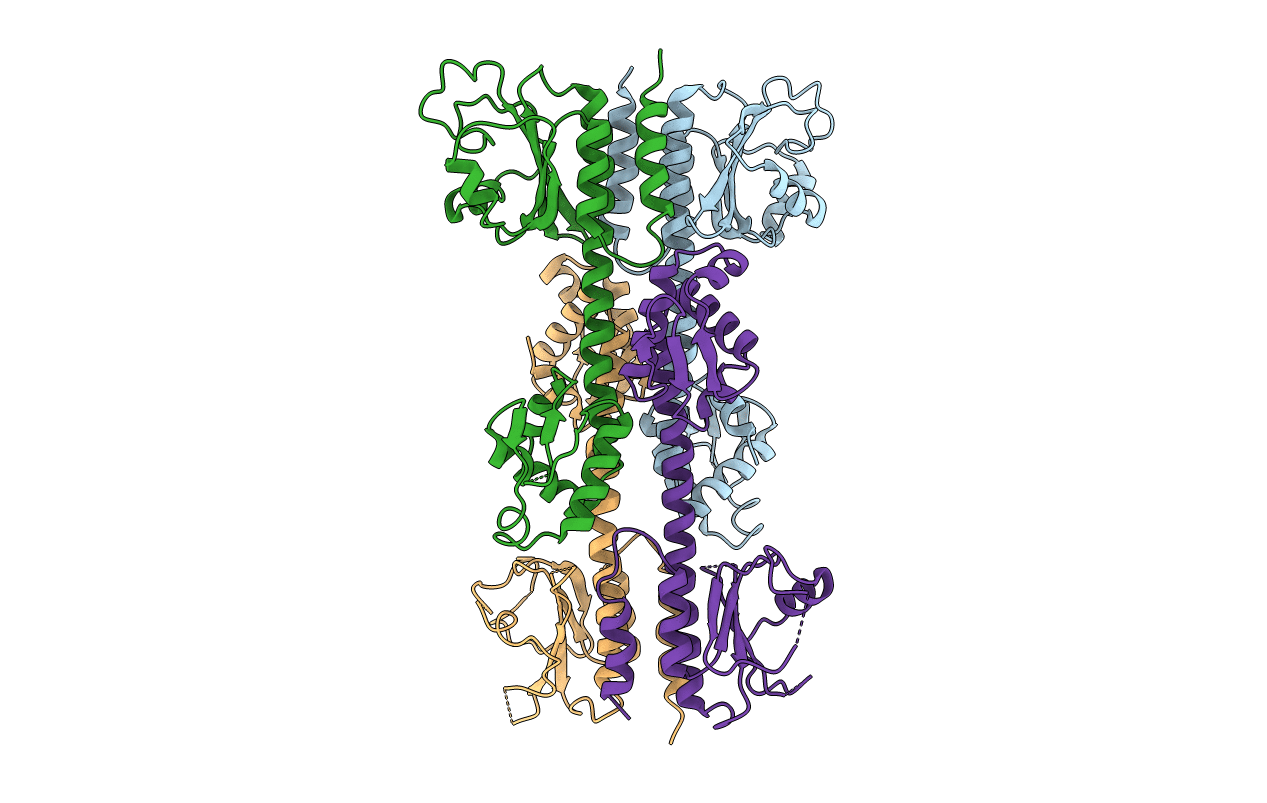
5EY2 image
Deposition Date 2015-11-24
Release Date 2016-09-14
Last Version Date 2024-10-23
Entry Detail
PDB ID:
5EY2
Keywords:
Title:
Crystal structure of CodY from Bacillus cereus
Biological Source:
Host Organism:
Method Details:
Experimental Method:
Resolution:
3.00 Å
R-Value Free:
0.27
R-Value Work:
0.23
R-Value Observed:
0.23
Space Group:
P 61

Macromolecular Entities
Structures with similar UniProt ID
Protein Blast
Polymer Type:polypeptide(L)
Molecule:GTP-sensing transcriptional pleiotropic repressor CodY
Gene (Uniprot):codY
Chain IDs:A, B, C (auth: D), D (auth: C)
Chain Length:276
Number of Molecules:4
Biological Source:Bacillus cereus (strain ATCC 14579 / DSM 31)
Modified Residue
Compound ID Chain ID Parent Comp ID Details 2D Image
MSE A MET modified residue
Primary Citation
The structure of the pleiotropic transcription regulator CodY provides insight into its GTP-sensing mechanism
Nucleic Acids Res. 44 9483 9493 (2016)
PMID: 27596595 DOI: 10.1093/nar/gkw775

Abstact

GTP and branched-chain amino acids (BCAAs) are metabolic sensors that are indispensable for the determination of the metabolic status of cells. However, their molecular sensing mechanism remains unclear. CodY is a unique global transcription regulator that recognizes GTP and BCAAs as specific signals and affects expression of more than 100 genes associated with metabolism. Herein, we report the first crystal structures of the full-length CodY complex with sensing molecules and describe their functional states. We observed two different oligomeric states of CodY: a dimeric complex of CodY from Staphylococcus aureus with the two metabolites GTP and isoleucine, and a tetrameric form (apo) of CodY from Bacillus cereus Notably, the tetrameric state shows in an auto-inhibitory manner by blocking the GTP-binding site, whereas the binding sites of GTP and isoleucine are clearly visible in the dimeric state. The GTP is located at a hinge site between the long helical region and the metabolite-binding site. Together, data from structural and electrophoretic mobility shift assay analyses improve understanding of how CodY senses GTP and operates as a DNA-binding protein and a pleiotropic transcription regulator.

Legend

Protein

Chemical

Disease

Primary Citation of related structures
Feedback Form
Name
Email
Institute
Feedback