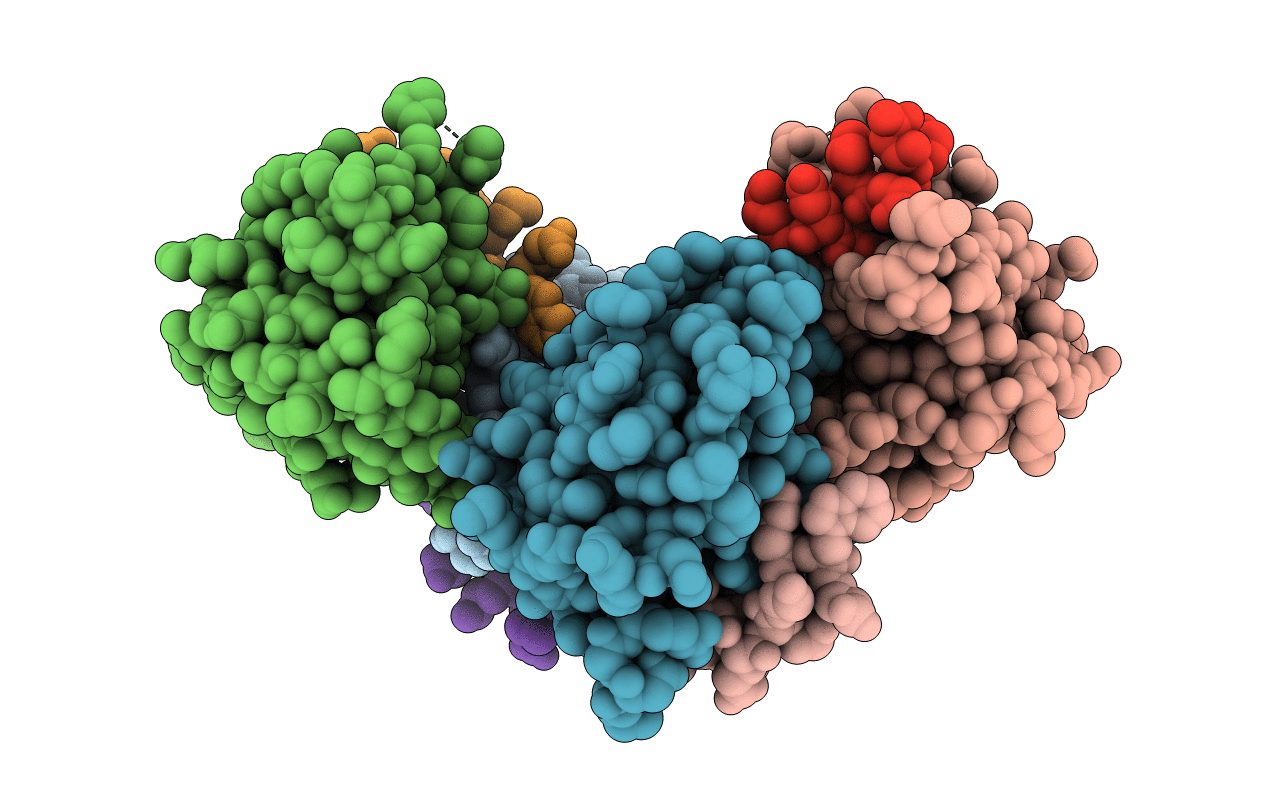
5EAY image
Deposition Date 2015-10-17
Release Date 2015-11-18
Last Version Date 2023-09-27
Entry Detail
PDB ID:
5EAY
Title:
Crystal structure of a Dna2 peptide in complex with Rpa 70N
Biological Source:
Source Organism:
Homo sapiens (Taxon ID: 9606)
Host Organism:
Method Details:
Experimental Method:
Resolution:
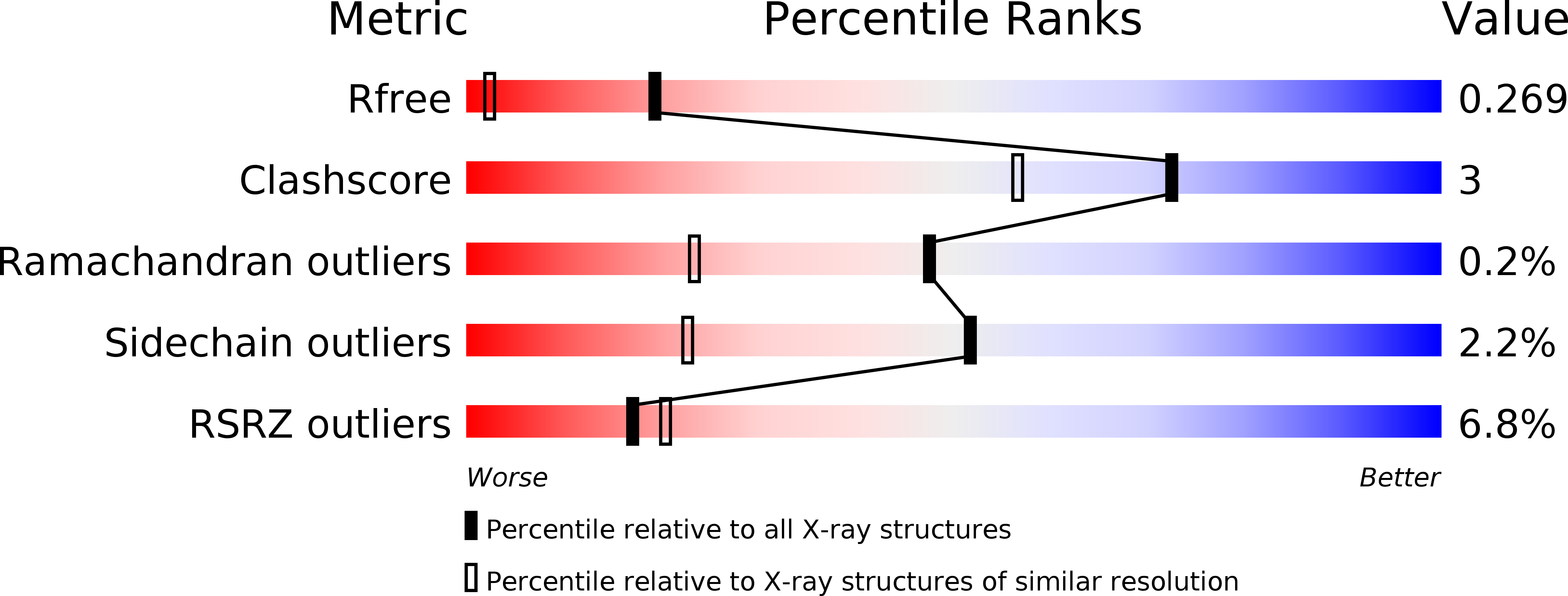
1.55 Å
R-Value Free:
0.26
R-Value Work:
0.23
R-Value Observed:
0.23
Space Group:
C 1 2 1
Macromolecular Entities
Structures with similar UniProt ID
Protein Blast
Polymer Type:polypeptide(L)
Molecule:Replication protein A 70 kDa DNA-binding subunit
Gene (Uniprot):RPA1
Chain IDs:A, B, C, D
Chain Length:118
Number of Molecules:4
Biological Source:Homo sapiens
Structures with similar UniProt ID
Protein Blast
Polymer Type:polypeptide(L)
Molecule:DNA replication ATP-dependent helicase/nuclease DNA2
Gene (Uniprot):DNA2
Chain IDs:E, F, G, H
Chain Length:13
Number of Molecules:4
Biological Source:Homo sapiens
Ligand Molecules
Primary Citation
Dna2 nuclease-helicase structure, mechanism and regulation by Rpa.
Elife 4 ? ? (2015)
PMID: 26491943 DOI: 10.7554/eLife.09832

Abstact

The Dna2 nuclease-helicase maintains genomic integrity by processing DNA double-strand breaks, Okazaki fragments and stalled replication forks. Dna2 requires ssDNA ends, and is dependent on the ssDNA-binding protein Rpa, which controls cleavage polarity. Here we present the 2.3 Å structure of intact mouse Dna2 bound to a 15-nucleotide ssDNA. The nuclease active site is embedded in a long, narrow tunnel through which the DNA has to thread. The helicase domain is required for DNA binding but not threading. We also present the structure of a flexibly-tethered Dna2-Rpa interaction that recruits Dna2 to Rpa-coated DNA. We establish that a second Dna2-Rpa interaction is mutually exclusive with Rpa-DNA interactions and mediates the displacement of Rpa from ssDNA. This interaction occurs at the nuclease tunnel entrance and the 5' end of the Rpa-DNA complex. Hence, it only displaces Rpa from the 5' but not 3' end, explaining how Rpa regulates cleavage polarity.

Legend

Protein

Chemical

Disease

Primary Citation of related structures
Feedback Form
Name
Email
Institute
Feedback