5E8K image
Deposition Date 2015-10-14
Release Date 2015-11-11
Last Version Date 2024-03-20
Entry Detail
PDB ID:
5E8K
Keywords:
Title:
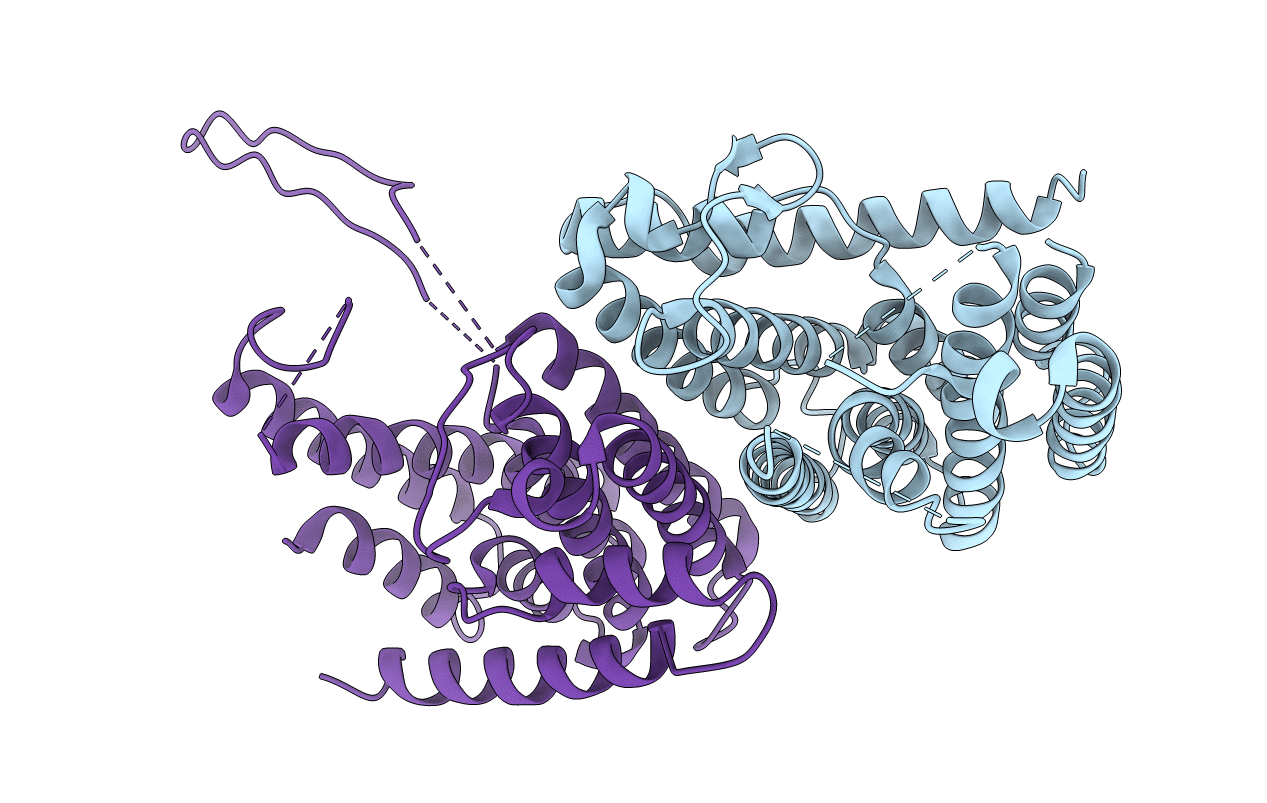
Crystal structure of polyprenyl pyrophosphate synthase 2 from Arabidopsis thaliana
Biological Source:
Source Organism:
Host Organism:
Method Details:
Experimental Method:
Resolution:
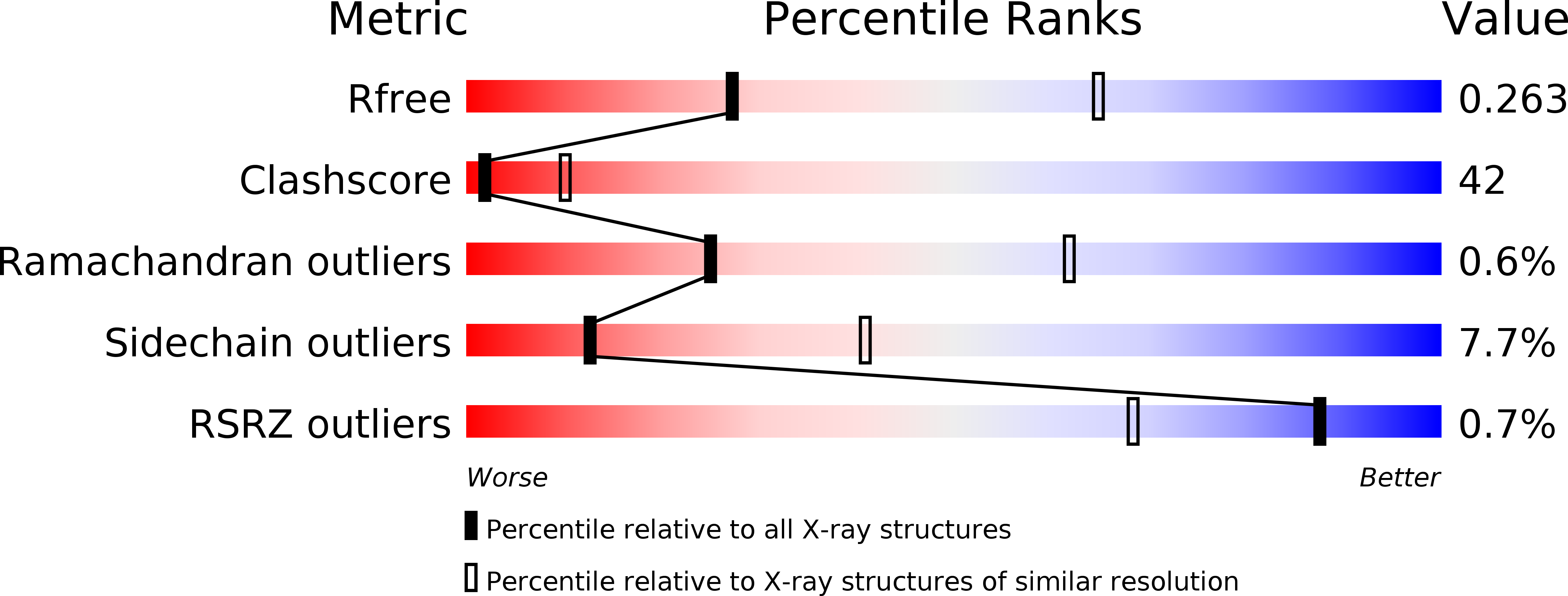
3.03 Å
R-Value Free:
0.25
R-Value Work:
0.22
R-Value Observed:
0.23
Space Group:
I 4
Macromolecular Entities
Structures with similar UniProt ID
Protein Blast
Polymer Type:polypeptide(L)
Molecule:Geranylgeranyl pyrophosphate synthase 10, mitochondrial
Gene (Uniprot):MAL21.19
Chain IDs:A, B
Chain Length:313
Number of Molecules:2
Biological Source:Arabidopsis thaliana
Ligand Molecules
Primary Citation
Structural Analyses of Short-Chain Prenyltransferases Identify an Evolutionarily Conserved GFPPS Clade in Brassicaceae Plants.
Mol Plant 9 195 204 (2016)
PMID: 26537048 DOI: 10.1016/j.molp.2015.10.010

Abstact

Terpenoids are the largest and most diverse class of plant-specialized metabolites, which function in diverse physiological processes during plant development. In the biosynthesis of plant terpenoids, short-chain prenyltransferases (SC-PTs), together with terpene synthases (TPSs), play critical roles in determining terpenoid diversity. SC-PTs biosynthesize prenyl pyrophosphates with different chain lengths, and these compounds are the direct precursors of terpenoids. Arabidopsis thaliana possesses a subgroup of SC-PTs whose functions are not clearly known. In this study, we focus on 10 geranylgeranyl pyrophosphate synthase-like [GGPPSL] proteins, which are commonly thought to produce GGPP [C20]. We found that a subset of members of the Arabidopsis GGPPSL gene family have undergone neo-functionalization: GGPPSL6, 7, 9, and 10 mainly have geranylfarnesyl pyrophosphate synthase activity (C25; renamed AtGFPPS1, 2, 3, and 4), and GGPPSL8 produces even longer chain prenyl pyrophosphate (≥ C30; renamed polyprenyl pyrophosphate synthase 2, AtPPPS2). By solving the crystal structures of AtGFPPS2, AtPPPS2, and AtGGPPS11, we reveal the product chain-length determination mechanism of SC-PTs and interpret it as a "three floors" model. Using this model, we identified a novel GFPPS clade distributed in Brassicaceae plants and found that the GFPPS gene typically occurs in tandem with a gene encoding a TPS, forming a GFPPS-TPS gene cluster.

Legend

Protein

Chemical

Disease

Primary Citation of related structures
Feedback Form
Name
Email
Institute
Feedback