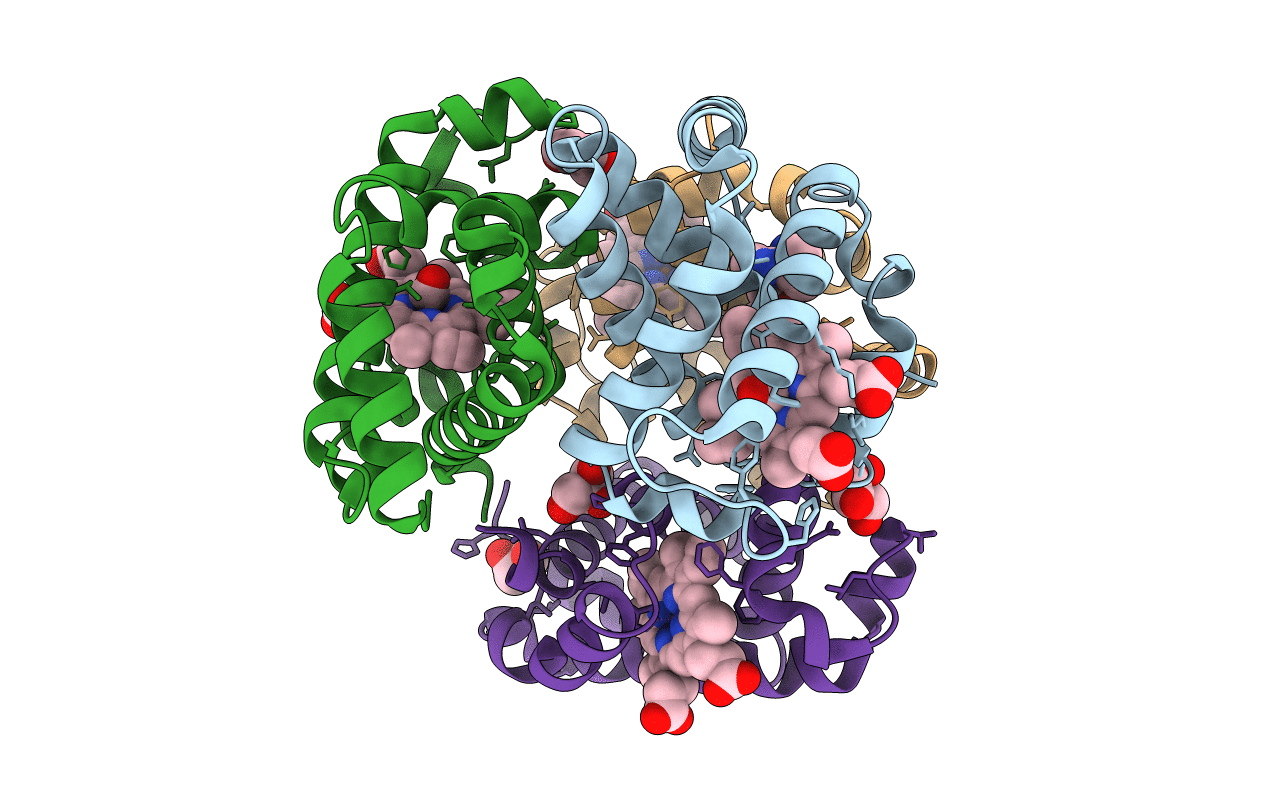
5E83 image
Deposition Date 2015-10-13
Release Date 2016-07-20
Last Version Date 2024-11-20
Entry Detail
PDB ID:
5E83
Title:
CRYSTAL STRUCTURE OF CARBONMONOXY HEMOGLOBIN S (LIGANDED SICKLE CELL HEMOGLOBIN) COMPLEXED WITH GBT440, CO-CRYSTALLIZATION EXPERIMENT
Biological Source:
Source Organism:
Homo sapiens (Taxon ID: 9606)
Method Details:
Experimental Method:
Resolution:
1.80 Å
R-Value Free:
0.20
R-Value Work:
0.17
R-Value Observed:
0.17
Space Group:
P 21 21 21

Macromolecular Entities
Structures with similar UniProt ID
Protein Blast
Polymer Type:polypeptide(L)
Molecule:Hemoglobin subunit alpha
Gene (Uniprot):HBA1, HBA2
Chain IDs:A, C
Chain Length:141
Number of Molecules:2
Biological Source:Homo sapiens
Structures with similar UniProt ID
Protein Blast
Polymer Type:polypeptide(L)
Molecule:Hemoglobin subunit beta
Gene (Uniprot):HBB
Chain IDs:B, D
Chain Length:146
Number of Molecules:2
Biological Source:Homo sapiens
Primary Citation
GBT440 increases haemoglobin oxygen affinity, reduces sickling and prolongs RBC half-life in a murine model of sickle cell disease.
Br.J.Haematol. 175 141 153 (2016)
PMID: 27378309 DOI: 10.1111/bjh.14214

Abstact

A major driver of the pathophysiology of sickle cell disease (SCD) is polymerization of deoxygenated haemoglobin S (HbS), which leads to sickling and destruction of red blood cells (RBCs) and end-organ damage. Pharmacologically increasing the proportion of oxygenated HbS in RBCs may inhibit polymerization, prevent sickling and provide long term disease modification. We report that GBT440, a small molecule which binds to the N-terminal α chain of Hb, increases HbS affinity for oxygen, delays in vitro HbS polymerization and prevents sickling of RBCs. Moreover, in a murine model of SCD, GBT440 extends the half-life of RBCs, reduces reticulocyte counts and prevents ex vivo RBC sickling. Importantly, oral dosing of GBT440 in animals demonstrates suitability for once daily dosing in humans and a highly selective partitioning into RBCs, which is a key therapeutic safety attribute. Thus, GBT440 has the potential for clinical use as a disease-modifying agent in sickle cell patients.

Legend

Protein

Chemical

Disease

Primary Citation of related structures
Feedback Form
Name
Email
Institute
Feedback