5E2U image
Deposition Date 2015-10-01
Release Date 2016-02-24
Last Version Date 2024-11-20
Entry Detail
PDB ID:
5E2U
Keywords:
Title:
Structure of anti-TAU AT8 FAB in the presence of phosphopeptide
Biological Source:
Source Organism:
Mus musculus (Taxon ID: 10090)
Host Organism:
Method Details:
Experimental Method:
Resolution:
2.40 Å
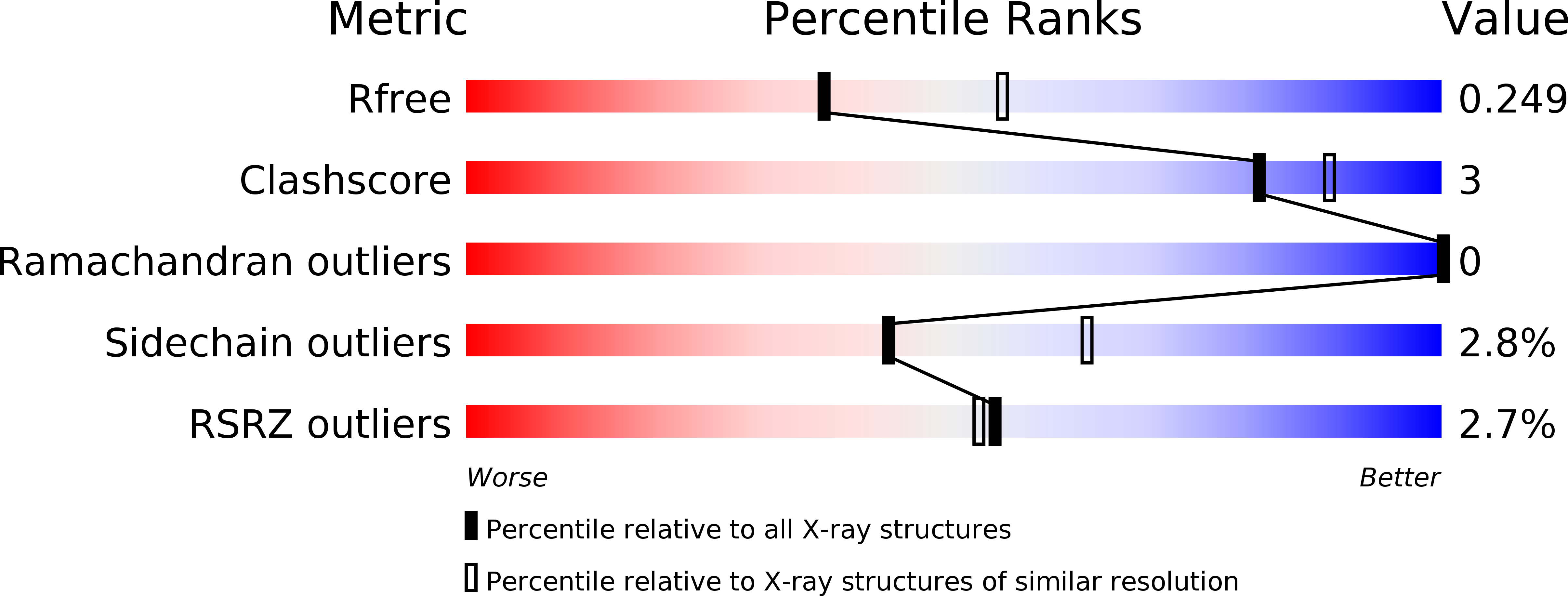
R-Value Free:
0.24
R-Value Work:
0.18
R-Value Observed:
0.18
Space Group:
I 2 2 2
Macromolecular Entities
Polymer Type:polypeptide(L)
Molecule:AT8 HEAVY CHAIN
Chain IDs:B (auth: H)
Chain Length:222
Number of Molecules:1
Biological Source:Mus musculus
Polymer Type:polypeptide(L)
Molecule:AT8 LIGHT CHAIN
Chain IDs:A (auth: L)
Chain Length:219
Number of Molecules:1
Biological Source:Mus musculus
Ligand Molecules
Primary Citation
Epitope mapping and structural basis for the recognition of phosphorylated tau by the anti-tau antibody AT8.
Proteins 84 427 434 (2016)
PMID: 26800003 DOI: 10.1002/prot.24988

Abstact

Microtubule-associated protein tau becomes abnormally phosphorylated in Alzheimer's disease and other tauopathies and forms aggregates of paired helical filaments (PHF-tau). AT8 is a PHF-tau-specific monoclonal antibody that is a commonly used marker of neuropathology because of its recognition of abnormally phosphorylated tau. Previous reports described the AT8 epitope to include pS202/pT205. Our studies support and extend previous findings by also identifying pS208 as part of the binding epitope. We characterized the phosphoepitope of AT8 through both peptide binding studies and costructures with phosphopeptides. From the cocrystal structure of AT8 Fab with the diphosphorylated (pS202/pT205) peptide, it appeared that an additional phosphorylation at S208 would also be accommodated by AT8. Phosphopeptide binding studies showed that AT8 bound to the triply phosphorylated tau peptide (pS202/pT205/pS208) 30-fold stronger than to the pS202/pT205 peptide, supporting the role of pS208 in AT8 recognition. We also show that the binding kinetics of the triply phosphorylated peptide pS202/pT205/pS208 was remarkably similar to that of PHF-tau. The costructure of AT8 Fab with a pS202/pT205/pS208 peptide shows that the interaction interface involves all six CDRs and tau residues 202-209. All three phosphorylation sites are recognized by AT8, with pT205 acting as the anchor. Crystallization of the Fab/peptide complex under acidic conditions shows that CDR-L2 is prone to unfolding and precludes peptide binding, and may suggest a general instability in the antibody.

Legend

Protein

Chemical

Disease

Primary Citation of related structures
Feedback Form
Name
Email
Institute
Feedback