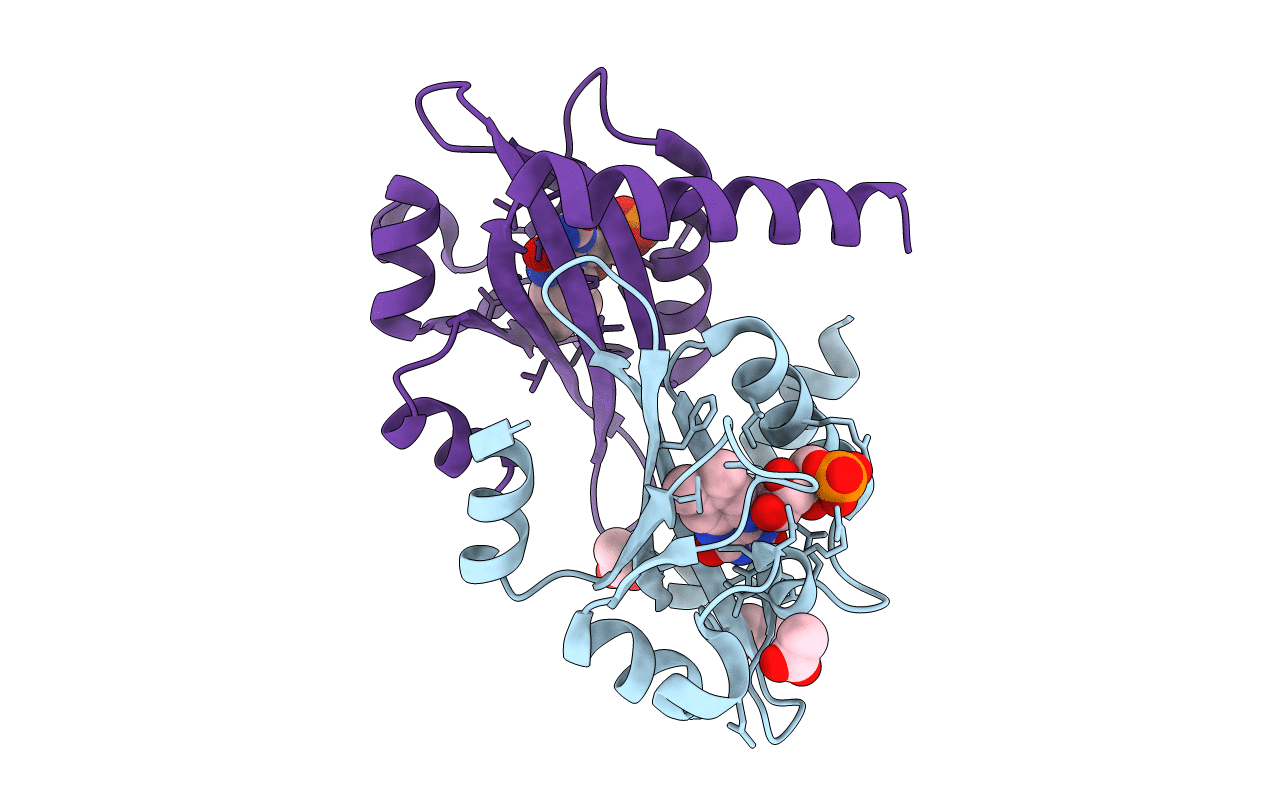
5DKK image
Deposition Date 2015-09-03
Release Date 2016-01-13
Last Version Date 2024-01-10
Entry Detail
PDB ID:
5DKK
Title:
Structure of the dark-state monomer of the blue light photoreceptor Aureochrome 1a LOV from P. tricornutum
Biological Source:
Source Organism:
Host Organism:
Method Details:
Experimental Method:
Resolution:
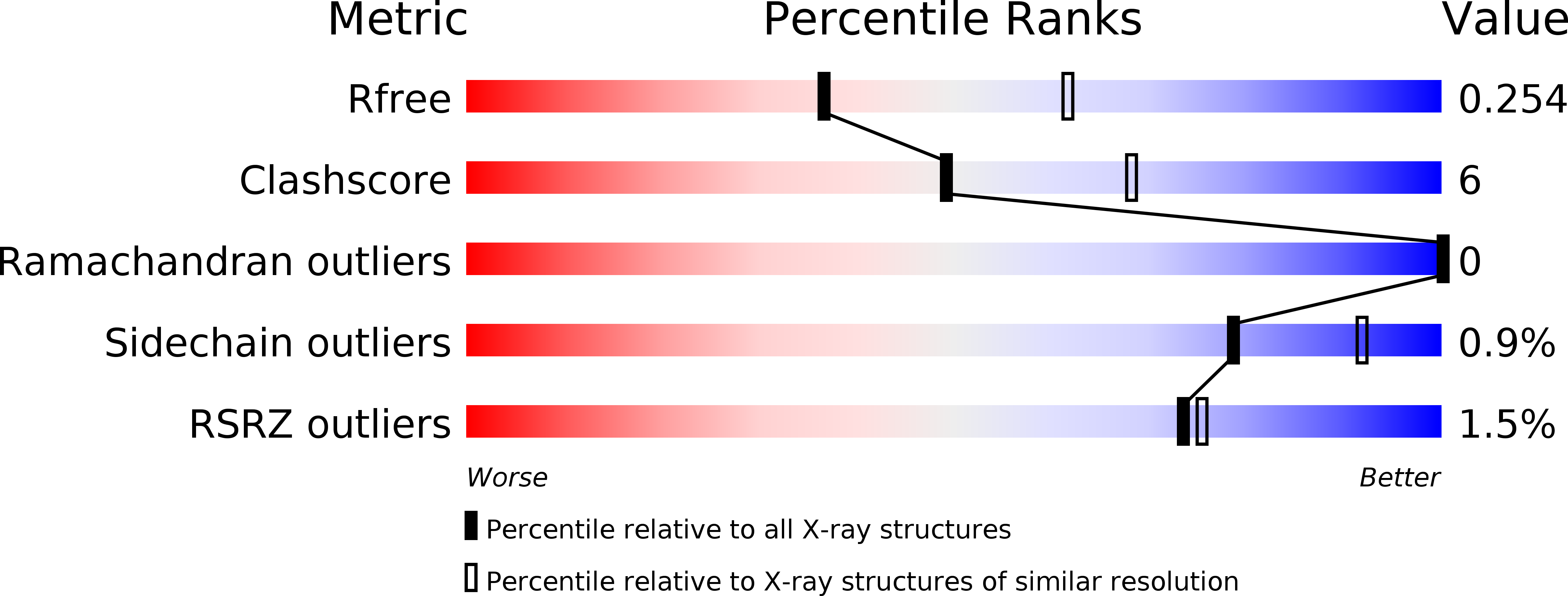
2.50 Å
R-Value Free:
0.25
R-Value Work:
0.19
R-Value Observed:
0.20
Space Group:
P 21 21 21
Macromolecular Entities
Structures with similar UniProt ID
Protein Blast
Polymer Type:polypeptide(L)
Molecule:LOV domain
Chain IDs:A, B
Chain Length:145
Number of Molecules:2
Biological Source:Phaeodactylum tricornutum
Primary Citation
Blue light-induced LOV domain dimerization enhances the affinity of Aureochrome 1a for its target DNA sequence.
Elife 5 e11860 e11860 (2016)
PMID: 26754770 DOI: 10.7554/eLife.11860

Abstact

The design of synthetic optogenetic tools that allow precise spatiotemporal control of biological processes previously inaccessible to optogenetic control has developed rapidly over the last years. Rational design of such tools requires detailed knowledge of allosteric light signaling in natural photoreceptors. To understand allosteric communication between sensor and effector domains, characterization of all relevant signaling states is required. Here, we describe the mechanism of light-dependent DNA binding of the light-oxygen-voltage (LOV) transcription factor Aureochrome 1a from Phaeodactylum tricornutum (PtAu1a) and present crystal structures of a dark state LOV monomer and a fully light-adapted LOV dimer. In combination with hydrogen/deuterium-exchange, solution scattering data and DNA-binding experiments, our studies reveal a light-sensitive interaction between the LOV and basic region leucine zipper DNA-binding domain that together with LOV dimerization results in modulation of the DNA affinity of PtAu1a. We discuss the implications of these results for the design of synthetic LOV-based photosensors with application in optogenetics.

Legend

Protein

Chemical

Disease

Primary Citation of related structures
Feedback Form
Name
Email
Institute
Feedback