5DA7 image
Deposition Date 2015-08-19
Release Date 2016-05-11
Last Version Date 2023-09-27
Entry Detail
PDB ID:
5DA7
Title:
monomeric PCNA bound to a small protein inhibitor
Biological Source:
Method Details:
Experimental Method:
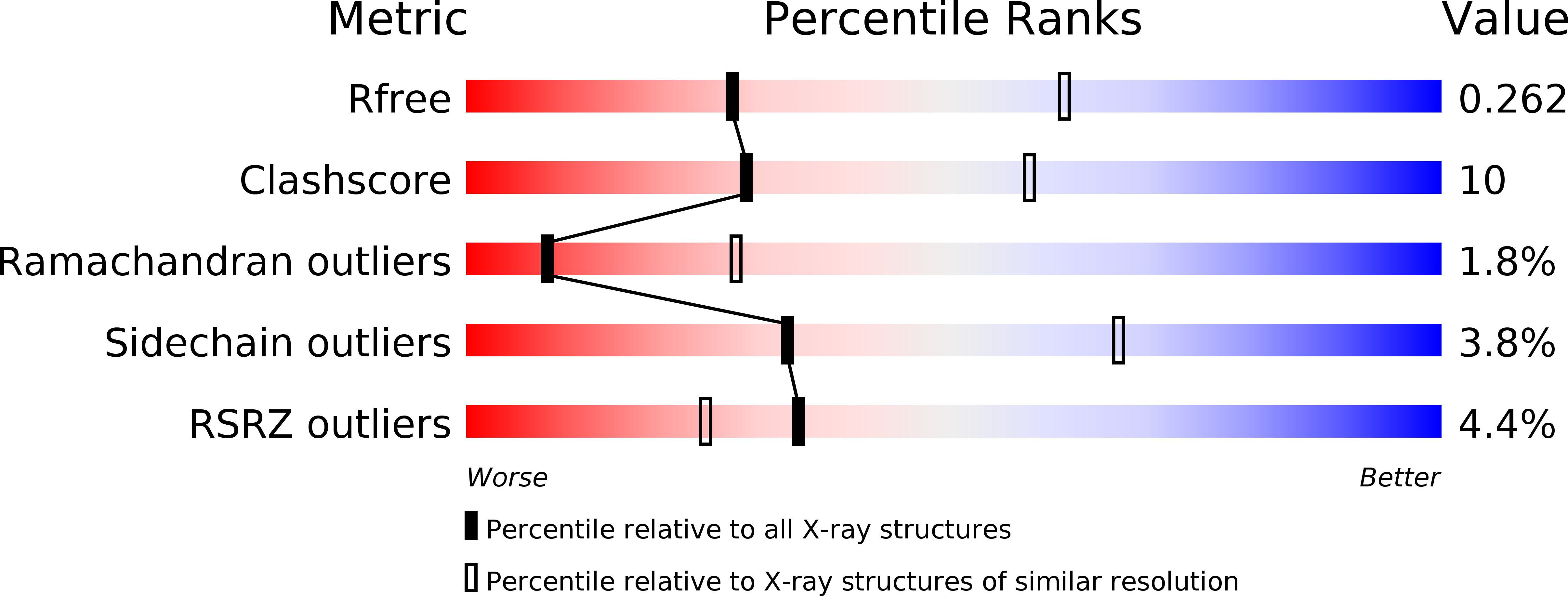
Resolution:
2.80 Å
R-Value Free:
0.26
R-Value Work:
0.20
R-Value Observed:
0.20
Space Group:
F 2 2 2
Macromolecular Entities
Structures with similar UniProt ID
Protein Blast
Polymer Type:polypeptide(L)
Molecule:DNA polymerase sliding clamp 1, Proliferating cell nuclear antigen
Gene (Uniprot):pcn1
Chain IDs:A, B (auth: D)
Chain Length:255
Number of Molecules:2
Biological Source:Thermococcus kodakarensis (strain ATCC BAA-918 / JCM 12380 / KOD1)
Structures with similar UniProt ID
Protein Blast
Polymer Type:polypeptide(L)
Molecule:Thermococcales inhibitor of PCNA
Gene (Uniprot):TK0808
Chain IDs:C (auth: B), D (auth: E)
Chain Length:64
Number of Molecules:2
Biological Source:Thermococcus kodakarensis (strain ATCC BAA-918 / JCM 12380 / KOD1)
Ligand Molecules
Primary Citation
A small protein inhibits proliferating cell nuclear antigen by breaking the DNA clamp.
Nucleic Acids Res. 44 6232 6241 (2016)
PMID: 27141962 DOI: 10.1093/nar/gkw351

Abstact

Proliferating cell nuclear antigen (PCNA) forms a trimeric ring that encircles duplex DNA and acts as an anchor for a number of proteins involved in DNA metabolic processes. PCNA has two structurally similar domains (I and II) linked by a long loop (inter-domain connector loop, IDCL) on the outside of each monomer of the trimeric structure that makes up the DNA clamp. All proteins that bind to PCNA do so via a PCNA-interacting peptide (PIP) motif that binds near the IDCL. A small protein, called TIP, binds to PCNA and inhibits PCNA-dependent activities although it does not contain a canonical PIP motif. The X-ray crystal structure of TIP bound to PCNA reveals that TIP binds to the canonical PIP interaction site, but also extends beyond it through a helix that relocates the IDCL. TIP alters the relationship between domains I and II within the PCNA monomer such that the trimeric ring structure is broken, while the individual domains largely retain their native structure. Small angle X-ray scattering (SAXS) confirms the disruption of the PCNA trimer upon addition of the TIP protein in solution and together with the X-ray crystal data, provides a structural basis for the mechanism of PCNA inhibition by TIP.

Legend

Protein

Chemical

Disease

Primary Citation of related structures
Feedback Form
Name
Email
Institute
Feedback