5D9Q image
Deposition Date 2015-08-18
Release Date 2016-08-17
Last Version Date 2024-10-23
Entry Detail
PDB ID:
5D9Q
Keywords:
Title:
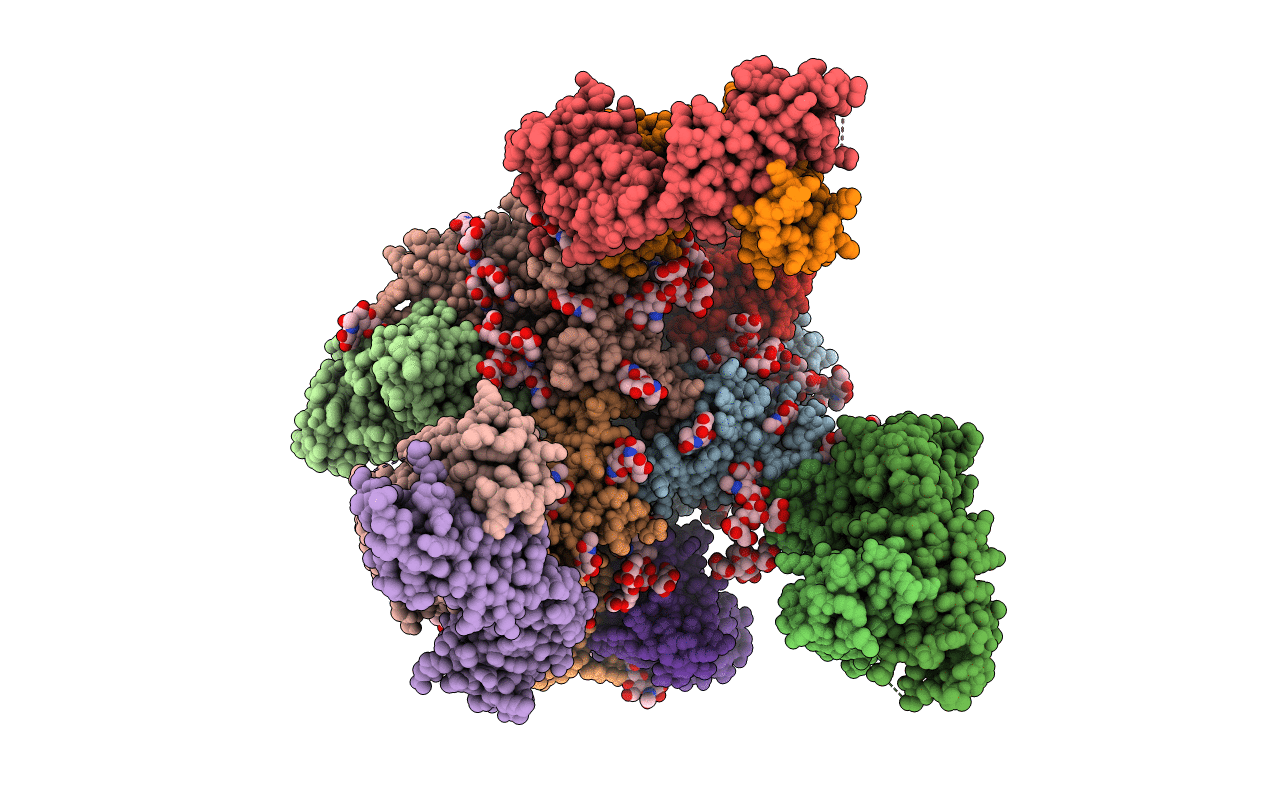
Crystal Structure of the BG505 SOSIP gp140 HIV-1 Env trimer in Complex with the Broadly Neutralizing Fab PGT122 and scFv NIH45-46
Biological Source:
Source Organism:
Host Organism:
Method Details:
Experimental Method:
Resolution:
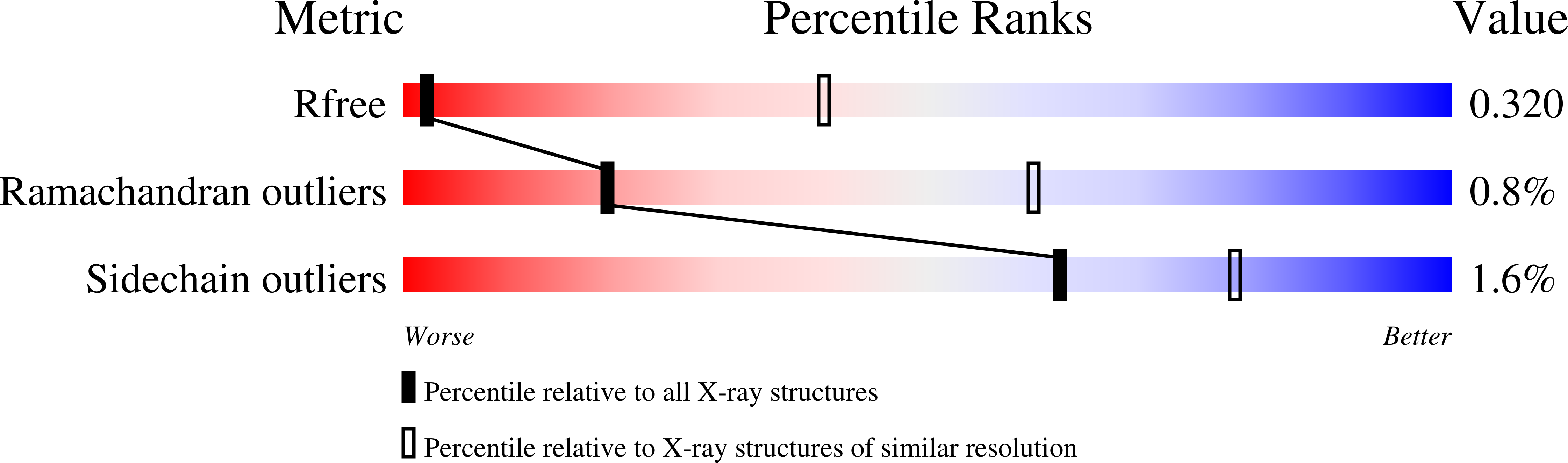
4.40 Å
R-Value Free:
0.31
R-Value Work:
0.28
R-Value Observed:
0.29
Space Group:
C 1 2 1
Macromolecular Entities
Structures with similar UniProt ID
Protein Blast
Polymer Type:polypeptide(L)
Molecule:Envelope glycoprotein gp41
Chain IDs:B, G (auth: C), L (auth: K)
Chain Length:152
Number of Molecules:3
Biological Source:Human immunodeficiency virus 1
Polymer Type:polypeptide(L)
Molecule:NIH45-46 single chain Fv
Chain IDs:E (auth: D), J (auth: I), O
Chain Length:241
Number of Molecules:3
Biological Source:Homo sapiens
Structures with similar UniProt ID
Protein Blast
Polymer Type:polypeptide(L)
Molecule:Envelope glycoprotein gp120
Gene (Uniprot):env
Chain IDs:A (auth: G), F (auth: A), K (auth: J)
Chain Length:472
Number of Molecules:3
Biological Source:Human immunodeficiency virus 1
Structures with similar UniProt ID
Protein Blast
Polymer Type:polypeptide(L)
Molecule:PGT122 heavy chain,IgG H chain
Chain IDs:D (auth: H), I (auth: F), N
Chain Length:235
Number of Molecules:3
Biological Source:Homo sapiens
Polymer Type:polypeptide(L)
Molecule:PGT122 light chain,Ig lambda-3 chain C regions
Chain IDs:C (auth: L), H (auth: E), M
Chain Length:211
Number of Molecules:3
Biological Source:Homo sapiens
Ligand Molecules
Primary Citation

Abstact

An optimal HIV vaccine should induce broadly neutralizing antibodies (bnAbs) that neutralize diverse viral strains and subtypes. However, potent bnAbs develop in only a small fraction of HIV-infected individuals, all contain rare features such as extensive mutation, insertions, deletions, and/or long complementarity-determining regions, and some are polyreactive, casting doubt on whether bnAbs to HIV can be reliably induced by vaccination. We engineered two potent VRC01-class bnAbs that minimized rare features. According to a quantitative features frequency analysis, the set of features for one of these minimally mutated bnAbs compared favorably with all 68 HIV bnAbs analyzed and was similar to antibodies elicited by common vaccines. This same minimally mutated bnAb lacked polyreactivity in four different assays. We then divided the minimal mutations into spatial clusters and dissected the epitope components interacting with those clusters, by mutational and crystallographic analyses coupled with neutralization assays. Finally, by synthesizing available data, we developed a working-concept boosting strategy to select the mutation clusters in a logical order following a germline-targeting prime. We have thus developed potent HIV bnAbs that may be more tractable vaccine goals compared to existing bnAbs, and we have proposed a strategy to elicit them. This reductionist approach to vaccine design, guided by antibody and antigen structure, could be applied to design candidate vaccines for other HIV bnAbs or protective Abs against other pathogens.

Legend

Protein

Chemical

Disease

Primary Citation of related structures
Feedback Form
Name
Email
Institute
Feedback