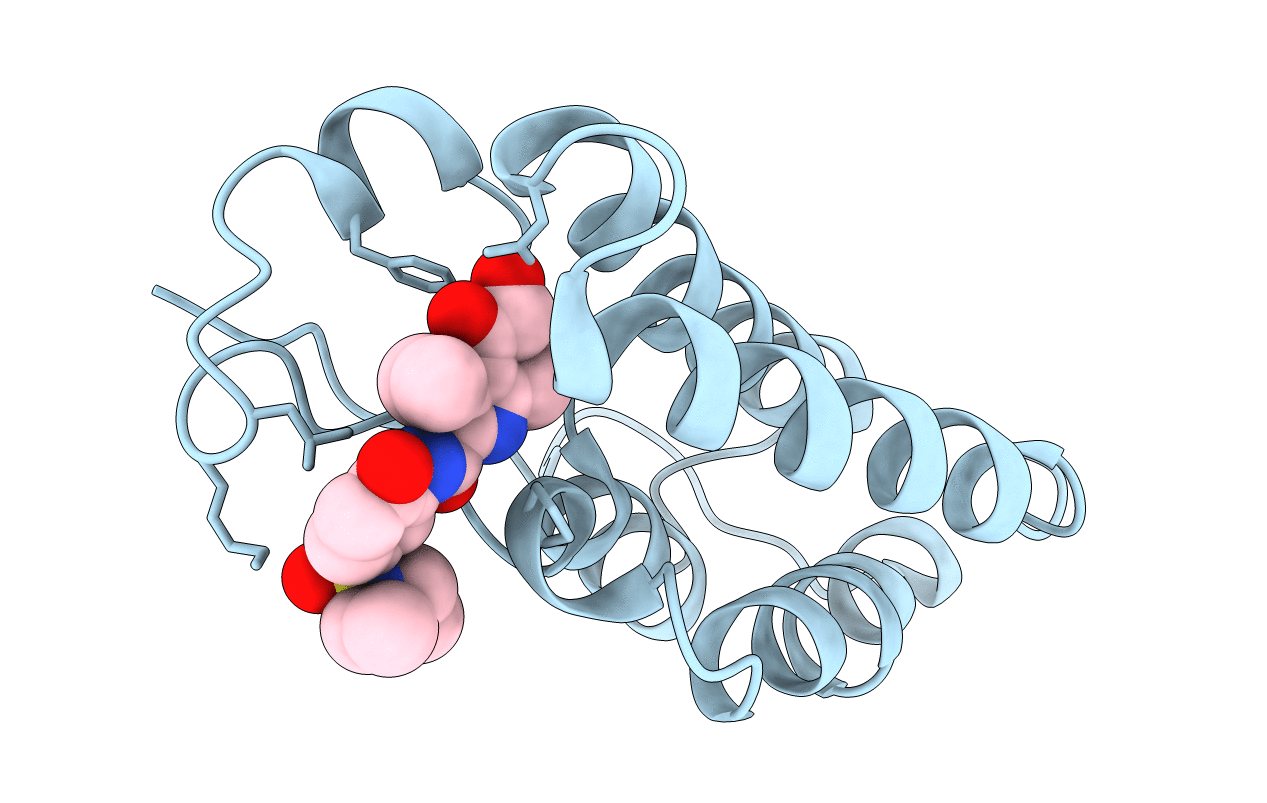
5D3H image
Deposition Date 2015-08-06
Release Date 2016-01-20
Last Version Date 2024-05-01
Entry Detail
PDB ID:
5D3H
Keywords:
Title:
First bromodomain of BRD4 bound to inhibitor XD29
Biological Source:
Source Organism:
Homo sapiens (Taxon ID: 9606)
Host Organism:
Method Details:
Experimental Method:
Resolution:
1.70 Å
R-Value Free:
0.19
R-Value Work:
0.16
R-Value Observed:
0.16
Space Group:
P 21 21 21

Macromolecular Entities
Structures with similar UniProt ID
Protein Blast
Polymer Type:polypeptide(L)
Molecule:Bromodomain-containing protein 4
Gene (Uniprot):BRD4
Chain IDs:A
Chain Length:126
Number of Molecules:1
Biological Source:Homo sapiens
Ligand Molecules
Primary Citation
4-Acyl Pyrrole Derivatives Yield Novel Vectors for Designing Inhibitors of the Acetyl-Lysine Recognition Site of BRD4(1).
J.Med.Chem. 59 1518 1530 (2016)
PMID: 26731611 DOI: 10.1021/acs.jmedchem.5b01267

Abstact

Several human diseases, including cancer, show altered signaling pathways resulting from changes in the activity levels of epigenetic modulators. In the past few years, small-molecule inhibitors against specific modulators, including the bromodomain and extra-terminal (BET) bromodomain family of acetylation readers, have shown early promise in the treatment of the genetically defined midline carcinoma and hematopoietic malignancies. We have recently developed a novel potent inhibitor of BET proteins, 1 (XD14[ Angew. Chem., Int. Ed. 2013, 52, 14055]), which exerts a strong inhibitory potential on the proliferation of specific leukemia cell lines. In the study presented here, we designed analogues of 1 to study the potential of substitutions on the 4-acyl pyrrole backbone to occupy additional sites within the substrate recognition site of BRD4(1). The compounds were profiled using ITC, DSF, and X-ray crystallography. We could introduce several substitutions that address previously untargeted areas of the substrate recognition site. This work may substantially contribute to the development of therapeutics with increased target specificity against BRD4-related malignancies.

Legend

Protein

Chemical

Disease

Primary Citation of related structures
Feedback Form
Name
Email
Institute
Feedback