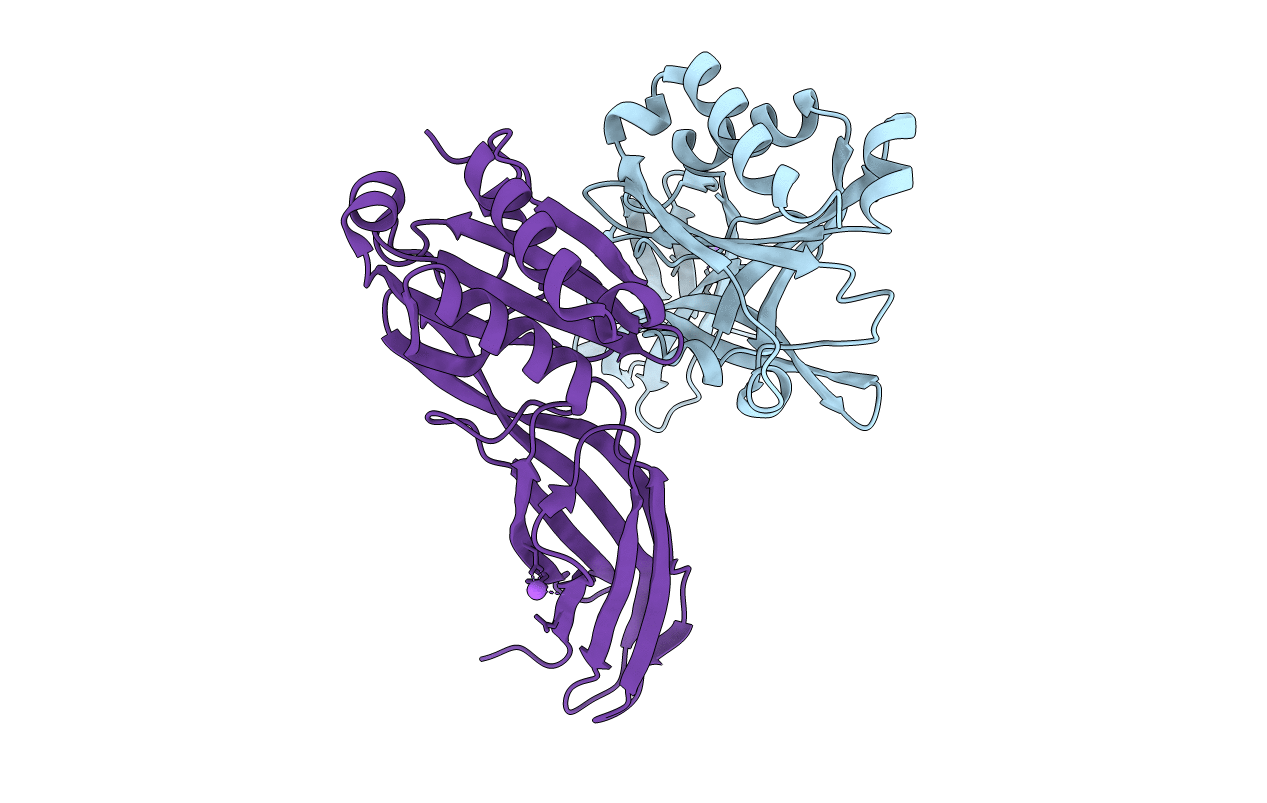
5CL2 image
Deposition Date 2015-07-16
Release Date 2015-12-16
Last Version Date 2024-03-20
Entry Detail
PDB ID:
5CL2
Keywords:
Title:
Crystal structure of Spo0M, sporulation control protein, from Bacillus subtilis.
Biological Source:
Source Organism:
Host Organism:
Method Details:
Experimental Method:
Resolution:
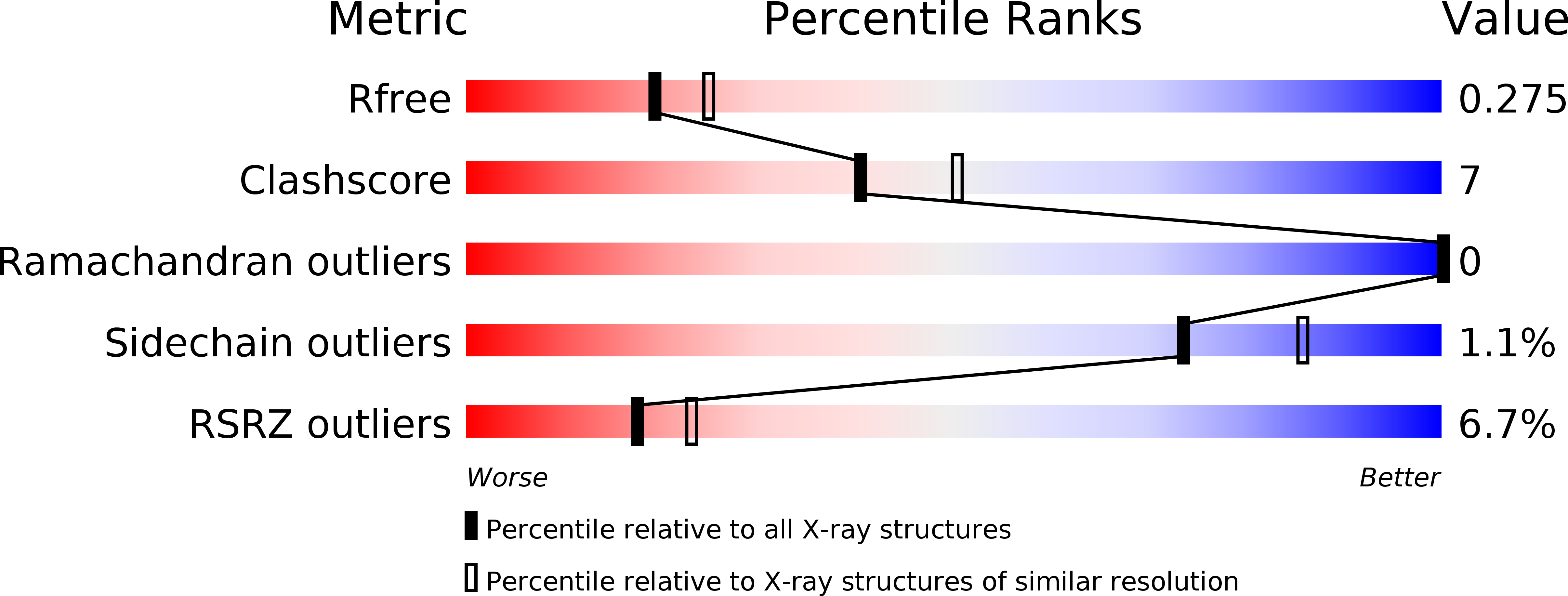
2.30 Å
R-Value Free:
0.27
R-Value Work:
0.22
R-Value Observed:
0.22
Space Group:
P 21 21 21
Macromolecular Entities
Structures with similar UniProt ID
Protein Blast
Polymer Type:polypeptide(L)
Molecule:Sporulation-control protein spo0M
Gene (Uniprot):spo0M
Chain IDs:A, B
Chain Length:252
Number of Molecules:2
Biological Source:Bacillus subtilis (strain 168)
Ligand Molecules
Primary Citation
Structure of Spo0M, a sporulation-control protein from Bacillus subtilis.
Acta Crystallogr.,Sect.F 71 1488 1497 (2015)
PMID: 26625291 DOI: 10.1107/S2053230X15020919

Abstact

Spo0M is a sporulation-control protein that is thought to play an essential role in the early stage of endospore formation. While little is known about the functions of Spo0M, a recent phylogenetic study suggests that, based on its amino-acid sequence, Spo0M might belong to the arrestin clan. The crystal structure of the Spo0M protein was determined at a resolution of 2.3 Å. Ten amino acids at the end of the N-terminus were removed to improve the thermal stability of the purified Spo0M protein and the crystal structure of Spo0M was determined by SAD. Spo0M has a well conserved N-terminal domain with an arrestin-like fold, which consists of a β-strand sandwich structure. Surprisingly, the C-terminal domain of Spo0M, which has no structural homology to arrestin-clan proteins, bears significant structural similarity to the FP domain of the human PI31 protein. In addition, Spo0M harbours a potential polar-core structure connecting the N- and C-terminal domains with several salt bridges, as seen in the crystal structures of arrestin and VPS26. The structure reported here constitutes the first structural information on a bacterial protein that shares significant structural homology to members of the arrestin clan and the FP domain.

Legend

Protein

Chemical

Disease

Primary Citation of related structures
Feedback Form
Name
Email
Institute
Feedback