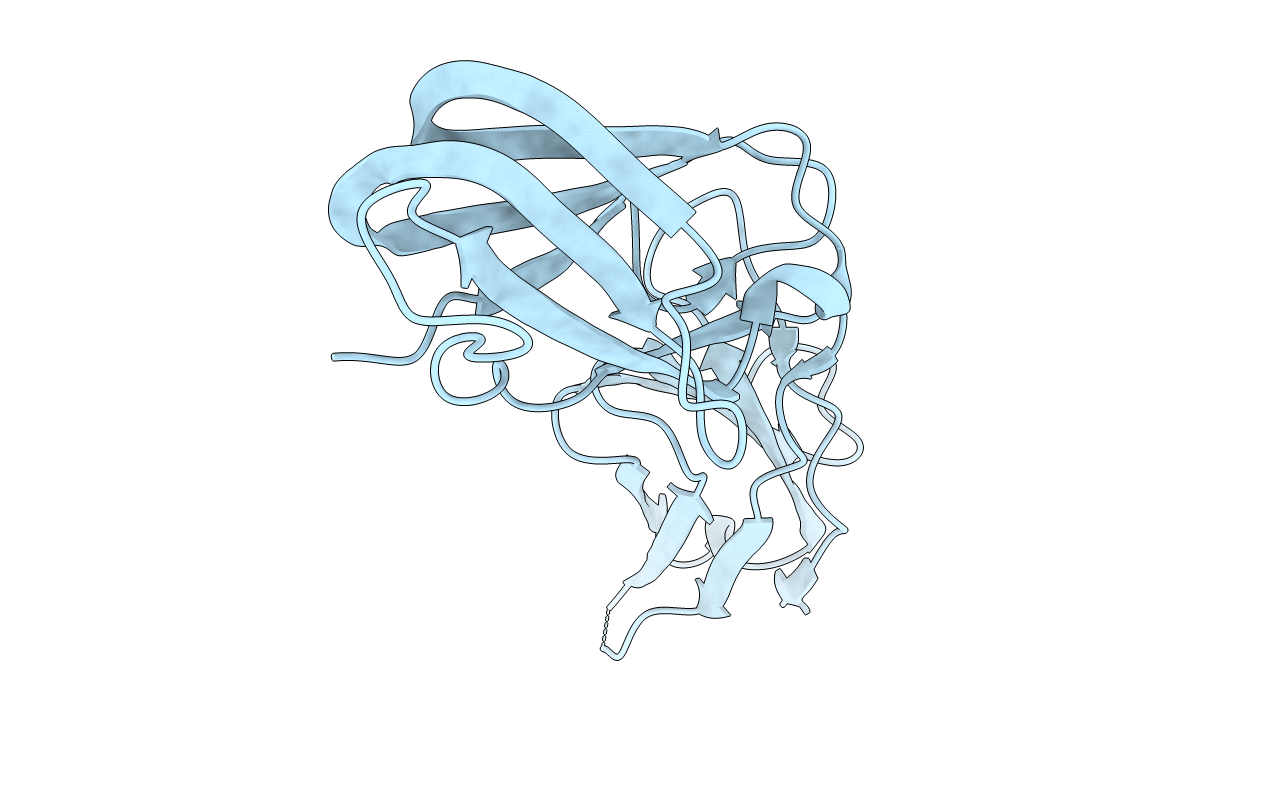
5CJ8 image
Deposition Date 2015-07-14
Release Date 2016-01-20
Last Version Date 2024-10-16
Entry Detail
PDB ID:
5CJ8
Keywords:
Title:
Human Osteoclast Associated Receptor (OSCAR) extracellular domain
Biological Source:
Source Organism:
Homo sapiens (Taxon ID: 9606)
Host Organism:
Method Details:
Experimental Method:
Resolution:
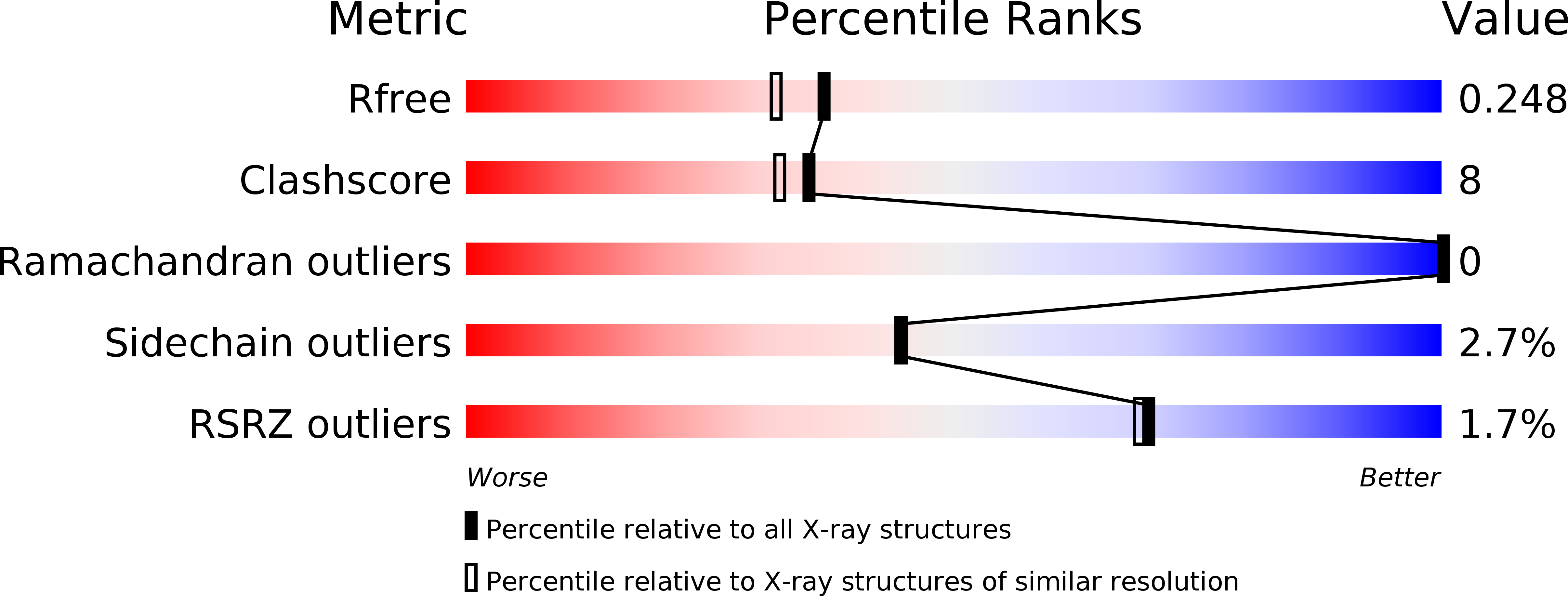
2.02 Å
R-Value Free:
0.25
R-Value Work:
0.22
R-Value Observed:
0.22
Space Group:
P 1 21 1
Macromolecular Entities
Structures with similar UniProt ID
Protein Blast
Polymer Type:polypeptide(L)
Molecule:Osteoclast-associated immunoglobulin-like receptor
Gene (Uniprot):OSCAR
Chain IDs:A
Chain Length:185
Number of Molecules:1
Biological Source:Homo sapiens
Primary Citation
Structural basis of collagen recognition by human osteoclast-associated receptor and design of osteoclastogenesis inhibitors.
Proc.Natl.Acad.Sci.USA 113 1038 1043 (2016)
PMID: 26744311 DOI: 10.1073/pnas.1522572113

Abstact

Human osteoclast-associated receptor (OSCAR) is an immunoglobulin (Ig)-like collagen receptor that is up-regulated on osteoclasts during osteoclastogenesis and is expressed in a range of myeloid cells. As a member of the leukocyte receptor complex family of proteins, OSCAR shares a high degree of sequence and structural homology with other collagen receptors of this family, including glycoprotein VI, leukocyte-associated Ig-like receptor-1, and leukocyte Ig-like receptor B4, but recognizes a unique collagen sequence. Here, we present the crystal structures of OSCAR in its free form and in complex with a triple-helical collagen-like peptide (CLP). These structures reveal that the CLP peptide binds only one of the two Ig-like domains, the membrane-proximal domain (domain 2) of OSCAR, with the middle and trailing chain burying a total of 661 Å(2) of solvent-accessible collagen surface. This binding mode is facilitated by the unusual topography of the OSCAR protein, which displays an obtuse interdomain angle and a rotation of domain 2 relative to the membrane-distal domain 1. Moreover, the binding of the CLP to OSCAR appears to be mediated largely by tyrosine residues and conformational changes at a shallow Phe pocket. Furthermore, we investigated CLP peptides as inhibitors of osteoclastogenesis and found that a peptide length of 40 amino acids is required to ensure adequate inhibition of osteoclastogenesis in vitro. These findings provide valuable structural insights into the mode of collagen recognition by OSCAR and into the use of synthetic peptide matrikines for osteoclastogenesis inhibition.

Legend

Protein

Chemical

Disease

Primary Citation of related structures
Feedback Form
Name
Email
Institute
Feedback