5CEY image
Deposition Date 2015-07-07
Release Date 2015-12-23
Last Version Date 2024-11-20
Entry Detail
PDB ID:
5CEY
Keywords:
Title:
Crystal Structure of Fab 9H+3L, a putative precursor of the PGT121 family of potent HIV-1 antibodies
Biological Source:
Source Organism:
Homo sapiens (Taxon ID: 9606)
Host Organism:
Method Details:
Experimental Method:
Resolution:
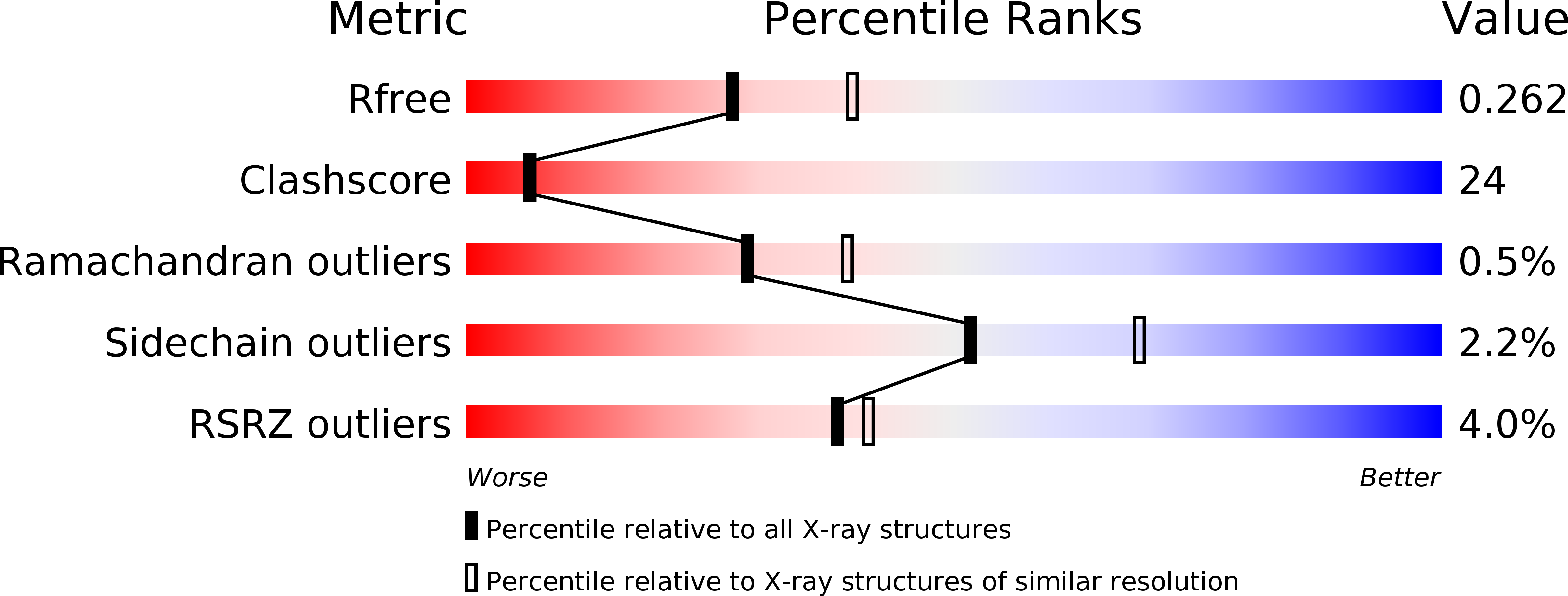
2.39 Å
R-Value Free:
0.27
R-Value Work:
0.22
R-Value Observed:
0.22
Space Group:
P 21 21 21
Macromolecular Entities
Polymer Type:polypeptide(L)
Molecule:Antibody 9H+3L Fab light chain
Chain IDs:A, C
Chain Length:218
Number of Molecules:2
Biological Source:Homo sapiens
Polymer Type:polypeptide(L)
Molecule:Antibody 9H+3L Fab heavy chain
Chain IDs:B, D
Chain Length:236
Number of Molecules:2
Biological Source:Homo sapiens
Primary Citation
Affinity Maturation of a Potent Family of HIV Antibodies Is Primarily Focused on Accommodating or Avoiding Glycans.
Immunity 43 1053 1063 (2015)
PMID: 26682982 DOI: 10.1016/j.immuni.2015.11.007

Abstact

The high-mannose patch on the HIV-1 envelope (Env) glycoprotein is the epicenter for binding of the potent broadly neutralizing PGT121 family of antibodies, but strategies for generating such antibodies by vaccination have not been defined. We generated structures of inferred antibody intermediates by X-ray crystallography and electron microscopy to elucidate the molecular events that occurred during evolution of this family. Binding analyses revealed that affinity maturation was primarily focused on avoiding, accommodating, or binding the N137 glycan. The overall antibody approach angle to Env was defined very early in the maturation process, yet some variation evolved in the PGT121 family branches that led to differences in glycan specificities in their respective epitopes. Furthermore, we determined a crystal structure of the recombinant BG505 SOSIP.664 HIV-1 trimer with a PGT121 family member at 3.0 Å that, in concert with these antibody intermediate structures, provides insights to advance design of HIV vaccine candidates.

Legend

Protein

Chemical

Disease

Primary Citation of related structures
Feedback Form
Name
Email
Institute
Feedback