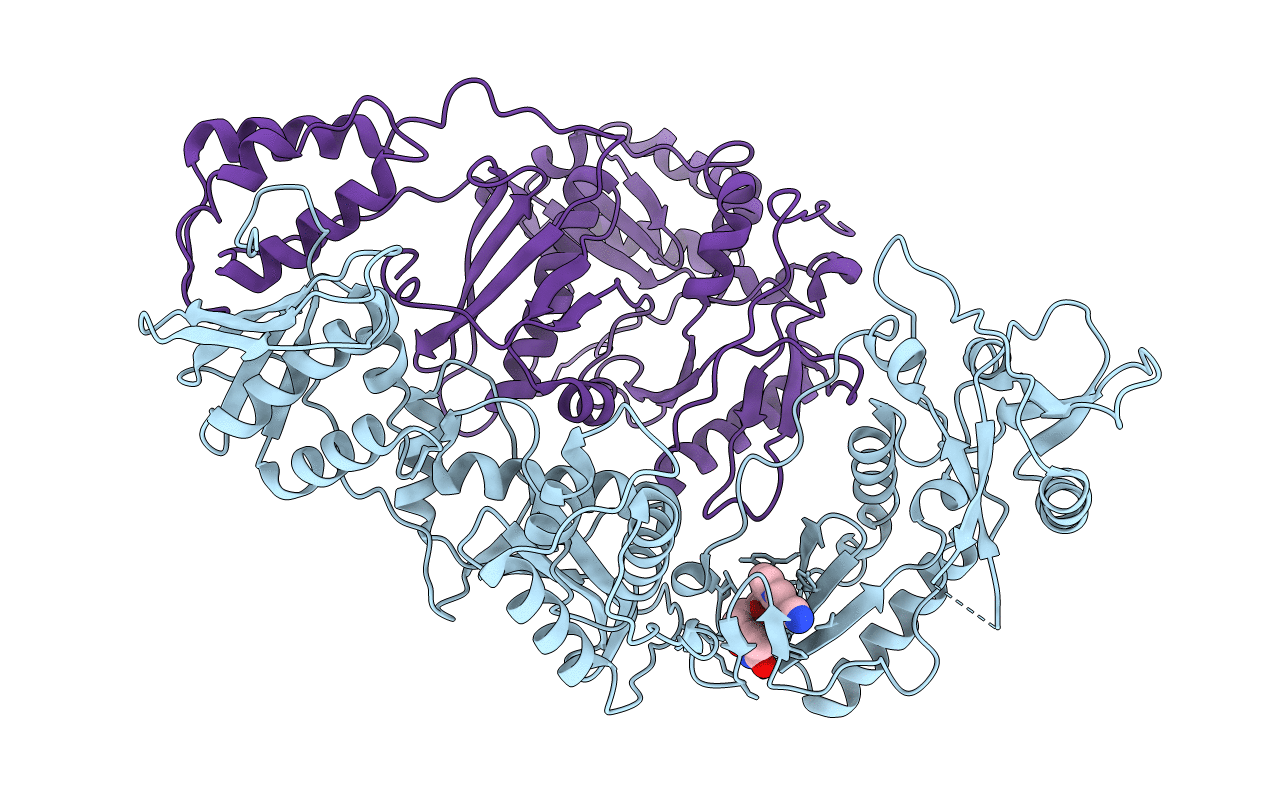
5C42 image
Deposition Date 2015-06-17
Release Date 2015-11-11
Last Version Date 2024-03-06
Entry Detail
PDB ID:
5C42
Title:
Crystal Structure of HIV-1 Reverse Transcriptase (K101P) Variant in Complex with 8-(2-(2-(2,4-dioxo-3,4-dihydropyrimidin-1(2H)-yl)ethoxy)phenoxy)indolizine-2-carbonitrile (JLJ555), a non-nucleoside inhibitor
Biological Source:
Method Details:
Experimental Method:
Resolution:
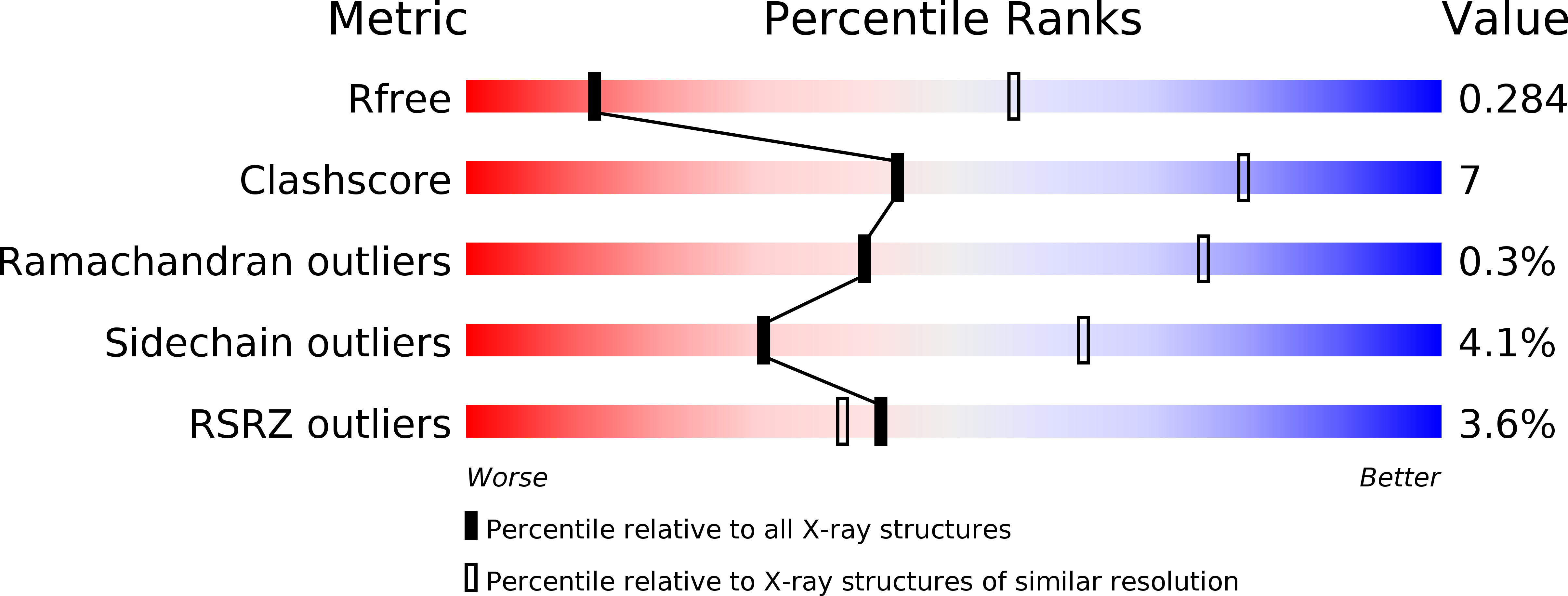
3.50 Å
R-Value Free:
0.28
R-Value Work:
0.24
R-Value Observed:
0.24
Space Group:
C 1 2 1
Macromolecular Entities
Structures with similar UniProt ID
Protein Blast
Polymer Type:polypeptide(L)
Molecule:HIV-1 Reverse Transcriptase, p66 subunit
Gene (Uniprot):gag-pol
Mutagens:K101P, K172A, K173A, C280S
Chain IDs:A
Chain Length:557
Number of Molecules:1
Biological Source:Human immunodeficiency virus type 1 group M subtype B (isolate BH10)
Structures with similar UniProt ID
Protein Blast
Polymer Type:polypeptide(L)
Molecule:HIV-1 Reverse Transcriptase, p51 subunit
Gene (Uniprot):gag-pol
Mutagens:C280S
Chain IDs:B
Chain Length:428
Number of Molecules:1
Biological Source:Human immunodeficiency virus type 1 group M subtype B (isolate BH10)
Ligand Molecules
Primary Citation
Potent Inhibitors Active against HIV Reverse Transcriptase with K101P, a Mutation Conferring Rilpivirine Resistance.
Acs Med.Chem.Lett. 6 1075 1079 (2015)
PMID: 26487915 DOI: 10.1021/acsmedchemlett.5b00254

Abstact

Catechol diether compounds have nanomolar antiviral and enzymatic activity against HIV with reverse transcriptase (RT) variants containing K101P, a mutation that confers high-level resistance to FDA-approved non-nucleoside inhibitors efavirenz and rilpivirine. Kinetic data suggests that RT (K101P) variants are as catalytically fit as wild-type and thus can potentially increase in the viral population as more antiviral regimens include efavirenz or rilpivirine. Comparison of wild-type structures and a new crystal structure of RT (K101P) in complex with a leading compound confirms that the K101P mutation is not a liability for the catechol diethers while suggesting that key interactions are lost with efavirenz and rilpivirine.

Legend

Protein

Chemical

Disease

Primary Citation of related structures
Feedback Form
Name
Email
Institute
Feedback