5B56 image
Deposition Date 2016-04-25
Release Date 2016-06-01
Last Version Date 2023-11-08
Entry Detail
PDB ID:
5B56
Title:
Crystal structure of HIV-1 VPR C-Terminal domain and DIBB-M-Importin-Alpha2 complex
Biological Source:
Source Organism:
Mus musculus (Taxon ID: 10090)
HIV-1 M:B_89.6 (Taxon ID: 401671)
Host Organism:
Method Details:
Experimental Method:
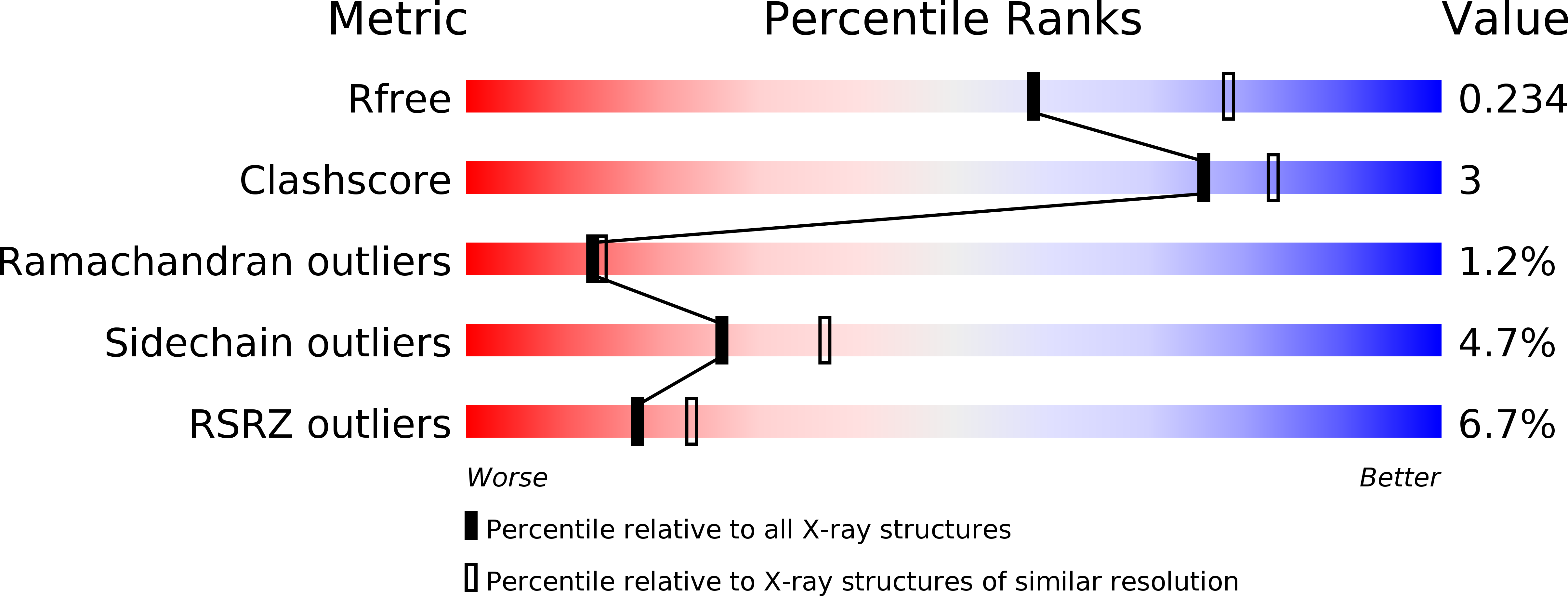
Resolution:
2.30 Å
R-Value Free:
0.22
R-Value Work:
0.18
R-Value Observed:
0.18
Space Group:
P 1 21 1
Macromolecular Entities
Structures with similar UniProt ID
Protein Blast
Polymer Type:polypeptide(L)
Molecule:Importin subunit alpha-1
Gene (Uniprot):Kpna2
Chain IDs:A, B
Chain Length:460
Number of Molecules:2
Biological Source:Mus musculus
Structures with similar UniProt ID
Protein Blast
Polymer Type:polypeptide(L)
Molecule:Protein Vpr
Gene (Uniprot):vpr
Chain IDs:C, D, E, F
Chain Length:12
Number of Molecules:4
Biological Source:HIV-1 M:B_89.6
Primary Citation
Molecular Mechanism of HIV-1 Vpr for Binding to Importin-alpha
J.Mol.Biol. 428 2744 2757 (2016)
PMID: 27181198 DOI: 10.1016/j.jmb.2016.05.003

Abstact

Viral protein R (Vpr) is an accessory gene product of human immunodeficiency virus type 1 (HIV-1) that plays multiple important roles associated with viral replication. Structural studies using NMR have revealed that Vpr consists of three α-helices and contains flexible N- and C-termini. However, the molecular mechanisms associated with Vpr function have not been elucidated. To investigate Vpr multifunctionality, we performed an X-ray crystallographic study of Vpr complexes containing importin-α, a known Vpr binding partner present in host cells. Elucidation of the crystal structure revealed that the flexible C-terminus changes its conformation to a twisted β-turn via an induced-fit mechanism, enabling binding to a minor nuclear localization signal (NLS) site of importin-α. The Vpr C-terminus can also bind with major NLS sites of importin-α in an extended conformation in different ways. These results, which represent the first reported crystallographic analysis of Vpr, demonstrate the multifunctional aspects that enable Vpr interaction with a variety of cellular proteins.

Legend

Protein

Chemical

Disease

Primary Citation of related structures
Feedback Form
Name
Email
Institute
Feedback