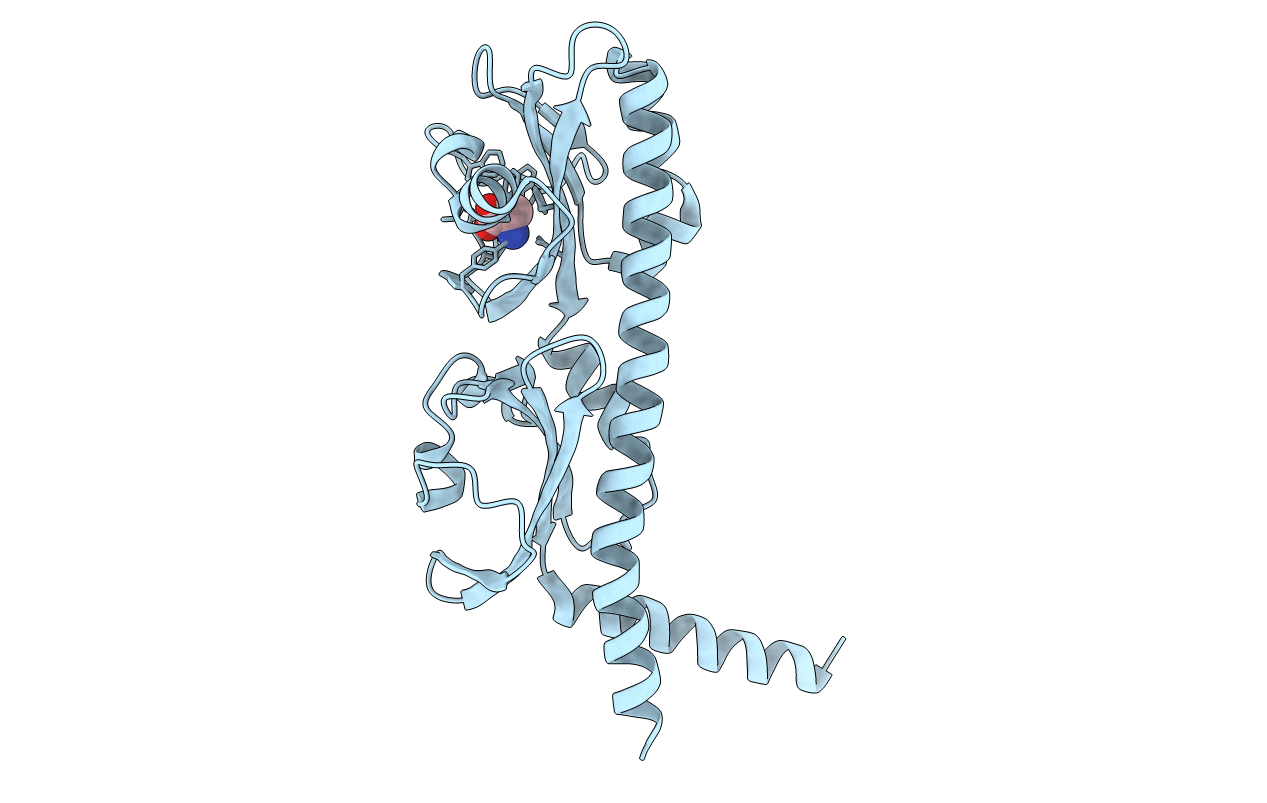
5AVE image
Deposition Date 2015-06-15
Release Date 2016-03-02
Last Version Date 2024-03-20
Entry Detail
PDB ID:
5AVE
Title:
The ligand binding domain of Mlp37 with serine
Biological Source:
Source Organism(s):
Vibrio cholerae (Taxon ID: 666)
Expression System(s):
Method Details:
Experimental Method:
Resolution:
1.80 Å
R-Value Free:
0.21
R-Value Work:
0.18
R-Value Observed:
0.18
Space Group:
C 2 2 21
Macromolecular Entities
Structures with similar UniProt ID
Protein Blast
Polymer Type:polypeptide(L)
Molecule:Methyl-accepting chemotaxis (MCP) signaling domain protein
Chain IDs:A
Chain Length:257
Number of Molecules:1
Biological Source:Vibrio cholerae
Ligand Molecules
Primary Citation
Identification of a Vibrio cholerae chemoreceptor that senses taurine and amino acids as attractants
Sci Rep 6 20866 20866 (2016)
PMID: 26878914 DOI: 10.1038/srep20866

Abstact

Vibrio cholerae, the etiological agent of cholera, was found to be attracted by taurine (2-aminoethanesulfonic acid), a major constituent of human bile. Mlp37, the closest homolog of the previously identified amino acid chemoreceptor Mlp24, was found to mediate taxis to taurine as well as L-serine, L-alanine, L-arginine, and other amino acids. Methylation of Mlp37 was enhanced upon the addition of taurine and amino acids. Isothermal titration calorimetry demonstrated that a purified periplasmic fragment of Mlp37 binds directly to taurine, L-serine, L-alanine and L-arginine. Crystal structures of the periplamic domain of Mlp37 revealed that L-serine and taurine bind to the membrane-distal PAS domain in essentially in the same way. The structural information was supported by characterising the in vivo properties of alanine-substituted mutant forms of Mlp37. The fact that the ligand-binding domain of the L-serine complex had a small opening, which would accommodate a larger R group, accounts for the broad ligand specificity of Mlp37 and allowed us to visualise ligand binding to Mlp37 with fluorescently labelled L-serine. Taken together, we conclude that Mlp37 serves as the major chemoreceptor for taurine and various amino acids.

Legend

Protein

Chemical

Disease

Primary Citation of related structures
Feedback Form
Name
Email
Institute
Feedback