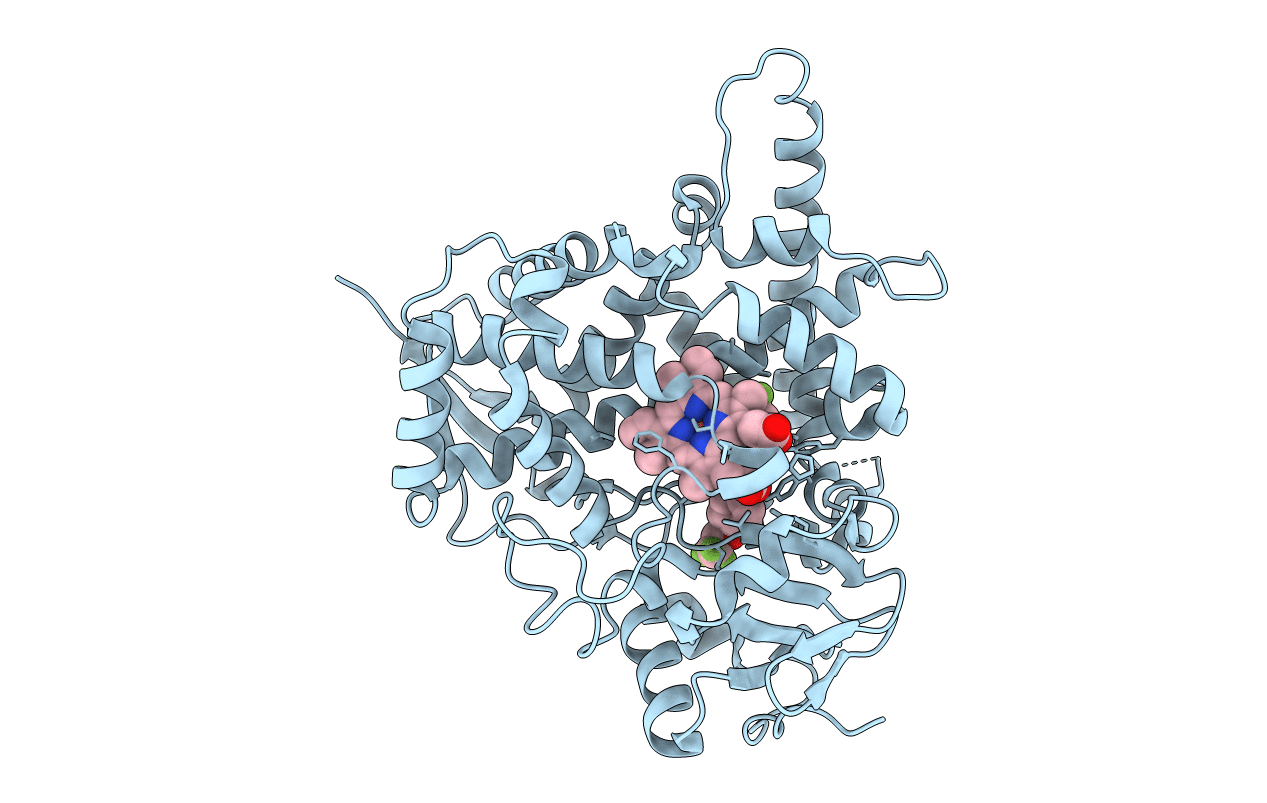
5AJR image
Deposition Date 2015-02-26
Release Date 2015-12-02
Last Version Date 2024-01-10
Entry Detail
PDB ID:
5AJR
Keywords:
Title:
Sterol 14-alpha demethylase (CYP51) from Trypanosoma cruzi in complex with the 1-tetrazole derivative VT-1161 ((R)-2-(2,4-Difluorophenyl)-1, 1-difluoro-3-(1H-tetrazol-1-yl)-1-(5-(4-(2,2,2-trifluoroethoxy)phenyl) pyridin-2-yl)propan-2-ol)
Biological Source:
Source Organism:
Host Organism:
Method Details:
Experimental Method:
Resolution:
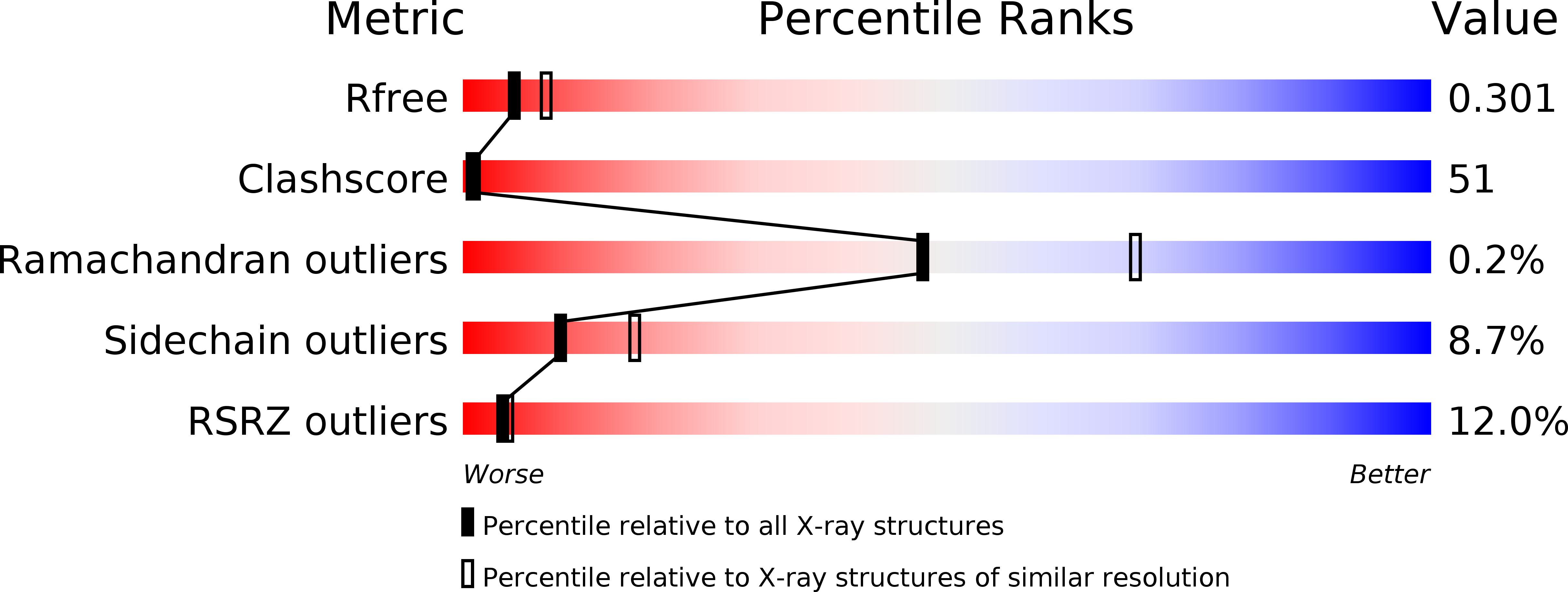
2.75 Å
R-Value Free:
0.27
R-Value Work:
0.26
R-Value Observed:
0.26
Space Group:
P 31 2 1
Macromolecular Entities
Structures with similar UniProt ID
Protein Blast
Polymer Type:polypeptide(L)
Molecule:STEROL 14-ALPHA DEMETHYLASE
Gene (Uniprot):CYP51
Chain IDs:A
Chain Length:460
Number of Molecules:1
Biological Source:TRYPANOSOMA CRUZI
Primary Citation
Clinical Candidate Vt-1161'S Antiparasitic Effect in Vitro, Activity in a Murine Model of Chagas Disease, and Structural Characterization in Complex with the Target Enzyme Cyp51 from Trypanosoma Cruzi.
Antimicrob.Agents Chemother. 60 1058 ? (2015)
PMID: 26643331 DOI: 10.1128/AAC.02287-15

Abstact

A novel antifungal drug candidate, the 1-tetrazole-based agent VT-1161 [(R)-2-(2,4-difluorophenyl)-1,1-difluoro-3-(1H-tetrazol-1-yl)-1-{5-[4-(2,2,2-trifluoroethoxy)phenyl]pyridin-2-yl}propan-2-ol], which is currently in two phase 2b antifungal clinical trials, was found to be a tight-binding ligand (apparent dissociation constant [Kd], 24 nM) and a potent inhibitor of cytochrome P450 sterol 14α-demethylase (CYP51) from the protozoan pathogen Trypanosoma cruzi. Moreover, VT-1161 revealed a high level of antiparasitic activity against amastigotes of the Tulahuen strain of T. cruzi in cellular experiments (50% effective concentration, 2.5 nM) and was active in vivo, causing >99.8% suppression of peak parasitemia in a mouse model of infection with the naturally drug-resistant Y strain of the parasite. The data strongly support the potential utility of VT-1161 in the treatment of Chagas disease. The structural characterization of T. cruzi CYP51 in complex with VT-1161 provides insights into the molecular basis for the compound's inhibitory potency and paves the way for the further rational development of this novel, tetrazole-based inhibitory chemotype both for antiprotozoan chemotherapy and for antifungal chemotherapy.

Legend

Protein

Chemical

Disease

Primary Citation of related structures
Feedback Form
Name
Email
Institute
Feedback