5ADG image
Deposition Date 2015-08-20
Release Date 2015-10-28
Last Version Date 2024-05-08
Entry Detail
PDB ID:
5ADG
Keywords:
Title:
Structure of human nNOS R354A G357D mutant heme domain in complex with 7-((4-Chloro-3-((methylamino)methyl)phenoxy)methyl)quinolin-2- amine
Biological Source:
Source Organism:
HOMO SAPIENS (Taxon ID: 9606)
Host Organism:
Method Details:
Experimental Method:
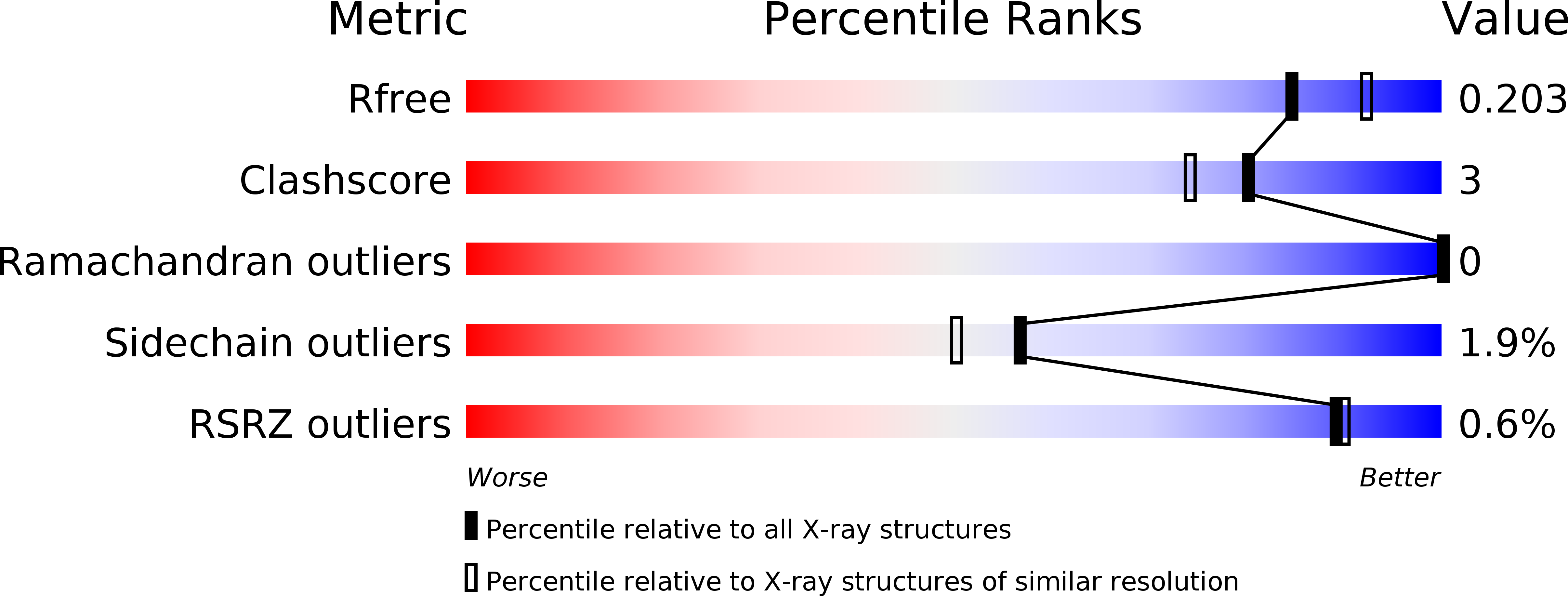
Resolution:
1.98 Å
R-Value Free:
0.20
R-Value Work:
0.16
R-Value Observed:
0.16
Space Group:
P 21 21 21
Macromolecular Entities
Structures with similar UniProt ID
Protein Blast
Polymer Type:polypeptide(L)
Molecule:NITRIC OXIDE SYNTHASE, BRAIN
Gene (Uniprot):NOS1
Mutagens:YES
Chain IDs:A, B
Chain Length:421
Number of Molecules:2
Biological Source:HOMO SAPIENS
Primary Citation
Phenyl Ether- and Aniline-Containing 2-Aminoquinolines as Potent and Selective Inhibitors of Neuronal Nitric Oxide Synthase.
J.Med.Chem. 58 8694 ? (2015)
PMID: 26469213 DOI: 10.1021/ACS.JMEDCHEM.5B01330

Abstact

Excess nitric oxide (NO) produced by neuronal nitric oxide synthase (nNOS) is implicated in neurodegenerative disorders. As a result, inhibition of nNOS and reduction of NO levels is desirable therapeutically, but many nNOS inhibitors are poorly bioavailable. Promising members of our previously reported 2-aminoquinoline class of nNOS inhibitors, although orally bioavailable and brain-penetrant, suffer from unfavorable off-target binding to other CNS receptors, and they resemble known promiscuous binders. Rearranged phenyl ether- and aniline-linked 2-aminoquinoline derivatives were therefore designed to (a) disrupt the promiscuous binding pharmacophore and diminish off-target interactions and (b) preserve potency, isoform selectivity, and cell permeability. A series of these compounds was synthesized and tested against purified nNOS, endothelial NOS (eNOS), and inducible NOS (iNOS) enzymes. One compound, 20, displayed high potency, selectivity, and good human nNOS inhibition, and retained some permeability in a Caco-2 assay. Most promisingly, CNS receptor counterscreening revealed that this rearranged scaffold significantly reduces off-target binding.

Legend

Protein

Chemical

Disease

Primary Citation of related structures
Feedback Form
Name
Email
Institute
Feedback