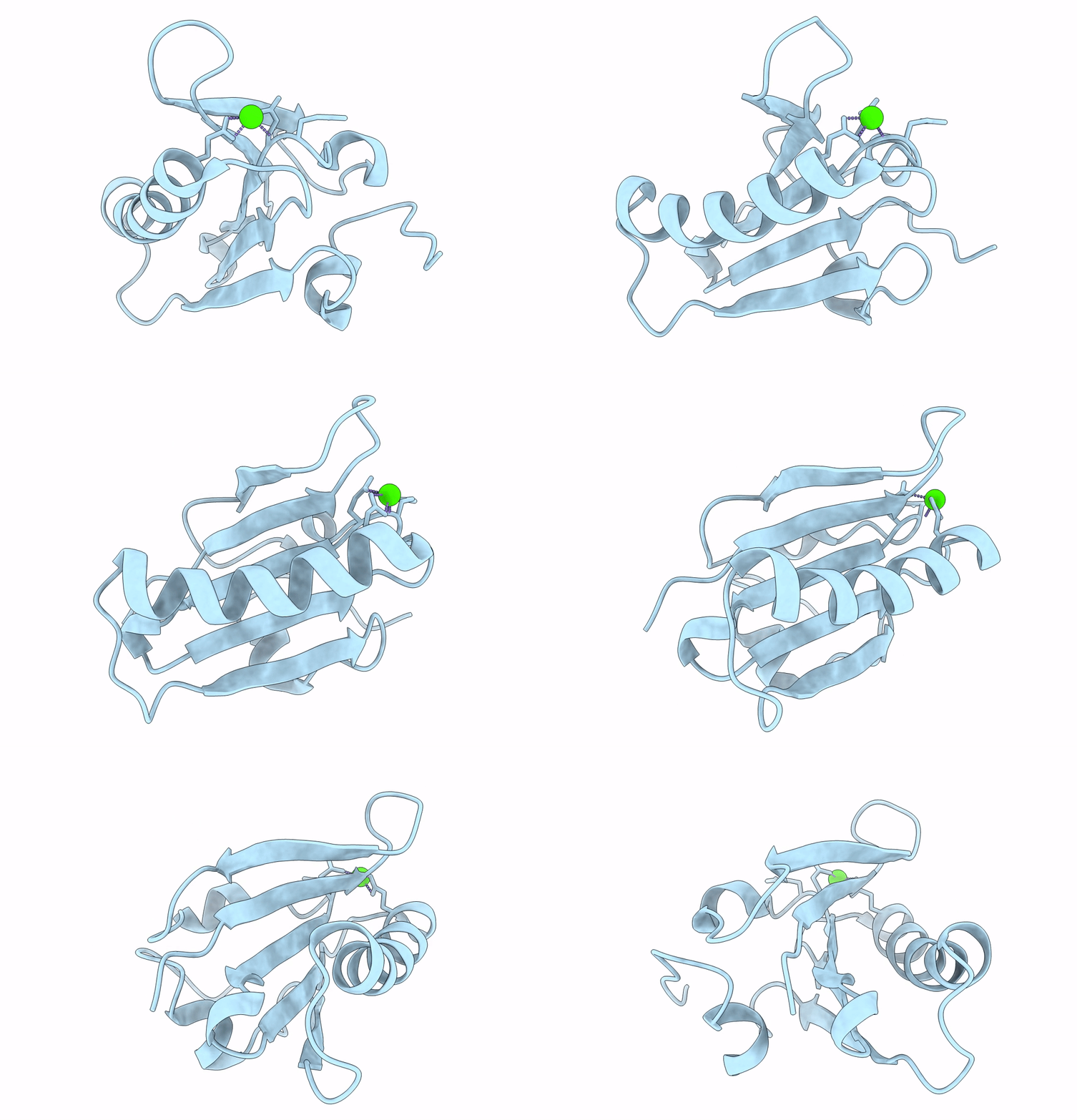
5A1M image
Deposition Date 2015-05-01
Release Date 2015-09-16
Last Version Date 2024-01-10
Entry Detail
PDB ID:
5A1M
Title:
Crystal structure of calcium-bound human adseverin domain A3
Biological Source:
Source Organism:
HOMO SAPIENS (Taxon ID: 9606)
Host Organism:
Method Details:
Experimental Method:
Resolution:
1.81 Å
R-Value Free:
0.18
R-Value Work:
0.18
R-Value Observed:
0.18
Space Group:
I 4 2 2
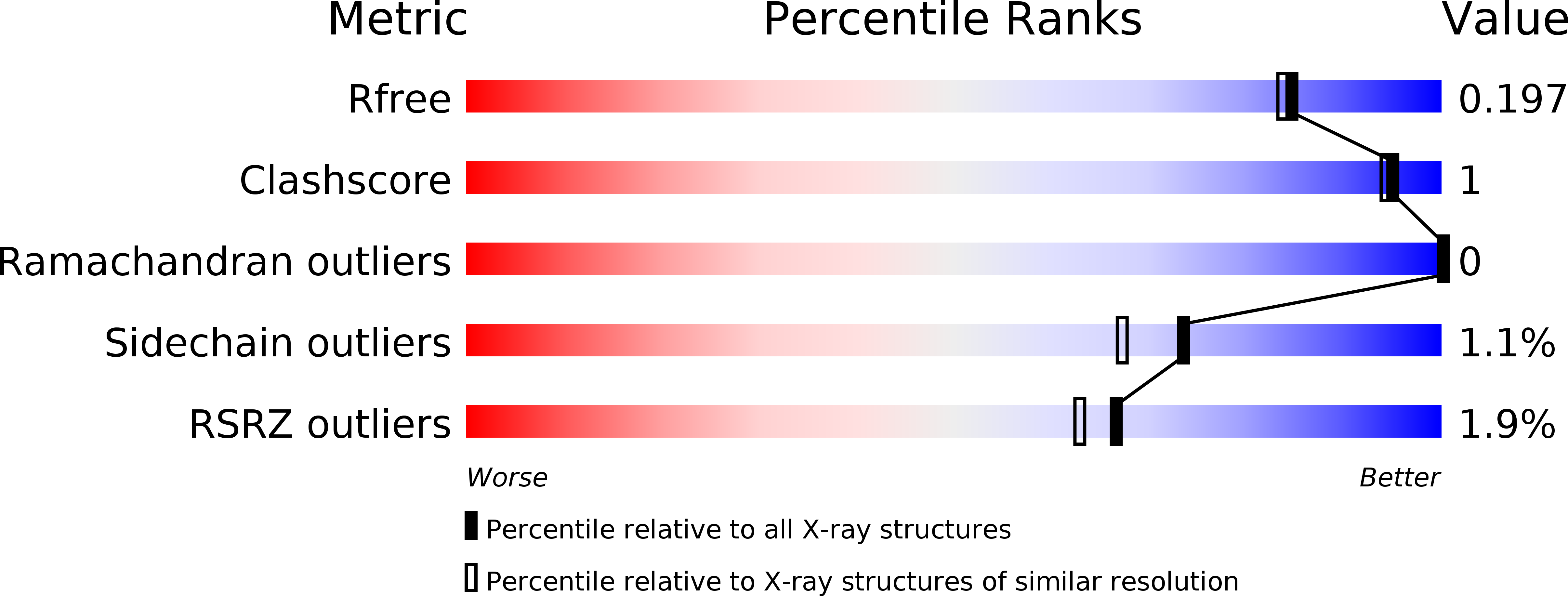
Macromolecular Entities
Structures with similar UniProt ID
Protein Blast
Polymer Type:polypeptide(L)
Molecule:ADSEVERIN
Gene (Uniprot):SCIN
Chain IDs:A
Chain Length:104
Number of Molecules:1
Biological Source:HOMO SAPIENS
Ligand Molecules
Primary Citation
Calcium-Controlled Conformational Choreography in the N-Terminal Half of Adseverin.
Nat.Commun. 6 8254 ? (2015)
PMID: 26365202 DOI: 10.1038/NCOMMS9254

Abstact

Adseverin is a member of the calcium-regulated gelsolin superfamily of actin-binding proteins. Here we report the crystal structure of the calcium-free N-terminal half of adseverin (iA1-A3) and the Ca(2+)-bound structure of A3, which reveal structural similarities and differences with gelsolin. Solution small-angle X-ray scattering combined with ensemble optimization revealed a dynamic Ca(2+)-dependent equilibrium between inactive, intermediate and active conformations. Increasing calcium concentrations progressively shift this equilibrium from a main population of inactive conformation to the active form. Molecular dynamics simulations of iA1-A3 provided insights into Ca(2+)-induced destabilization, implicating a critical role for the A2 type II calcium-binding site and the A2A3 linker in the activation process. Finally, mutations that disrupt the A1/A3 interface increase Ca(2+)-independent F-actin severing by A1-A3, albeit at a lower efficiency than observed for gelsolin domains G1-G3. Together, these data address the calcium dependency of A1-A3 activity in relation to the calcium-independent activity of G1-G3.

Legend

Protein

Chemical

Disease

Primary Citation of related structures
Feedback Form
Name
Email
Institute
Feedback