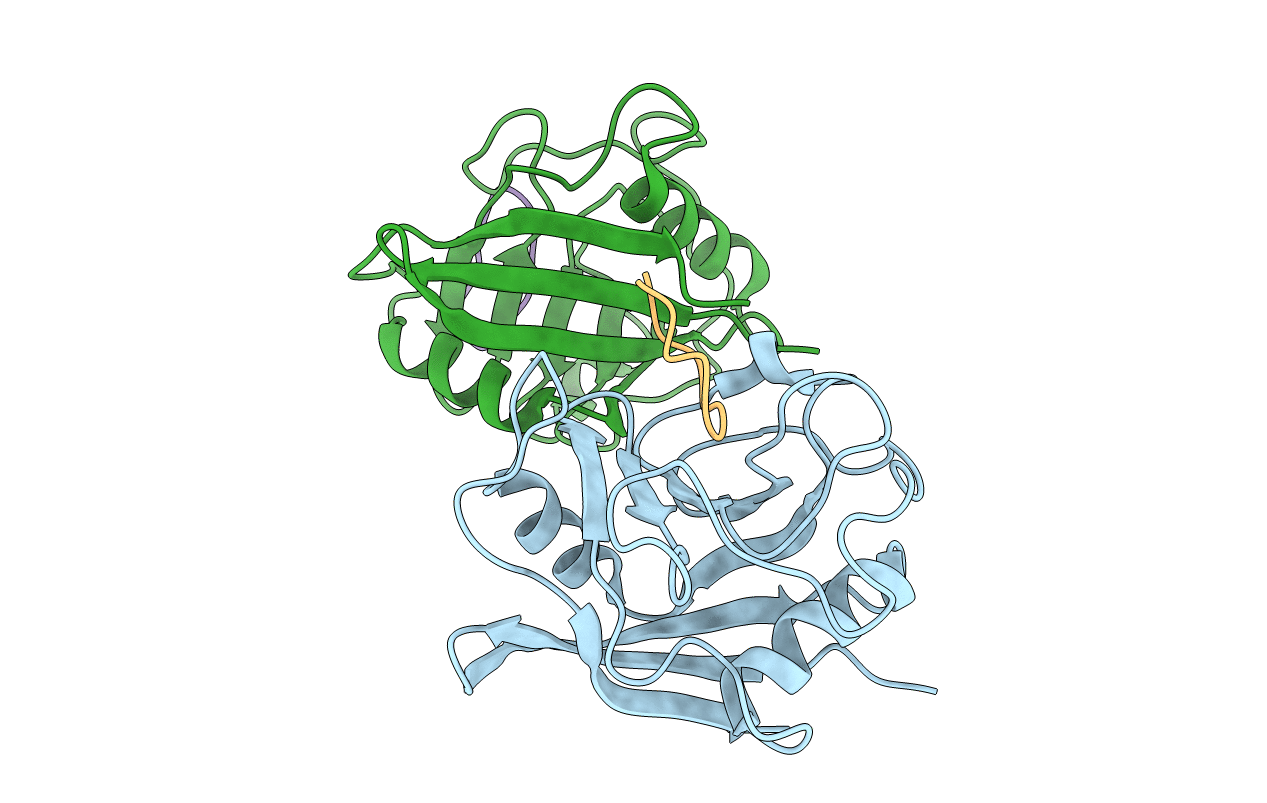
5A0E image
Deposition Date 2015-04-19
Release Date 2015-12-30
Last Version Date 2024-01-10
Entry Detail
PDB ID:
5A0E
Keywords:
Title:
Crystal structure of cyclophilin D in complex with CsA analogue, JW47.
Biological Source:
Source Organism:
Host Organism:
Method Details:
Experimental Method:
Resolution:
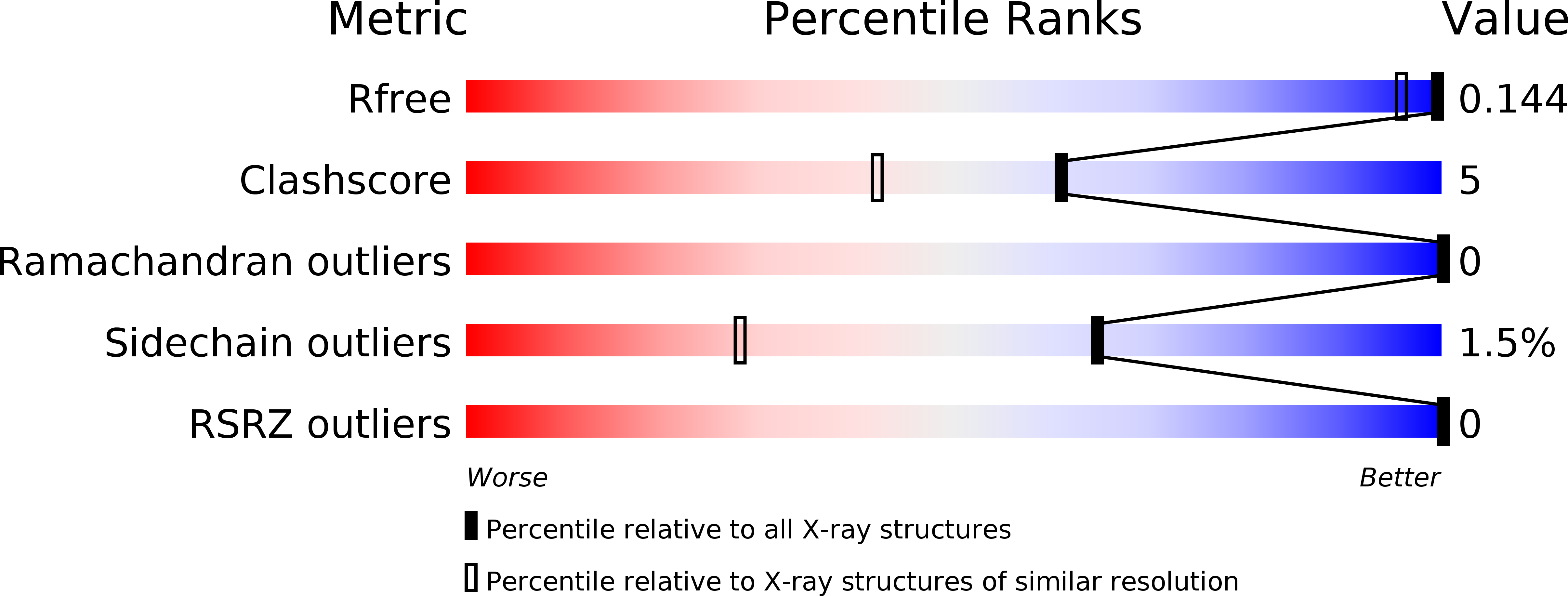
1.25 Å
R-Value Free:
0.13
R-Value Work:
0.09
R-Value Observed:
0.09
Space Group:
P 21 21 21
Macromolecular Entities
Structures with similar UniProt ID
Protein Blast
Polymer Type:polypeptide(L)
Molecule:PEPTIDYL-PROLYL CIS-TRANS ISOMERASE F, MITOCHONDRIAL
Gene (Uniprot):PPIF
Mutagens:YES
Chain IDs:A, B
Chain Length:165
Number of Molecules:2
Biological Source:HOMO SAPIENS
Polymer Type:polypeptide(L)
Molecule:JW47
Chain IDs:C, D (auth: E)
Chain Length:11
Number of Molecules:2
Biological Source:CYLINDROCARPON LUCIDUM
Modified Residue
Compound ID Chain ID Parent Comp ID Details 2D Image
ABA C ALA ALPHA-AMINOBUTYRIC ACID
MLE C LEU N-METHYLLEUCINE
MVA C VAL N-METHYLVALINE
SAR C GLY SARCOSINE
Primary Citation
Selective Inhibition of the Mitochondrial Permeability Transition Pore Protects Against Neuro-Degeneration in Experimental Multiple Sclerosis.
J.Biol.Chem. 291 4356 ? (2016)
PMID: 26679998 DOI: 10.1074/JBC.M115.700385

Abstact

The mitochondrial permeability transition pore is a recognized drug target for neurodegenerative conditions such as multiple sclerosis and for ischemia-reperfusion injury in the brain and heart. The peptidylprolyl isomerase, cyclophilin D (CypD, PPIF), is a positive regulator of the pore, and genetic down-regulation or knock-out improves outcomes in disease models. Current inhibitors of peptidylprolyl isomerases show no selectivity between the tightly conserved cyclophilin paralogs and exhibit significant off-target effects, immunosuppression, and toxicity. We therefore designed and synthesized a new mitochondrially targeted CypD inhibitor, JW47, using a quinolinium cation tethered to cyclosporine. X-ray analysis was used to validate the design concept, and biological evaluation revealed selective cellular inhibition of CypD and the permeability transition pore with reduced cellular toxicity compared with cyclosporine. In an experimental autoimmune encephalomyelitis disease model of neurodegeneration in multiple sclerosis, JW47 demonstrated significant protection of axons and improved motor assessments with minimal immunosuppression. These findings suggest that selective CypD inhibition may represent a viable therapeutic strategy for MS and identify quinolinium as a mitochondrial targeting group for in vivo use.

Legend

Protein

Chemical

Disease

Primary Citation of related structures
Feedback Form
Name
Email
Institute
Feedback