4rqf image
Deposition Date 2014-11-03
Release Date 2015-11-04
Last Version Date 2023-11-08
Entry Detail
PDB ID:
4RQF
Keywords:
Title:
human Seryl-tRNA synthetase dimer complexed with one molecule of tRNAsec
Biological Source:
Source Organism:
Homo sapiens (Taxon ID: 9606)
Host Organism:
Method Details:
Experimental Method:
Resolution:
3.50 Å
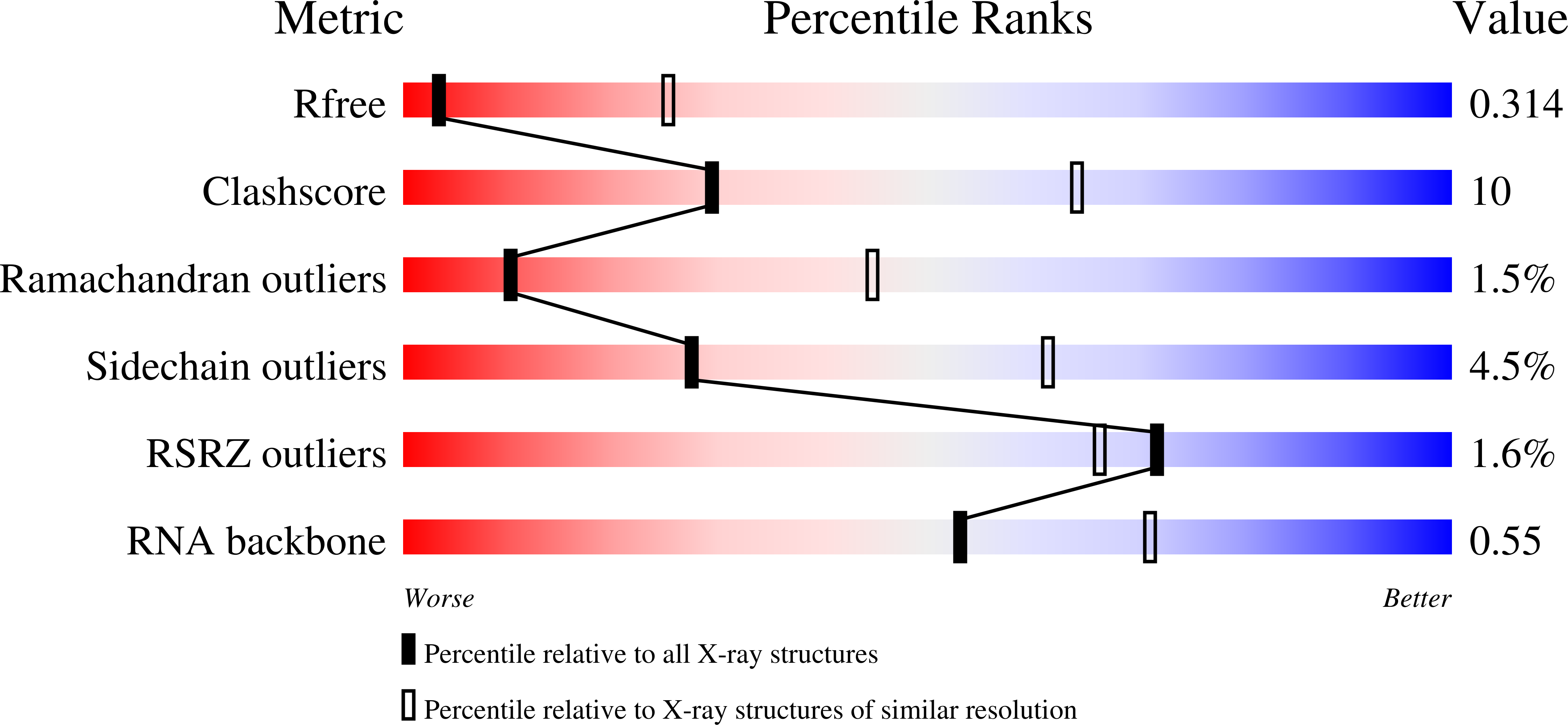
R-Value Free:
0.31
R-Value Work:
0.25
R-Value Observed:
0.25
Space Group:
P 21 21 2
Macromolecular Entities
Structures with similar UniProt ID
Protein Blast
Polymer Type:polypeptide(L)
Molecule:Serine--tRNA ligase, cytoplasmic
Gene (Uniprot):SARS1
Mutagens:E447K
Chain IDs:B (auth: A), C (auth: B)
Chain Length:522
Number of Molecules:2
Biological Source:Homo sapiens
Polymer Type:polyribonucleotide
Molecule:selenocysteine tRNA
Mutagens:C2G, G70C
Chain IDs:A (auth: C)
Chain Length:90
Number of Molecules:1
Biological Source:Homo sapiens
Primary Citation
SerRS-tRNASec complex structures reveal mechanism of the first step in selenocysteine biosynthesis.
Nucleic Acids Res. 43 10534 10545 (2015)
PMID: 26433229 DOI: 10.1093/nar/gkv996

Abstact

Selenocysteine (Sec) is found in the catalytic centers of many selenoproteins and plays important roles in living organisms. Malfunctions of selenoproteins lead to various human disorders including cancer. Known as the 21st amino acid, the biosynthesis of Sec involves unusual pathways consisting of several stages. While the later stages of the pathways are well elucidated, the molecular basis of the first stage-the serylation of Sec-specific tRNA (tRNA(Sec)) catalyzed by seryl-tRNA synthetase (SerRS)-is unclear. Here we present two cocrystal structures of human SerRS bound with tRNA(Sec) in different stoichiometry and confirm the formation of both complexes in solution by various characterization techniques. We discovered that the enzyme mainly recognizes the backbone of the long variable arm of tRNA(Sec) with few base-specific contacts. The N-terminal coiled-coil region works like a long-range lever to precisely direct tRNA 3' end to the other protein subunit for aminoacylation in a conformation-dependent manner. Restraints of the flexibility of the coiled-coil greatly reduce serylation efficiencies. Lastly, modeling studies suggest that the local differences present in the D- and T-regions as well as the characteristic U20:G19:C56 base triple in tRNA(Sec) may allow SerRS to distinguish tRNA(Sec) from closely related tRNA(Ser) substrate.

Legend

Protein

Chemical

Disease

Primary Citation of related structures
Feedback Form
Name
Email
Institute
Feedback