4ZUD image
Deposition Date 2015-05-15
Release Date 2015-10-07
Last Version Date 2024-11-06
Entry Detail
PDB ID:
4ZUD
Title:
Crystal Structure of Human Angiotensin Receptor in Complex with Inverse Agonist Olmesartan at 2.8A resolution.
Biological Source:
Source Organism(s):
Escherichia coli (Taxon ID: 562)
Homo sapiens (Taxon ID: 9606)
Expression System(s):
Method Details:
Experimental Method:
Resolution:
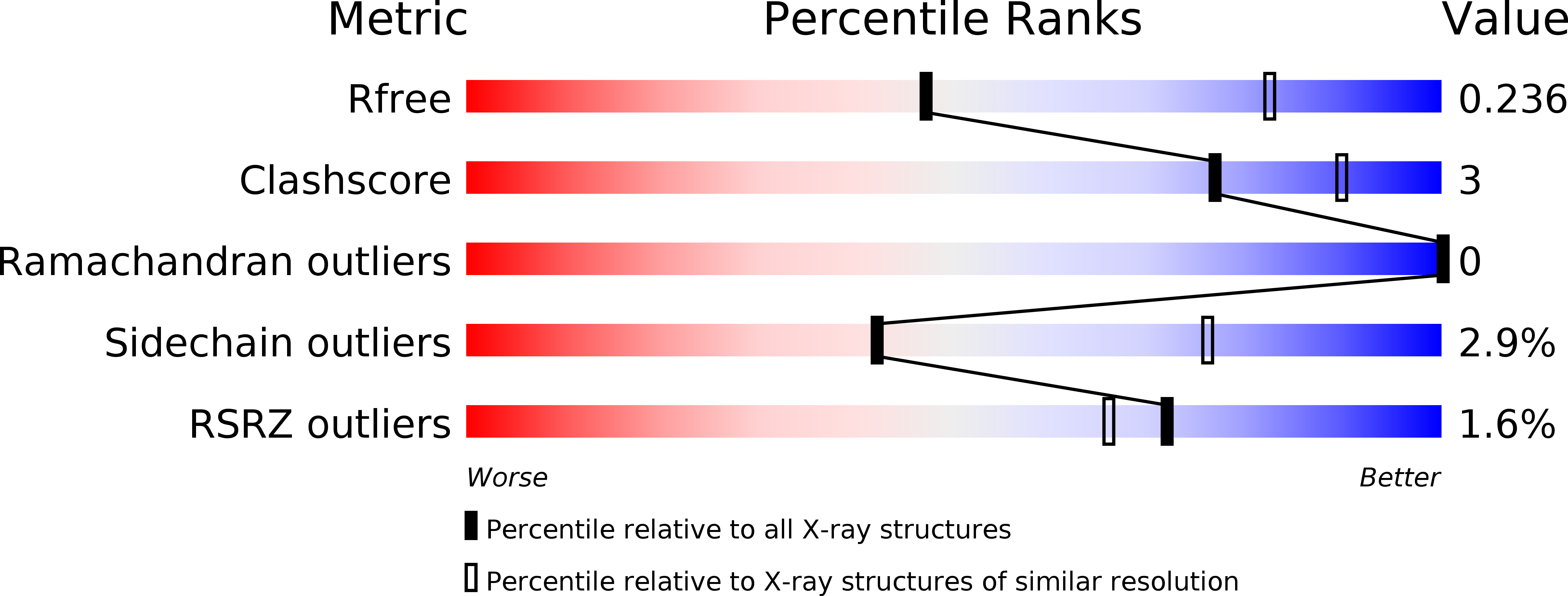
2.80 Å
R-Value Free:
0.23
R-Value Work:
0.19
R-Value Observed:
0.19
Space Group:
P 32
Macromolecular Entities
Protein Blast
Polymer Type:polypeptide(L)
Molecule:Chimera protein of Soluble cytochrome b562 and Type-1 angiotensin II receptor
Gene (Uniprot):cybC, AGTR1
Mutagens:M1007W, H1102I, R1106L
Chain IDs:A
Chain Length:410
Number of Molecules:1
Biological Source:Escherichia coli, Homo sapiens
Ligand Molecules
Primary Citation
Structural Basis for Ligand Recognition and Functional Selectivity at Angiotensin Receptor.
J.Biol.Chem. 290 29127 29139 (2015)
PMID: 26420482 DOI: 10.1074/jbc.M115.689000

Abstact

Angiotensin II type 1 receptor (AT1R) is the primary blood pressure regulator. AT1R blockers (ARBs) have been widely used in clinical settings as anti-hypertensive drugs and share a similar chemical scaffold, although even minor variations can lead to distinct therapeutic efficacies toward cardiovascular etiologies. The structural basis for AT1R modulation by different peptide and non-peptide ligands has remained elusive. Here, we report the crystal structure of the human AT1R in complex with an inverse agonist olmesartan (Benicar(TM)), a highly potent anti-hypertensive drug. Olmesartan is anchored to the receptor primarily by the residues Tyr-35(1.39), Trp-84(2.60), and Arg-167(ECL2), similar to the antagonist ZD7155, corroborating a common binding mode of different ARBs. Using docking simulations and site-directed mutagenesis, we identified specific interactions between AT1R and different ARBs, including olmesartan derivatives with inverse agonist, neutral antagonist, or agonist activities. We further observed that the mutation N111(3.35)A in the putative sodium-binding site affects binding of the endogenous peptide agonist angiotensin II but not the β-arrestin-biased peptide TRV120027.

Legend

Protein

Chemical

Disease

Primary Citation of related structures
Feedback Form
Name
Email
Institute
Feedback