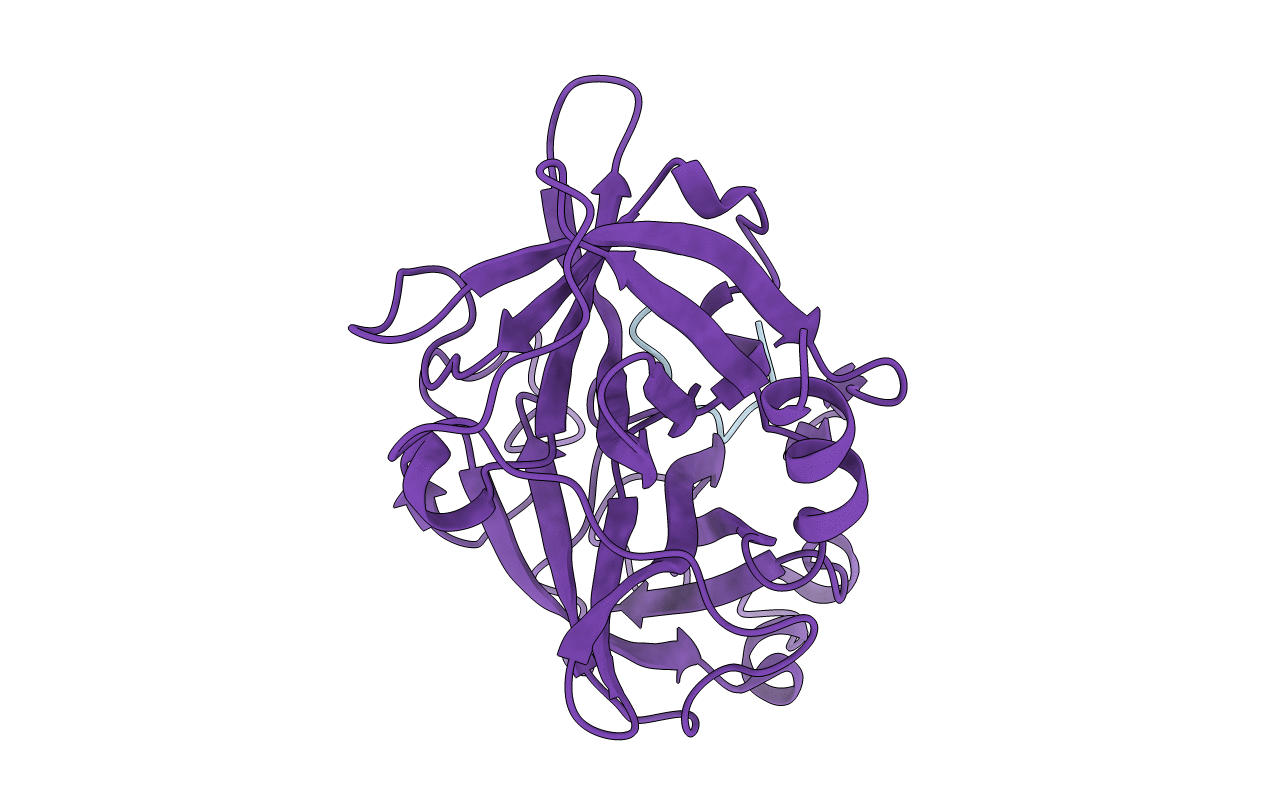
4ZHL image
Deposition Date 2015-04-25
Release Date 2015-09-16
Last Version Date 2024-10-16
Entry Detail
PDB ID:
4ZHL
Title:
The crystal structure of mupain-1-IG in complex with murinised human uPA at pH7.4
Biological Source:
Source Organism:
Host Organism:
Method Details:
Experimental Method:
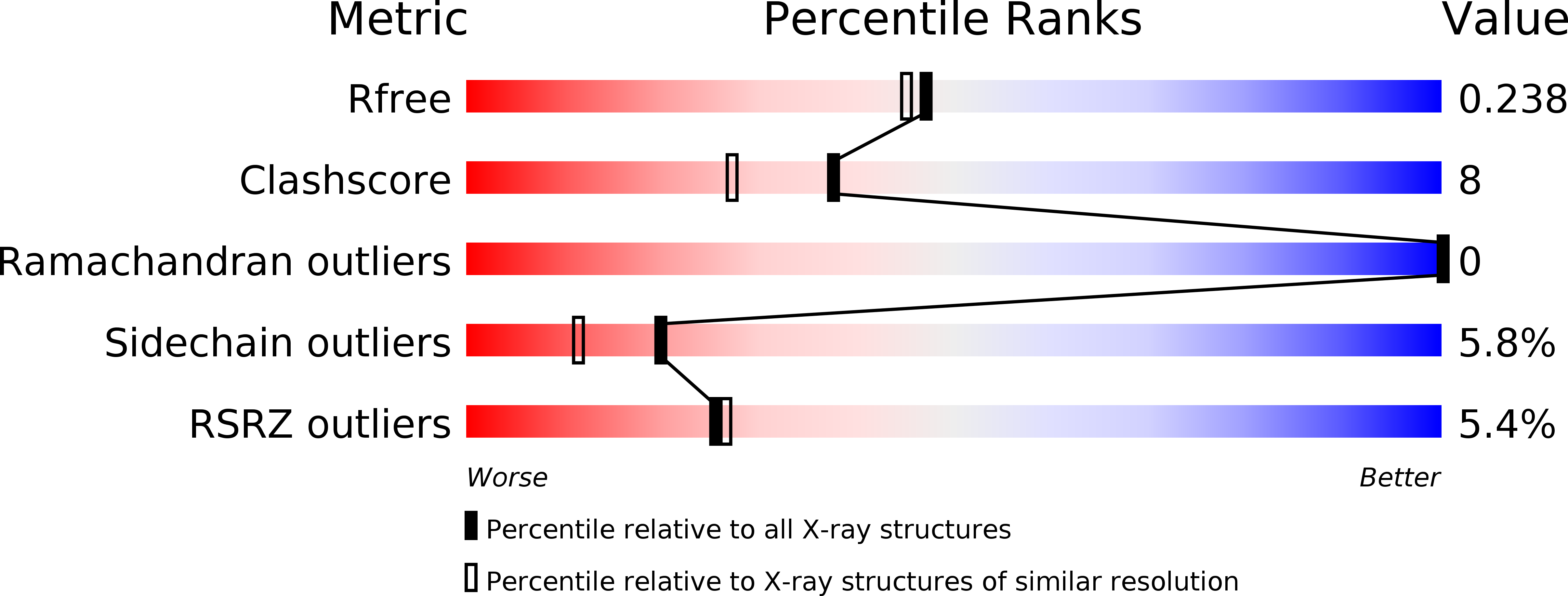
Resolution:
2.06 Å
R-Value Free:
0.26
R-Value Work:
0.21
R-Value Observed:
0.22
Space Group:
H 3
Macromolecular Entities
Polymer Type:polypeptide(L)
Molecule:mupain-1-IG
Chain IDs:B (auth: P)
Chain Length:10
Number of Molecules:1
Biological Source:synthetic construct
Structures with similar UniProt ID
Protein Blast
Polymer Type:polypeptide(L)
Molecule:Urokinase-type plasminogen activator
Gene (Uniprot):PLAU
Mutagens:H99Y, C122A, N145Q
Chain IDs:A (auth: U)
Chain Length:247
Number of Molecules:1
Biological Source:Homo sapiens
Primary Citation
Selection of High-Affinity Peptidic Serine Protease Inhibitors with Increased Binding Entropy from a Back-Flip Library of Peptide-Protease Fusions.
J.Mol.Biol. 427 3110 3122 (2015)
PMID: 26281711 DOI: 10.1016/j.jmb.2015.08.005

Abstact

We have developed a new concept for designing peptidic protein modulators, by recombinantly fusing the peptidic modulator, with randomized residues, directly to the target protein via a linker and screening for internal modulation of the activity of the protein. We tested the feasibility of the concept by fusing a 10-residue-long, disulfide-bond-constrained inhibitory peptide, randomized in selected positions, to the catalytic domain of the serine protease murine urokinase-type plasminogen activator. High-affinity inhibitory peptide variants were identified as those that conferred to the fusion protease the lowest activity for substrate hydrolysis. The usefulness of the strategy was demonstrated by the selection of peptidic inhibitors of murine urokinase-type plasminogen activator with a low nanomolar affinity. The high affinity could not have been predicted by rational considerations, as the high affinity was associated with a loss of polar interactions and an increased binding entropy.

Legend

Protein

Chemical

Disease

Primary Citation of related structures
Feedback Form
Name
Email
Institute
Feedback