Planned Maintenance: Some services may turn out to be unavailable from 15th January, 2026 to 16th January, 2026. We apologize for the inconvenience!

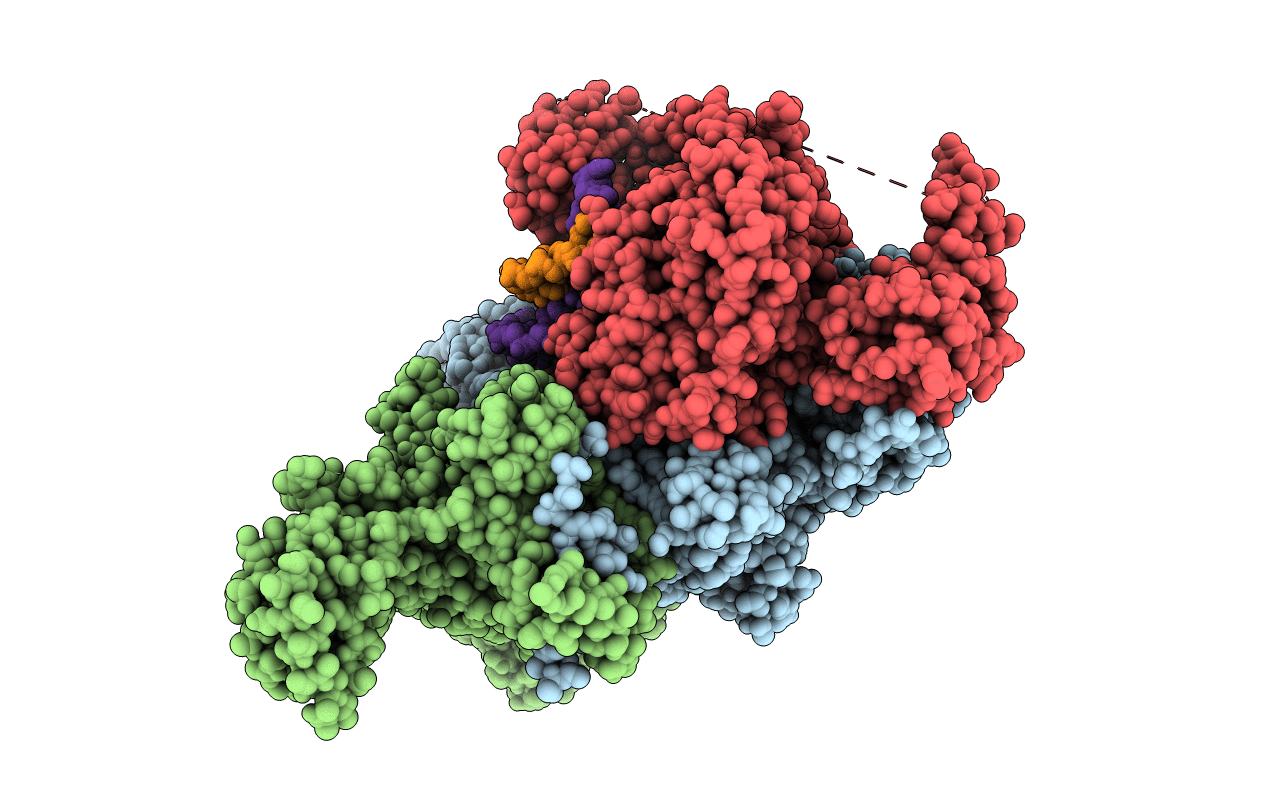
4ZCF image
Deposition Date 2015-04-15
Release Date 2015-07-29
Last Version Date 2024-03-06
Entry Detail
PDB ID:
4ZCF
Title:
Structural basis of asymmetric DNA methylation and ATP-triggered long-range diffusion by EcoP15I
Biological Source:
Source Organism(s):
Escherichia coli (Taxon ID: 562)
Expression System(s):
Method Details:
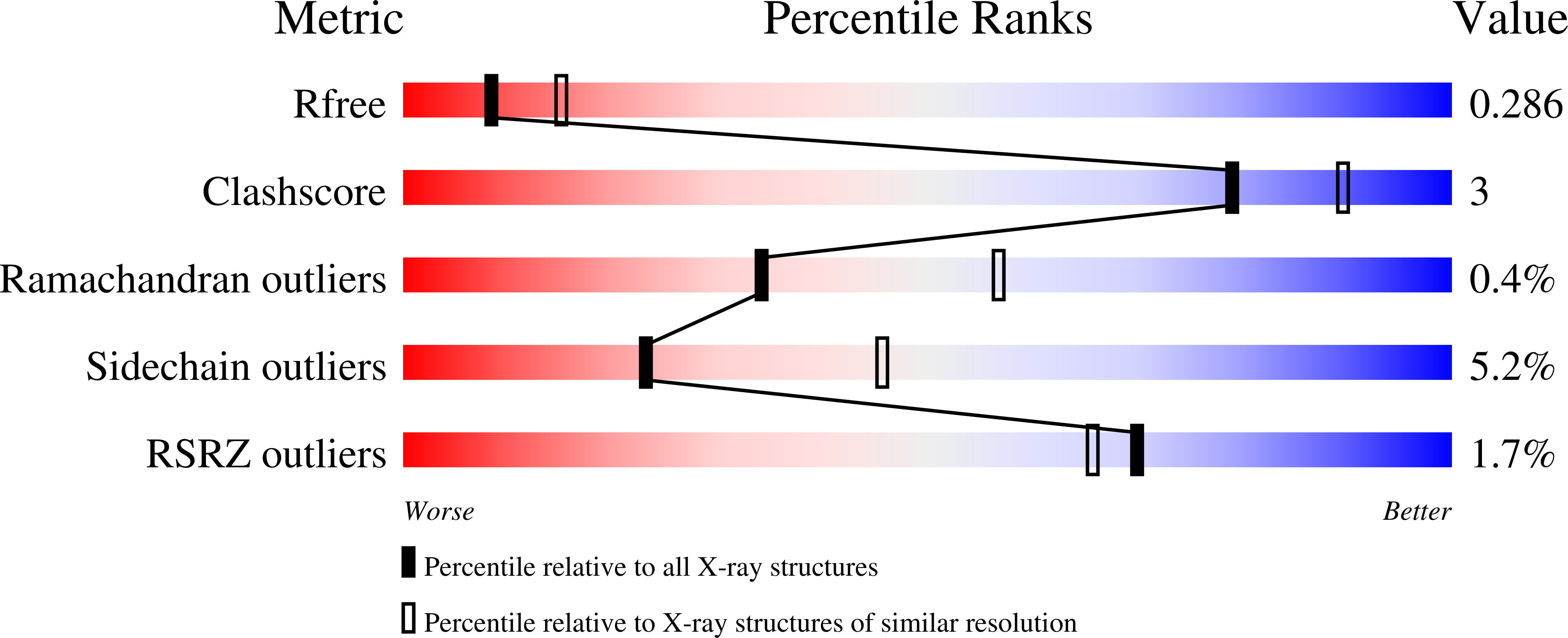
Experimental Method:
Resolution:
2.60 Å
R-Value Free:
0.26
R-Value Work:
0.21
R-Value Observed:
0.22
Space Group:
P 41 21 2
Macromolecular Entities
Structures with similar UniProt ID
Protein Blast
Polymer Type:polypeptide(L)
Molecule:Restriction endonuclease EcoP15I, modification subunit
Chain IDs:A, B
Chain Length:644
Number of Molecules:2
Biological Source:Escherichia coli
Structures with similar UniProt ID
Protein Blast
Polymer Type:polypeptide(L)
Molecule:Restriction endonuclease EcoP15I, restriction subunit
Gene (Uniprot):res
Chain IDs:C
Chain Length:970
Number of Molecules:1
Biological Source:Escherichia coli
Polymer Type:polydeoxyribonucleotide
Molecule:DNA 20-mer ATACAGCAGTAGACTATGAT
Chain IDs:D
Chain Length:20
Number of Molecules:1
Biological Source:Escherichia coli
Polymer Type:polydeoxyribonucleotide
Molecule:DNA 20-mer AATCATAGTCTACTGCTGTA
Chain IDs:E
Chain Length:20
Number of Molecules:1
Biological Source:Escherichia coli
Primary Citation
Structural basis of asymmetric DNA methylation and ATP-triggered long-range diffusion by EcoP15I.
Nat Commun 6 7363 7363 (2015)
PMID: 26067164 DOI: 10.1038/ncomms8363

Abstact

Type III R-M enzymes were identified >40 years ago and yet there is no structural information on these multisubunit enzymes. Here we report the structure of a Type III R-M system, consisting of the entire EcoP15I complex (Mod2Res1) bound to DNA. The structure suggests how ATP hydrolysis is coupled to long-range diffusion of a helicase on DNA, and how a dimeric methyltransferase functions to methylate only one of the two DNA strands. We show that the EcoP15I motor domains are specifically adapted to bind double-stranded DNA and to facilitate DNA sliding via a novel 'Pin' domain. We also uncover unexpected 'division of labour', where one Mod subunit recognizes DNA, while the other Mod subunit methylates the target adenine--a mechanism that may extend to adenine N6 RNA methylation in mammalian cells. Together the structure sheds new light on the mechanisms of both helicases and methyltransferases in DNA and RNA metabolism.

Legend

Protein

Chemical

Disease

Primary Citation of related structures
Feedback Form
Name
Email
Institute
Feedback